1. Title and Introduction
Catchy Title: Saint Lucia: The Helen of the West – A Natural Paradise, Historical Struggle, and a Beautiful Blend of Caribbean Culture
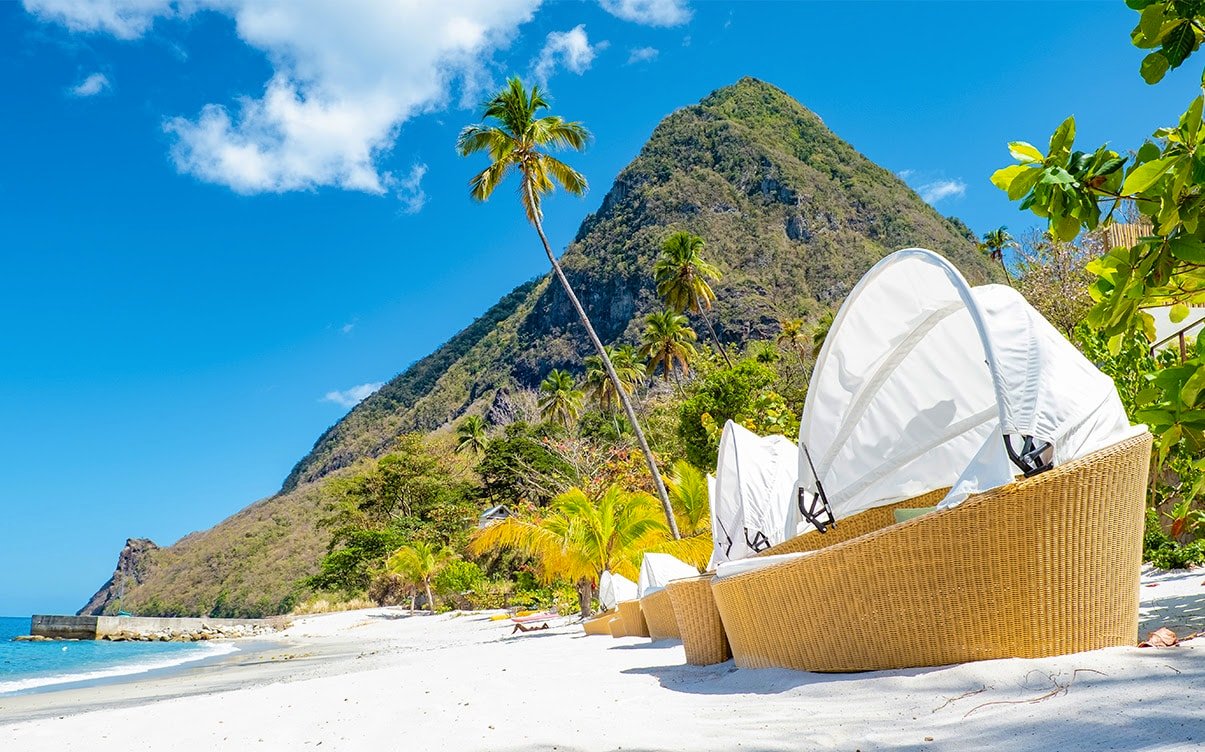
Located in the eastern part of the Caribbean Sea, Saint Lucia is a remarkably beautiful and culturally rich island nation. It is famous worldwide for its breathtaking natural beauty, which includes the iconic twin peaks—Gros Piton and Petit Piton. Historically, it is also known as the “Helen of the West Indies.” Just as huge wars were fought in Greek mythology to control the beauty of Helen of Troy, a fierce struggle continued for centuries between the British and French empires to establish dominance over Saint Lucia. As a result, this island changed its rulers 14 times. Today, Saint Lucia is an independent, vibrant, and economically developing country that presents an excellent example of tourism, agriculture, and rich Creole heritage.
Saint Lucia is not just a tropical paradise; its history and culture form a complex tapestry deeply influenced by African, European, and Indian (Indo-Caribbean) roots. From a geopolitical and economic expert’s perspective, Saint Lucia is a developing economy that is strengthening its sustainable development and international diplomacy despite natural disasters and global economic shifts. The country’s geographical location and its resources make it an important strategic player in the Eastern Caribbean region. In this research report, we will deeply analyze Saint Lucia, from its ancient history to the current UK visa crisis (2026), the impact of the Indian diaspora, and its unique cultural expressions.
| Official Name | Saint Lucia |
| Continent / Region |
North America / Caribbean (Lesser Antilles, Windward Islands) |
| Capital & Largest City |
Castries (Population est. 67,000) |
| Total Area |
619 sq. km. (238 sq. mi.) |
| Official Language |
English (widely spoken: French Patois / Kwéyòl) |
| Government System |
Westminster-style Parliamentary Democracy, Commonwealth Realm |
| Current Prime Minister |
Philip J. Pierre (Elected in 2021, retained majority in 2025) |
| Currency |
East Caribbean Dollar (EC$) |
| World Famous For |
The Pitons (UNESCO World Heritage), Drive-in Volcano (Sulphur Springs), Two Nobel Laureates, Exotic Beaches |
2. History
Saint Lucia’s history is a long story of struggle, resilience, and cultural synthesis. The country’s story began with the peaceful life of indigenous tribes, followed by an era of European colonization and slavery, and it finally carved out its identity as an independent nation.
Ancient History and Indigenous Tribes
Centuries before the arrival of European powers, Amerindian tribes lived in Saint Lucia. According to archaeological evidence, the Ciboney tribe first arrived here between 1000 and 500 BC, though not much evidence of them remains. The first proven settlement started around 200 to 400 AD, when peaceful Arawak Indians arrived here in canoes from the northern part of South America (now known as Venezuela and Guyana). The Arawaks were an agricultural society that practiced slash-and-burn farming and were experts at making pottery. They named the island “Louanalao,” which means “Island of the Iguanas,” because there was a very large population of these reptiles here at the time.
However, the peaceful life of the Arawaks did not last forever. Around 800 AD, a more aggressive warrior tribe called the Caribs (Kalinago) attacked the island. The Caribs came from the Orinoco river region. They killed the Arawak men and assimilated their women into their society. The Caribs changed the island’s name to “Hewanorra,” a name that is still alive today as Saint Lucia’s main international airport (Hewanorra International Airport). The Caribs had a highly complex society with hereditary kings and shamans. Their war canoes could carry over 100 people and were fast enough to catch sailing ships. Due to their fierce nature and strong resistance, the early European settlers faced extreme difficulties settling here, and the Caribs successfully maintained their hold on the island until the 1600s.
Major Events: Colonization and Wars
In the 16th and 17th centuries, Saint Lucia became a strategic battleground for European powers. In the 1550s, a famous French pirate named François le Clerc, known as “Jambe de Bois” (Wooden Leg), built a military base on Pigeon Island so he could ambush passing Spanish ships. Around 1600, the Dutch tried to build a fortified base in Vieux Fort, and the English also tried to establish a settlement in 1605 and 1639, but the resident Caribs chased them away.
The real geopolitical rivalry was between the British and French empires. Due to Saint Lucia’s strategic location and fertile land (which was ideal for sugar plantations), a fierce competition began between the two countries to capture the island. Between the 17th and 19th centuries, Saint Lucia changed its rulers 14 times (7 times British and 7 times French). In 1746, the French built their first settlement in Soufriere, and by 1780, 12 settlements and sugar plantations had been established here.
The most significant battle during this period was the Battle of Cul de Sac (Battle of St. Lucia), fought on December 15, 1778, during the American Revolutionary War. The French, who supported the American rebels, were capturing British colonies in the Caribbean (like Dominica). In response, British Royal Navy Admiral Samuel Barrington attacked Saint Lucia on December 12, 1778. Commodore William Hotham landed 5,000 British soldiers on the island under the leadership of Major-General James Grant. Soon, French Admiral Jean Baptiste Charles Henri Hector, Comte d’Estaing arrived with a large fleet. Admiral Barrington arranged his 7 ships in a defensive line in Cul de Sac bay and successfully repelled d’Estaing’s 12 ships. On land (Battle of Morne de la Vigie), Brigadier General William Medows faced 9,000 French regulars and militia with his 1,400 British troops, inflicting heavy losses on them. Ultimately, the French forces were defeated and had to retreat.
Another important event was the First Brigand War (1795). Influenced by the French Revolution (1789), the slogan “Liberté, Égalité, Fraternité” began to echo in Saint Lucia. In 1791, the French National Assembly sent its commissaries, after which thousands of slaves left their estates and became maroons (freed slaves). These freed slaves joined forces with the French revolutionaries and fought fiercely against the British forces, especially around Soufriere. However, under the Treaty of Paris in 1814, France formally and finally handed over Saint Lucia to Britain.
The End of Slavery and Arrival of Indian Indentured Laborers
The most painful part of this colonization era was African chattel slavery. Thousands of enslaved Africans were forcibly brought here to work on sugar plantations. When the British empire completely abolished slavery in 1838, there was an extreme labor shortage on the plantations. To overcome this economic crisis, British planters decided to bring Indian Indentured Laborers (Girmityas) to Saint Lucia.
Arrival of Indians (1859-1893): On May 6, 1859, a ship named ‘Palmyra’ arrived in Saint Lucia carrying 318 Indian laborers. Most of these people were brought from Bihar, Jharkhand, and Uttar Pradesh (Bhojpur and Awadh regions). This journey would take 10 to 20 weeks, and during this time, a deep social bond formed among these “Jahajis” (seafarers). Between 1859 and December 10, 1893 (when the last ship Volga arrived), a total of 13 ships brought nearly 4,500 Indians to Saint Lucia.
Indentured contracts ended completely in 1897. Around 2,075 laborers returned to India, but the rest either did not have the money to return or chose to settle there. By the end of the 19th century, there were about 2,560 free Indians on the island. They played a crucial role in saving Saint Lucia’s agricultural sector and laid the foundation for today’s Indo-Saint Lucian community. Although they initially faced prejudice and derogatory terms like “coolie”, they gradually adopted Creole culture and assimilated deeply into Saint Lucian society.
Independence
In the 20th century, Saint Lucia slowly moved towards self-governance. From 1838 to 1885, it was part of the British Windward Islands administration, with its headquarters in Barbados. The 1924 constitution gave the island its first representative government. From 1958 to 1962, it was part of the short-lived West Indies Federation.
In 1967, Saint Lucia became an “Associated State” of the United Kingdom. Under this arrangement, internal affairs were controlled by Saint Lucia, but defense and external affairs (foreign policy) were under the UK’s control. Finally, after decades of political evolution, Saint Lucia achieved full independence on February 22, 1979. Since independence, the country has maintained a stable democratic system and is an active member of international organizations like the Commonwealth of Nations, CARICOM, and OECS.
3. Geography and Climate
Saint Lucia’s geography is not only visually stunning but also forms the fundamental basis of its economy (tourism and agriculture) and biodiversity.
Location & Borders
Located on the eastern rim of the Caribbean Sea, Saint Lucia is part of the Lesser Antilles island chain, specifically the Windward Islands group. The country’s total land area is approximately 616 to 619 sq. km. To its north lies the French overseas territory of Martinique, and to its south is Saint Vincent and the Grenadines. The calm Caribbean Sea touches the island’s western coast (which is best for snorkeling and sailing), while its eastern coast faces the wilder Atlantic Ocean, where waves and currents are stronger and the coastline is more rugged.
Physical Features (Mountains, Rivers, and Lakes)
Saint Lucia’s terrain is highly mountainous and rugged, which is a testament to its volcanic origins. A central ridge of wooded mountains runs from north to south through the middle of the island.
-
The Pitons: The country’s most famous geological feature is ‘The Pitons’—Gros Piton (700 meters) and Petit Piton. These are a UNESCO World Heritage Site. These towering volcanic spires rise straight out of the sea near Soufriere and attract trekkers from all over the world. By hiking Gros Piton, you can see both Martinique and St. Vincent on clear days.
-
Rivers and Water Bodies: Several streams and rivers flow from the central mountain ridge through fertile valleys. The Roseau River, Cul de Sac River, and Vieux Fort River are the major ones. Additionally, the John Compton Dam is critical infrastructure for the country’s water supply. However, in recent years, it has faced challenges due to the need for silting and dredging, and agricultural runoff has affected the water quality of nearby bays (like Praslin Bay). The island also has several natural waterfalls like Dennery Waterfall and Toraille Waterfall.
Flora and Fauna (Biodiversity and Endemic Species)
Historically, 70% of Saint Lucia was covered by lush rainforests, though this has decreased significantly due to agriculture (monoculture plantations) and construction (a 22.5% forest loss and 40% mangrove loss occurred between 1977 and 1989). Still, the country’s biodiversity is exceptional. Over 1,300 plant species (including orchids and anthurium), 250 reef fish, and 50 coral species are found here.
In terms of avian (bird) life, Saint Lucia is globally significant, home to 160 bird species. The most important is the country’s national bird, the Saint Lucia Parrot (Amazona versicolor), locally called the Jacquot. It is an endemic (found only here) and vulnerable species, known for its vivid green, blue, and red plumage. In the 1970s, due to habitat loss and the pet trade, their population had dropped to just 100. But in 1978, the Forestry Department, Jersey Wildlife Preservation Trust, and RARE Center ran an aggressive public awareness campaign together (which included a learning center named ‘Jacquot Express’). It was declared the national bird in 1979, and hunting was banned, which saved the species. Another rare endemic bird is the Saint Lucia White-breasted Thrasher (Ramphocinclus sanctaeluciae), with only 1,900 individuals left. This ground-feeder bird is a major attraction for bird-watchers. In terms of other wildlife, the Saint Lucia whiptail lizard and mammals like the agouti are commonly seen.
Climate and Best Time to Visit
Saint Lucia has a tropical and warm climate, with the average temperature remaining between 75°F to 85°F (24°C to 29°C) all year round. The weather can be divided into two main seasons:
-
Dry Season (High Season): From December to April. This is considered the best time to visit. During this time, the sky is clear, humidity is low, and the sea is calm, providing excellent underwater visibility, making it perfect for snorkeling, beach holidays, and honeymooners. Because it is peak season, accommodation prices are high, and beaches are crowded.
-
Wet Season (Low/Shoulder Season): From May to November. This is the rainy season, and it includes the Atlantic hurricane season from July to November. Although the risk of a direct hurricane hit in Saint Lucia is low, tropical storms can definitely occur. This season is great for nature lovers, hikers, and budget travelers because the rainforests are in full green bloom, waterfalls are at peak flow, and hotel prices drop significantly. April-May and November are considered the “shoulder season,” offering a good balance of weather and budget.
4. Government and Economy
A stable political framework and a continuously evolving economy make Saint Lucia distinct and more resilient compared to other Eastern Caribbean nations.
Government System
Saint Lucia is a Westminster-style parliamentary democracy. Because it is a Commonwealth Realm, its Head of State is the British Monarch (currently King Charles III). The monarch is represented on the island by a Governor-General (currently Errol Charles is in an acting role, while Dame Pearlette Louisy held this position for a long time previously).
The executive power and the responsibility to run the government lie with the Prime Minister and his cabinet. The current Prime Minister is Philip J. Pierre, who is the leader of the Saint Lucia Labour Party (SLP). He won the July 2021 general elections, defeating Allen Chastanet of the United Workers Party (UWP), and has retained his party’s majority in the recent 2025 elections.
The Parliament is bicameral:
-
House of Assembly (Lower House): It has 17 members, elected directly from constituencies.
-
Senate (Upper House): It has 11 members, appointed on the advice of the Prime Minister, the Leader of the Opposition, and the Governor-General. The country’s judicial system falls under the Eastern Caribbean Supreme Court (which includes the High Court and Court of Appeals), and final appeals are still made to the Privy Council in London. The country is divided into 11 administrative parishes.
Economy
Historically, Saint Lucia’s economy was dependent on single-crop agriculture (first sugar, then bananas). However, since the 1990s, due to the end of European Union banana trade preferences, the economy has undergone a major structural shift and is now completely a service-based economy.
-
Tourism (Primary Source of Income): Today, tourism is the country’s biggest source of income, generating a large part of the GDP and providing direct and indirect employment. All-inclusive resorts, cruise ship arrivals, and eco-tourism drive the economy here.
-
Other Sectors: Offshore banking, manufacturing (garments, electronic components, beverages, corrugated boxes), and agriculture (bananas, cocoa, coconut, citrus fruits) are other important sectors.
-
Economic Outlook & IMF Data (2025/2026): Recently, in January 2026, the IMF (International Monetary Fund) released its Article IV consultation report. According to it, the economy showed a robust growth of 4.7% in 2024, credited to strong tourism from the US and a domestic construction boom. For 2025, the IMF has projected a growth rate of 1.7%. Inflation was negative in 2024 and is expected to be 0.8% in 2025. Unemployment hit a historic low of 10.8% in 2024, slightly rising to 13.4%. Although the primary fiscal balance is positive, high public debt and the economic risk of natural disasters remain long-term challenges.
-
Citizenship by Investment (CIP): A large part of the country’s economy also comes from the CIP program, where foreign investors get citizenship in exchange for a financial contribution. However, this revenue stream is currently under serious threat due to recent UK visa policy changes (discussed in the Global Relations section).
Currency
Saint Lucia’s official currency is the East Caribbean Dollar (EC$). This currency is shared by the eight member states of the Eastern Caribbean Currency Union (ECCU) and has long been pegged to the US Dollar at a fixed exchange rate (EC$ 2.70 = US$ 1). This fixed pegging provides macro-economic stability and makes international trade easier. US Dollars are also commonly accepted in tourist areas.
5. Culture and People
Saint Lucia’s culture is a direct and beautiful reflection of its turbulent history. African roots, French colonial influence, British administration, and Indian integration have combined to create a unique Creole identity.
Population & Languages
The country’s population is between 170,000 and 179,000 (according to various recent estimates). The population growth rate is quite low (around 0.74% to 1.5%). The population is evenly divided between rural and urban areas (although the urban population is growing), with one-third of the people living in and around the capital city, Castries. Life expectancy is good (men ~76 years, women ~81.8 years), and the adult literacy rate is about 94.8%.
-
Demographics / Ethnic Groups: About 85% to 90% of the population is of African descent (Black), whose ancestors were brought over during slavery. The mixed-descent population is about 6% to 10.9%. Indo-Saint Lucians (East Indians) make up about 2.2% to 3% of the population (approx. 3000 people), descendants of the indentured laborers who arrived after 1859. Besides these, there is a small European minority (1%).
-
Languages: The official language is English, used in education, government, and business. However, in informal settings, daily life, and rural areas, French Patois (Kwéyòl / Creole) is the most widely spoken. This language is a wonderful mixture of French vocabulary and West African syntax. Even though Saint Lucia has been under British rule constantly since 1814, this Creole language proves that French cultural influence was the deepest among the common people.
Religion, Festivals & Nobel Laureates
The main religion here is Roman Catholic (about 90% of the population), which is the result of early French missionary influence. In addition, Seventh Day Adventist, Pentecostal, and various Protestant denominations are also present. Most Indo-Saint Lucians have adopted Christianity, but some still practice Hinduism and Islam, and recently there has been a revival of traditional Hindu weddings (like worshiping Lord Ganesha and Krishna).
| Prominent Saint Lucian Figures & Nobel Laureates | Field / Achievements |
| Sir W. Arthur Lewis (1915–1991) |
Nobel Prize in Economics (1979). Known for work on economic development in developing nations. First president of the Caribbean Development Bank. |
| Sir Derek Walcott (1930–2017) |
Nobel Prize in Literature (1992). Renowned poet and playwright. Famous for the Homeric epic poem Omeros and the play Dream on Monkey Mountain. |
| Joséphine de Beauharnais |
Empress of the French, first wife of Napoleon Bonaparte. Raised on a plantation in nearby Martinique, heavily linked to the region’s colonial history. |
| Julien Alfred |
Modern Athlete, bringing global recognition in track and field. |
| Arthur Léandre Fédave Jacobs |
Famous sculptor and theatre artist, awarded Saint Lucia Medal of Merit Gold, died in 2021. |
Saint Lucia boasts having the highest number of Nobel Prize winners per capita. A week-long Nobel Laureate Festival is celebrated every January in memory of Sir Arthur Lewis and Sir Derek Walcott, promoting education and arts.
Major Festivals:
-
Jounen Kwéyòl (Creole Day): Celebrated on the last Sunday of October, this festival has become Saint Lucia’s biggest cultural event, drawing even larger crowds than Carnival. This festival openly celebrates the country’s Creole heritage, language, folk music, and traditional foods. People wear traditional Madras check clothes, and food stalls are set up in various communities.
-
La Rose and La Marguerite (The Flower Festivals): These are two flower festivals that represent two competing “societies” (factions) in Saint Lucia. La Rose is celebrated on August 30 (St. Rose of Lima’s day) and La Marguerite on October 17 (St. Margaret Mary Alacocque’s day). These festivals were started by slave societies to mimic and parody the courtly life of European elites. Each group chooses its “Kings”, “Queens”, “Doctors”, and “Policemen” and holds street processions, banquets, and traditional dances (like Quadrille, Mappa, Belair). The La Rose group wears red/pink colors, and La Marguerite wears mauve/blue.
-
Carnival (July): Lucian Carnival is a massive explosion of calypso music, steel bands, and vibrant Mardi-Gras style street parties.
-
Indian Arrival Day (May 6): The Indo-Saint Lucian community (especially led by the Indian Heritage Foundation) celebrates this day to remember the arrival of the ship ‘Palmyra’ in 1859. Although it hasn’t been granted full public holiday status, it remains a vital day for cultural preservation, sharing elders’ stories, and remembering ancestral roots.
Music (Dennery Segment)
Saint Lucia has given the global music scene a new and highly energetic genre called the “Dennery Segment” (formerly Lucian Kuduro). Originating from Dennery village in the 2010s, this music is fast-paced, high-energy, and a mixture of Soca, Dancehall, and French Antillean Zouk. It features bold, provocative lyrics in Creole and a digital fusion of traditional folk instruments like the Shak-shak (rattles/maracas), Boom-boom (bamboo windpipe), and Tambo drums. Today, this music has become a staple of Lucian Carnival and is going viral in international party scenes.
Food & Cuisine
Saint Lucian cuisine is a delicious fusion of African, European, and East Indian culinary traditions.
-
National Dish: “Green Fig and Saltfish” is the national dish here. It is made by boiling raw green bananas (called ‘green figs’ locally) and cooking them with salted codfish, garlic, thyme, and other herbs. The origin of this dish is tied to 19th-century slavery, when cheap salted codfish was imported from Canada as rations, and locally grown bananas were the main carbohydrate source for the slaves. Over time, slaves added their own spices, and today this dish has become a symbol of resilience and national identity, eaten with great enthusiasm on weekends and during the Jounen Kwéyòl festival.
-
Other Famous Traditional Dishes: Bouillon (a thick hearty soup of lentils, red beans, pork/beef, and vegetables), Coupe (sweetbread mixed with sugar and spices), Souse, roasted breadfruit, and popular drinks like Cocoa tea (local hot chocolate) and Spice rum.
6. Top Tourist Attractions
Tourism is the backbone of Saint Lucia’s economy. From luxury all-inclusive resorts to wild nature trails, there is something for every type of traveler.
Major Cities and Hubs
-
Castries: The capital and the largest commercial city. Being a deep-water harbor, it is the main docking port for cruise ships. Castries’ central market is the best place for local crafts, spices, and local food.
-
Soufriere: Located in the south-west of the island, this picturesque town was a historic French capital, and this is where Saint Lucia’s most iconic natural attractions (the Pitons and Sulphur Springs) are located.
-
Gros-Islet / Rodney Bay: Located in the north, this area is famous for its upscale luxury resorts, yacht marinas, and vibrant nightlife. The ‘Gros Islet Street Party’ held every Friday night is very famous, where people enjoy calypso music and seafood.
Monuments, Nature & Famous Places
Beyond the typical white sand beaches, Saint Lucia has much more to attract tourists:
-
Sulphur Springs (Drive-in Volcano): Located near Soufriere, it is considered the world’s only “drive-in volcano.” Visitors can drive their cars right into the volcano’s crater and enjoy warm mud baths, which locals believe possess healing and therapeutic properties.
-
Pigeon Island National Landmark: A perfect blend of history and nature located in the north. It houses 18th-century British military ruins (Fort Rodney). This is the very spot where pirate François le Clerc set up his base and from where Admiral Rodney monitored the French fleet. Today, it also serves as the main venue for the Saint Lucia Jazz Festival.
-
Diamond Falls Botanical Gardens: Situated near Soufriere, this garden features vivid tropical flowers and a beautiful waterfall, whose water appears colorful (yellow, green, purple) due to volcanic minerals.
Hidden Gems (Off the Beaten Path)
For those seeking peace away from the crowds, Saint Lucia has several hidden treasures that aren’t usually highlighted on mass tourism maps :
-
Anse Mamin: A quiet, tucked-away black sand beach near Anse Chastanet. It is famous among peace-seekers and jungle biking/cycling enthusiasts.
-
Tet Paul Nature Trail: Known as the “Stairway to Heaven,” this is an easy hike that offers the most stunning, awe-inspiring panoramic views of the Pitons, Jalousie Bay, and the southern coast. It is a much easier alternative to climbing Gros Piton.
-
Laborie Beach and Dennery Fishing Village: Ideal places for experiencing authentic local Caribbean life and serene escapades.
-
Edmund Forest Reserve: Trekking enthusiasts get a chance for deep rainforest exploration here, where rare birds and exotic flora can be spotted.
7. Current Situation and Global Relations
Despite being a small island nation, Saint Lucia has maintained a pro-active stance in international diplomacy. Its foreign policy is based on regional cooperation (CARICOM, OECS) and global non-alignment.
Relations with India
India and Saint Lucia’s relations are historically linked to 1859 (when the first Indian Indenture ship Palmyra arrived), but today these historical ties have transformed into modern diplomatic, educational, and economic cooperation. The Indian Embassy located in Paramaribo, Suriname concurrently covers Saint Lucia.
-
Diplomatic Engagements: Both countries strongly support each other in the United Nations, Commonwealth, and NAM. Saint Lucia has openly supported India’s candidacy for a permanent seat on the UN Security Council. High-level meetings occur frequently (like the meeting between PM Modi and PM Pierre). In April 2024, a crucial Visa Waiver agreement was signed for Diplomatic and Official passport holders, further strengthening diplomatic ties.
-
Trade & Economy: The bilateral trade volume is small but growing. In the 2023-2024 financial year, total bilateral trade reached $8.49 million (US Dollars), significantly higher than the $3.85M in 2019-20. India mainly exports pharmaceuticals, textiles, plastics, vehicles, and iron/steel, while scrap metals and aluminum products are imported from Saint Lucia.
-
Development Projects & Foreign Aid: India has provided substantial support to Saint Lucia under South-South cooperation. Through the “India-UNDP Fund,” a $1 million COVID-19 response grant and $1.06 million for vocational training of marginalized youth were given. From the IBSA fund, $1.29 million was provided for poverty reduction. Additionally, Saint Lucia is an eligible beneficiary of the $150M Line of Credit announced by PM Modi for CARICOM countries (for renewable energy projects). India also provided half a million dollars in grants for disaster relief during Hurricane Tomas in 2010 and the 2013 floods.
-
Indian Diaspora & Education: There is a small but influential modern Indian diaspora here, which includes professionals (doctors), Sindhi businessmen, and investors in the education sector. There are 3 prominent offshore medical colleges (Spartan Health Sciences University, Commonwealth University College of Medicine, and International American University) owned and operated by the Indian diaspora. About 250 students of Indian origin study in these institutions.
| India-Saint Lucia Relations Indicator | Details (Latest FY 2023-24) |
| Total Bilateral Trade |
US$ 8.49 Million |
| India’s Exports to St. Lucia |
Pharmaceuticals, Vehicles, Plastics, Iron & Steel |
| India’s Imports from St. Lucia |
Aluminum products, Scrap Metals |
| Key Development Projects |
India-UNDP Fund ($1.06M for youth), Covid Relief ($1M) |
| Historical Connection |
Arrival of Indentured Laborers (May 6, 1859 – Ship: Palmyra) |
Current Affairs (2024 to 2026)
In recent years, especially in 2025 and early 2026, Saint Lucia has been dealing with several major diplomatic and domestic issues:
-
UK Visa Policy Suspension (March 2026): Saint Lucia’s global mobility and diplomacy suffered a massive blow when the United Kingdom abruptly ended visa-free travel for Saint Lucian citizens starting March 5, 2026. The main reason was Saint Lucia’s Citizenship by Investment (CIP) program. UK authorities noted that passports were being rapidly issued under the CIP program (over 5,600 applications in 2023-24), and people were using these passports to reach Britain and make false asylum claims (as of December 2025, 222 St. Lucian nationals were on asylum support in the UK). Ordinary citizens must now get a Standard Visit Visa to go to the UK, though those with an ETA were given a grace period until April 16, 2026. PM Pierre and Deputy PM Ernest Hilaire strongly criticized this decision, stating it is wrong to place the direct blame on the CIP program, but they have initiated urgent diplomatic talks.
-
National Budget 2026-2027: PM Philip J. Pierre presented a historically large budget of EC $2.18 Billion on March 24, 2026. This budget focuses on education, health, infrastructure, and agricultural development. Although the country’s economy is growing, the government is facing intense pressure to meet local and foreign debts, public servants’ backpay, and capital expenditures.
-
Crime & Security Restructuring: Crime has been a major domestic issue. In March 2026, a leadership restructuring was done in the police force, and Ronald Phillip was appointed as Acting Police Commissioner to maintain law and order.
8. Conclusion and FAQs
Summary
When assessing Saint Lucia, it becomes clear that this island is not just a postcard-perfect holiday destination, but a dynamic and living land that has gracefully endured many historical conflicts and ups and downs. From the peaceful lives of the Arawaks to the warrior nature of the Caribs, and from the 14 handovers and fierce naval battles (Battle of St. Lucia 1778) between European empires for hegemony to the blood and sweat of African and Indian indentured laborers—this soil has seen it all. The country has woven all these disparate elements together to produce a beautiful Creole culture, the famous Dennery Segment music, festivals like Jounen Kwéyòl, and world-class Nobel Laureates like Sir Arthur Lewis and Sir Derek Walcott.
From an economic standpoint, the country has successfully transformed itself from depending on sugar and banana exports to a thriving tourism-driven economy. Today, even though the economy faces global challenges like the UK visa restrictions (CIP program controversies) and inflation, PM Pierre’s focus on development, the IMF’s positive growth trajectory, and the resilience of the tourism sector keep Saint Lucia a strong pillar in the Eastern Caribbean. For tourists coming from all over the world, this country offers a rare and attractive balance of tropical perfection (The Pitons, Drive-in Volcano) and authentic cultural depth.
FAQs (Frequently Asked Questions)
Q: What is the capital of Saint Lucia?
A: Saint Lucia’s capital is Castries, located on the country’s north-west coast. It is the island’s largest city by population (housing one-third of the country’s people) and is also the main port for cruise ships.
Q: What is the currency of Saint Lucia?
A: The currency used here is the East Caribbean Dollar (EC$), which is firmly fixed to the US Dollar at a rate of EC$ 2.70 = US$ 1. However, US dollars are easily accepted in most tourist places, resorts, and restaurants.
Q: Do Indians need a visa to visit Saint Lucia?
A: Indian citizens do not need to apply for a visa in advance to visit Saint Lucia; they get a Visa on Arrival upon reaching the airport, which is valid for up to 90 days (and sometimes comes with a fee exemption). To clear immigration, you must have a passport with at least 6 months of validity, a return flight ticket, hotel booking/accommodation proof, and sufficient funds to support your stay.
Q: What is the best time to visit Saint Lucia?
A: The most ideal and popular time to visit is between December and April (High Season), when the weather is dry, sunny, humidity-free, and the sea is calm. If you love nature, bird-watching, and lush green waterfalls, and want to travel on a lower budget (cheap flights/hotels), May to November (Wet Season/Shoulder Season) is also a good time, though there is a slight risk of rain and tropical storms.
Q: What is the most famous and traditional dish of Saint Lucia?
A: The National Dish here is “Green Fig and Saltfish.” This dish is made by boiling raw green bananas (green figs) and cooking them with salted codfish and local spices. Its history is tied to 19th-century slavery, and today it is the main attraction of the Jounen Kwéyòl festival.
Q: Is Saint Lucia safe for tourists?
A: Yes, Saint Lucia is generally considered a safe destination for tourists, especially around resorts, hotels, and popular attractions. However, recently (2025/2026), there has been an increase in some local crime (like gang violence and petty theft) in the country. Therefore, it is important to take normal travel precautions, such as not wandering alone in secluded areas at night, avoiding un-licensed taxis, and keeping your valuables (passports/cash) secure in a hotel safe.
Romania: Global Diplomatic, Economic and Strategic