Child Growth & Development Stages
Thank you for reading this post, don't forget to subscribe!Growing from a baby into a teen involves many physical changes. In infancy, babies grow very fast and learn to move and eat. In early childhood (about 2–5 years) growth slows slightly, and children become more coordinated and leaner. Middle childhood (about 6–9 years) brings steady growth and stronger motor skills. Preadolescence (9–12 years) often sees the first signs of puberty (breast budding or testicle growth). Adolescence (13–18 years) is when the body fully changes to an adult form: height spurts, body shape changes, skin and hair change, and sexual maturation (menstruation in girls, erections in boys) occur. These changes are driven by hormones (growth hormone for general growth, and estrogen/testosterone for puberty) and follow wide normal age ranges. Emotional feelings and social changes happen alongside the body changes. Healthy habits (good nutrition, sleep, exercise, hygiene) support growing bodies, and parents/teens can use age-specific tips below. Common myths (like “you stop growing after first period”) are clarified. Everyone’s body is unique: there is a broad range of normal, and care should be inclusive of all genders and differences.
Infancy (0–2 years)

Baby’s first year growth and development milestones
Babies start life very small and grow incredibly fast. By 4–6 months, many babies double their birthweight, and by 12 months they triple it. Infants also grow about 10–12 inches in length by their first birthday. During this stage, a baby’s head is large in proportion, but limbs and trunk quickly catch up. Motor skills develop rapidly: first babies lift their heads, roll over, sit up, then crawl and walk by about 12–15 months. They learn fine skills too (grasping toys, feeding themselves). Infants have about 20 baby (primary) teeth by age 2 and learn to chew more textures. Their skin is soft and sensitive; hair may fall out or change color/texture as baby grows.
Emotionally, infants form trust by bonding with caregivers. They feel basic emotions (joy, distress) and need comforting and safety. Comfortable routines for eating, sleeping, and play help infants feel secure.
Variations & Facts: Growth charts (WHO charts) are used by doctors to track baby’s growth against global standards. There is a wide “normal” range. Small babies can catch up; big babies may slow down – genetics plays a big role. Some babies grow in spurts (weeks of fast growth) then slow.
Tips for Parents (Infancy):
- Nutrition: Aim for exclusive breastfeeding or formula until about 6 months, then gradually introduce solid foods (purees, soft solids) while continuing breastmilk or formula. Follow CDC/WHO feeding guidelines.
- Sleep: Newborns sleep ~14–17 hours/day; by 1 year most need ~11–14 hours including naps. Always place babies on their back to sleep for safety.
- Health Checks: Keep up well-baby visits and vaccinations. Monitor growth with your pediatrician using growth charts. If growth or development seems very slow, discuss it.
- Hygiene & Safety: Bathe regularly, clean gums/teeth, and baby-proof the home (covers on outlets, gates on stairs). Ensure car seats and cribs meet safety standards.
- Emotional Care: Hold, talk to, and play with baby. Respond warmly to crying and needs to build trust.
Early Childhood (2–5 years)

Early childhood development milestones: active play, improving motor skills, and growing independence in preschool years.
In early childhood, growth is steady but slower than infancy. Children grow about 3 inches in height and 4–5 pounds in weight per year. By age 3–4, they have all 20 baby teeth and often achieve 20/20 vision. Compared to toddlers, preschoolers are taller and leaner. Their legs and torsos lengthen, and the head is more proportionate to the body. This gives many preschoolers a skinny or athletic look.
Motor skills advance rapidly. Three-year-olds can run, jump, climb, and stack blocks. By age 4–5 they can hop on one foot, catch a bounced ball, dress themselves (with some help for buttons), and draw basic shapes. Fine motor skills (using utensils, scissors, coloring) improve too. Children love active play: they scribble, build, pedal trikes, and explore their world.
Their skin and hair also change. The texture of skin becomes more like an older child’s. Hair may darken slightly or change texture. Some children get soft baby fat early on, but they gradually lose baby “pudginess” after age 2, becoming slimmer. By age 6 body proportions look more adult-like (longer legs, smaller stomach).
Emotionally and socially, 2–5 year olds are learning independence. They know their name, age, and gender. They start making friends and playing cooperatively. They may have strong emotions (stubbornness or tantrums as they test limits) and learn to share and cooperate. This is the age of “why?” questions and pretend play.
Variations & Facts: Each child grows at their own pace. Even at the same age, children’s heights can vary by many inches. Girls and boys are similar in size until late childhood. Some chubbiness is normal in toddlers; most slim down by preschool.
Tips (Early Childhood):
- Nutrition: Provide a balanced diet of fruits, vegetables, grains, proteins, and dairy. Encourage a variety of foods. Watch portion sizes (appetite naturally decreases a bit). Avoid excessive sugary drinks or snacks.
- Sleep: Children 3–5 years typically need 10–13 hours of sleep in 24 hours (including naps). Maintain a bedtime routine (storytime, quiet play) and consistent bedtime.
- Hygiene: Teach handwashing, brushing teeth twice daily, and regular baths. By age 3–4 most can brush with supervision. Use fluoride toothpaste.
- Activity: Provide lots of active playtime. Unstructured outdoor play helps motor skills and imagination. Enroll in age-appropriate physical activities (swimming, playgroups).
- Development Checks: Continue regular pediatric visits. Discuss any concerns (speech delay, walking issues) promptly.
- Learning and Play: Encourage reading and talking to build language. Provide puzzles, crayons, safe toys to develop fine motor skills. Praise efforts to dress or feed themselves to boost confidence.
Middle Childhood (6–11 years)

In middle childhood, school-age children continue growing at a steady pace. On average they grow about 2–2.5 inches (5–6 cm) and gain 6–7 pounds (2.5–3 kg) per year. By age 6 most children have lost all baby teeth and have a full set of 28 (20 primary plus 8 permanent). The limbs lengthen more and body proportions become adult-like. This is often a lean phase: as earlier baby fat diminishes, children look long-limbed and active.
Physical skills are much more refined. Children run faster, ride bicycles, jump rope, play sports (throw, catch balls) and engage in team games. Fine motor skills grow too: most can write neatly, tie shoelaces, use scissors well, and create more detailed drawings. Teenagers’ coordination even improves: they learn to swing bats, skate, or swim with better form.
Before puberty, boys and girls in middle childhood look quite similar in size and shape. However, preadolescent changes may quietly begin. Around age 8–10, some girls start subtle breast tissue under nipples (breast budding), and some boys’ testicles may slightly enlarge (testes growth signals puberty’s start). These very early changes are usually mild and part of normal variation. Skin may get oilier by preteen years, and body odor can appear as sweat glands mature.
Socially and emotionally, children become more independent of parents. They form stronger friendships, work in teams, and care about how they fit in at school. They compare themselves to peers; differences in height or strength may affect confidence. School-age children develop industry (pride in accomplishments) or may feel inferior if others seem better. Body image starts to matter: some may feel shy if they are much taller or shorter than peers. Cognitive abilities grow: they learn to read more, do math, and understand complex ideas, boosting their curiosity.
Variations & Facts: Growth spurts often come in mini-surges that can last months. Genetics is a strong predictor of height. In a typical class, kids’ heights can differ by 4–5 inches. Girls and boys hit puberty at different times: about half the growth in adult height happens during the teenage years.
Tips (Middle Childhood):
- Nutrition: A balanced diet remains crucial. Ensure enough calcium and vitamin D for bone growth (milk, cheese, leafy greens). Avoid processed food excess. Children in this age often need 4–5 small meals or snacks.
- Sleep: School-age kids need 9–11 hours of sleep. For example, 6-year-olds may need about 10–12 hours, while 11-year-olds usually need around 9 hours. Keep a consistent bedtime and wind-down routine (reading, no screens before bed).
- Hygiene: Teach regular bathing or showering (most kids can bathe themselves by 8–9), daily tooth brushing, and using deodorant once body odor starts. Encourage changing into clean clothes daily.
- Activity: Continue daily active play or sports. Limit sedentary screen time. Encourage team sports, dance, martial arts or other interests. Good physical activity supports bone and muscle growth.
- Health Checks: Regular checkups and hearing/vision tests. Monitor growth on charts; if concerns (rapid weight gain, too tall/short), discuss with the doctor.
- Emotional Support: Talk about friendships and self-esteem. Praise efforts and strengths. Address bullying or body concerns early. Explain that children develop at different rates – reminders that “everyone’s timeline is unique” can help.
Preadolescence (9–12 years)
Preadolescence is the bridge between childhood and teenage years. Physical growth is still steady (about 2 inches/yr), but the first clear signs of puberty begin. In many girls around age 9–10, small breast “buds” (firm lumps under the areola) appear. In boys around age 10–11, the testicles enlarge and the scrotal skin changes (thins and reddens). These are the start of the hormonal changes of puberty. Pubic hair may begin to appear as well, though hair alone (without breasts or testes changes) can sometimes be just adrenal hair (a normal pre-puberty change). Voice changes are minimal yet at this age, though boys might speak a bit deeper over the next years.
Height and weight continue fairly normally, but girls often begin their growth spurt about a year before boys. It’s also common to notice that some children at 10–12 years are much taller or heavier than peers (early developers) while others are lean or petite. This variation is normal. In fact, if a girl’s first period (menarche) starts at age ~12, she will still grow about 7 inches (18 cm) after that. So even when monthly periods begin, there is still significant growth left.
Emotionally, preteens become more self-aware and may feel awkward about changes. They care more about friends and social groups, and they start noticing differences in body development (wider hips, longer legs, voice pitch). This can cause self-consciousness. Hormonal changes can begin to affect mood – some mood swings or irritability are normal. Children may also start exploring their identity (hobbies, clothing styles, beliefs) and seek more privacy.
Variations & Facts: Puberty timing varies widely. It’s normal for girls to begin between ages 8–13 and boys between 9–14. A girl starting at 8 or at 13 can both be within normal range. If puberty signs begin very early (<8 girls, <9 boys) or very late (no signs by age 13–14), parents should consider medical advice.
Tips (Preadolescence):
- Nutrition: Make sure children eat enough for their growing bodies. Include protein (meat, beans), whole grains, fruits, and vegetables. Girls need plenty of iron (lean meats, beans, leafy greens) as they near menstruation. Avoid restrictive diets – preteens often feel awkward about body shape.
- Sleep: At this age, children need about 9–11 hours of sleep. Growth hormones are released during sleep, so sufficient rest aids development. Maintain a bedtime routine.
- Hygiene: Begin more mature hygiene habits. Showering with soap when bathing, using deodorant daily, and learning about menstrual hygiene (pads/tampons) for girls. Boys may start using antiperspirant if sweating heavily. Dental check-ups and eyes tests each year.
- Activity: Encourage regular exercise or sports to support muscle and bone development. Flexibility and coordination exercises (e.g. stretching, yoga for kids) can help growing bodies.
- Education: Start age-appropriate discussions about puberty. Teach what menstruation is and how erections/wet dreams are normal. This helps reduce fear or embarrassment. Use simple language and be open to questions.
- When to Seek Help: Talk to a doctor if puberty seems extremely early or late (as above), or if a child shows severe emotional distress. By age 12, girls usually have had a first period; by 13, girls should show breast development. If not, discuss it. Similarly, if a boy has no testicle changes by 14, consult a doctor.
Adolescence (13–18 years)
Adolescence is when childhood ends and the body reaches adult form. Growth spurts and sexual maturation peak.
Girls
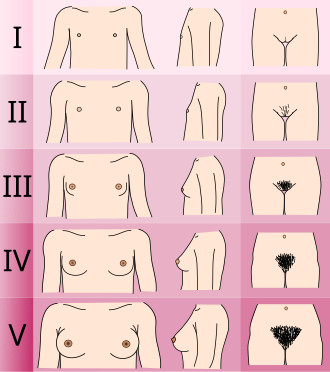
Girls usually have their biggest growth spurt around 11–12 years, then start menstruation (periods) at about age 12–13 on average. Breast development progresses through Tanner stages (see diagram below). The illustration shows the five Tanner stages of breast growth—from preadolescent flat chest to mature breast shape. Estrogen and progesterone (female hormones) cause breasts to grow and hips to widen, giving the body more of an hourglass shape. Pubic and underarm hair grow in coarse, curly patterns (initially light and sparse, then darker and denser). The ovaries begin releasing eggs monthly, leading to regular menstrual cycles (menarche usually 18–24 months after breast budding).
Skin changes are common: more active oil glands often cause pimples or acne on the face, back, and chest. Hair may become oilier or thicker, requiring more frequent washing. Many girls also notice changes in mood or feelings (more interest in friendships, mood swings); this is partly due to hormonal shifts and social pressures.
Figure: Tanner stages of breast development in girls (Stages 1–5).
Boys
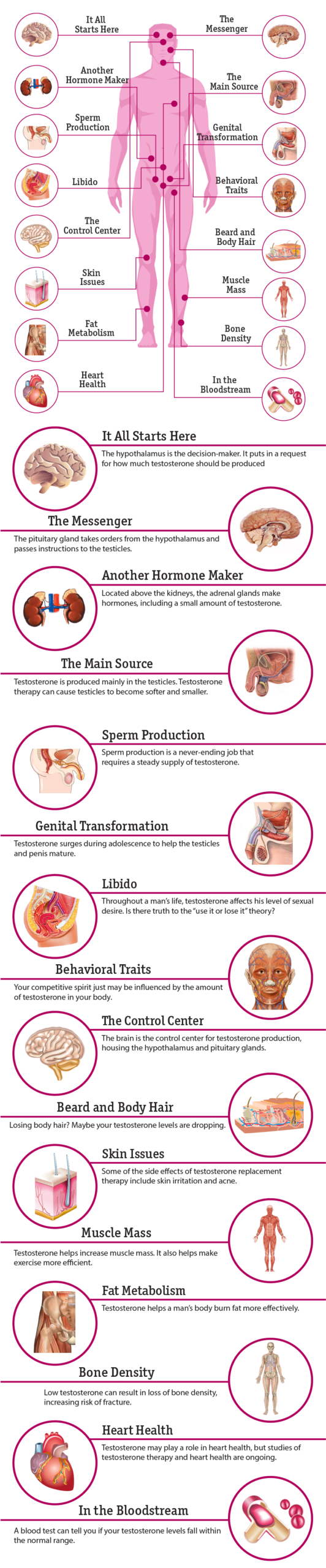
Boys’ adolescent changes start a bit later on average than girls. Testicles and penis grow substantially (Tanner stage 2–3) usually between ages 11–14. The diagram shows the five Tanner stages of penile/testicle development. In Stage 2 (around age 9–14), testes enlarge and scrotum skin thins and reddens. By Stage 3 and 4 (ages 12–16), the penis lengthens and widens, and pubic hair becomes thicker and spreads in a triangular pattern. Testosterone (male hormone) drives muscle growth (boys get stronger and more muscular), deepening of the voice (as the voice box enlarges), and increased body and facial hair.
Wet dreams (nocturnal emissions) and spontaneous erections are common as hormone levels rise. Boys also often experience transient breast swelling (gynecomastia) around 11–15 years, which usually resolves by late teens (this is normal). Like girls, teenage boys can get acne from oily skin. Boys may become more self-conscious about body shape (some early teens may be thin then become stocky). Mood swings and strong emotions are common in boys too; peer acceptance and identity become very important.
Figure: Tanner stages of male genital development (penis and scrotum).
Hormones and Puberty
Puberty is triggered by hormones—chemical messengers from the brain and glands. The brain’s hypothalamus releases GnRH (gonadotropin-releasing hormone) at puberty, which signals the pituitary gland to release two key hormones: LH (luteinizing hormone) and FSH (follicle-stimulating hormone). LH and FSH then stimulate the gonads (ovaries in girls, testes in boys) to make sex hormones.
- Testosterone: the main male hormone. It causes the penis and testes to enlarge and is responsible for height growth, muscle gain, deep voice, body/facial hair, and sex drive.
- Estrogen: the main female hormone. It causes breast growth, widening of hips, and helps regulate menstruation.
- Progesterone: works with estrogen to regulate the menstrual cycle and also contributes to breast changes.
- Growth Hormone (GH): made by the pituitary gland, GH is crucial for overall growth. It acts on bones and cartilage to increase height in childhood and adolescence. (After growth plates fuse at end of puberty, GH maintains muscle and organ health).
- Thyroid Hormones: produced by the thyroid gland, these support metabolism and brain development. Adequate thyroid hormones are needed for normal growth, though they change little during puberty.
- Adrenal Androgens: the adrenal glands also produce small amounts of male-type hormones in both sexes. These contribute to growth of underarm and pubic hair (called adrenarche) and body odor. Pubic hair can appear before full puberty because of these adrenal hormones.
All these hormones rise and fall in pulses during puberty. This hormonal storm explains why growing up can feel unpredictable – bodies change gradually and emotions can feel intense.
Variations & Facts: The age of puberty onset is very broad. On average girls start around 11–12 and boys 12, but normal can be a few years on either side. Some healthy girls begin as early as 8 (and some boys at 9). These are called precocious puberty (if very early) or delayed puberty (if very late). See a doctor if puberty seems extreme: for example, if a girl <8 has breasts or a boy <9 has testicles growing rapidly. Conversely, if a girl has no breast growth by 13 or a boy no testicle growth by 14, discuss with a pediatrician.
Tips (Adolescence):
- Nutrition: Teens need extra calories and nutrients to fuel growth. Emphasize fruits, vegetables, whole grains, lean proteins, and dairy (or alternatives) for calcium and vitamin D. Iron is important, especially for menstruating girls (leafy greens, beans, fortified cereals). Avoid fad diets – teens should not restrict calories too much.
- Sleep: Growth hormone is mostly released during sleep, so adequate rest is vital. Most teens need 8–10 hours nightly, even if they feel they “survive” on less. Encourage a fixed bedtime and limit evening screen time.
- Hygiene: Daily bathing or showering is important as sweat and oil production increases. Use mild soap, shampoo regularly, and wear deodorant. Girls will need feminine hygiene products (pads/tampons) – keep a supply available. Both sexes should wear clean clothes daily. Teach proper menstrual and genital care (e.g., change pads daily, clean with water).
- Physical Activity: Continue regular exercise to build strong bones and muscles. Even self-guided workouts (push-ups, squats) help muscle tone. Weight-bearing activities like running or jumping strengthen bones. Encourage participation in sports or active hobbies.
- Emotional Support: Puberty can cause mood swings, anxiety about appearance, or new relationships. Encourage open communication. Listen to teens’ feelings without judgment. Reassure them that all these changes are normal and everyone develops on their own schedule.
- When to Get Help: Schedule regular checkups. Contact a doctor if there are problems like very heavy or painful periods, severe acne, or emotional difficulties. Also see a doctor for delayed puberty (no signs by 13 for girls or 14 for boys) or early puberty (before 8 in girls, 9 in boys). Adolescent medicine specialists can help if growth or hormonal issues arise.
Common Myths and Facts
- Myth: Pubic hair always means puberty has started. Fact: Pubic (and underarm) hair can grow from rising adrenal hormones, even before full puberty. On its own, hair with no breast or testicle growth often just means adrenarche, not true puberty.
- Myth: Girls stop growing after their first period. Fact: Girls usually grow several more inches after menarche – about 3 inches (7 cm) on average, more if they matured early. Early-maturing girls often have a longer time before periods and end up as tall as peers.
- Myth: Puberty happens at the same age for everyone. Fact: There is a wide normal range. Many girls start at 9–14 and boys at 10–15. Some healthy children start a year or two earlier or later than average. Growth and development come at different paces, and late bloomers usually catch up.
- Myth: Teens should always get enough sleep or they’ll stop growing. Fact: While sleep is important (less sleep can affect growth hormone release), short-term sleep loss won’t halt normal growth. The bigger factors are overall health and genetics. Still, chronic sleep deprivation is unhealthy and should be avoided.
- Myth: Only “girls” or “boys” go through puberty. Fact: All young people experience body changes, but terminology can vary. Some children may identify as transgender or non-binary. For example, a transgender boy (female-to-male) may experience menstruation unless on hormones, and a transgender girl may go through some masculinization unless she takes estrogen. It’s important to use inclusive language and respect each person’s identity while discussing growth.
Child Growth & Development Stages
| Stage | Approximate Ages | Height & Weight | Motor Skills & Other Physical Changes |
|---|---|---|---|
| Infancy | 0–2 years | Very rapid growth – doubles birthweight by 4–6 mo, triples by 12 mo; height grows ~10–12 in in first year. | Rolls over, sits, crawls, then walks; 20 baby teeth by age 2. Soft baby skin, fine “lanugo” hair usually lost. |
| Early Childhood | 2–5 years | Grows ~3 in (7–8 cm) and 4–5 lb (2–2.5 kg) per year. Body becomes leaner: limbs lengthen, head size becomes more proportional. | Runs, jumps, climbs, throws; improved balance. Loses baby chubbiness; all 20 baby teeth are present; 20/20 vision around age 4. Plays with scissors, drawing shapes. |
| Middle Childhood | 6–9 years | Steady growth ~2 in (5–6 cm) and 6–7 lb (2.5–3 kg) per year. Most lose all baby (primary) teeth; gain permanent teeth. | Refined skills: bicycling, sports, writing neatly. Skin gets oilier (pimples may start). Boys and girls look similar, but begin to prepare for puberty. |
| Preadolescence | 9–12 years | Continued steady growth until puberty. Girls often get taller than boys. Some may start growing body hair and experience odor as glands mature. | First puberty signs: breast budding in girls, testicle enlargement in boys. Skin/hair can change (acne, body odor). Feelings of awkwardness may arise. |
| Adolescence | 13–18 years | Growth spurt: Total height gain of ~8–12 in (20–30 cm) during puberty (girls peak around 11–12 yrs, boys around 13–14 yrs). Most reach adult height by ~16–17. Weight and muscle increase (boys) and fat redistribution (girls). | Girls: Continued breast growth, start menstruation (usually 12–13 yrs), hip widening. Boys: Penis/testes grow, voice deepens (cracking first), facial hair appears. Both sexes develop underarm/pubic hair. Skin often pimples. Sexual feelings (attraction) begin. |
Here are 10 Frequently Asked Questions (FAQs) extracted directly from the text provided. These are structured to be clear, informative, and easily scannable for readers.
Frequently Asked Questions: Child & Adolescent Growth
1. How fast do babies grow during their first year?
Babies grow incredibly fast in infancy. By 4 to 6 months, most babies double their birth weight, and by 12 months, they usually triple it. They also grow about 10 to 12 inches in length before their first birthday.
2. Why do toddlers seem to lose their “baby fat” as they get older?
During early childhood (ages 2–5), growth slows down compared to infancy, but children grow taller and their limbs lengthen. As they become much more active—running, jumping, and climbing—they naturally lose their baby “pudginess” and develop a leaner, more athletic look.
3. How much sleep do children need to support healthy growth?
Sleep needs change with age. Infants need 11–17 hours, preschoolers (3–5 years) need 10–13 hours, school-aged children (6–11 years) need 9–11 hours, and teens (13–18 years) still require 8–10 hours a night. Growth hormones are primarily released during sleep, making rest vital for physical development.
4. What are the very first signs of puberty in boys and girls?
The first clear signs of puberty usually appear during preadolescence (9–12 years). For girls, it often begins with small breast “buds” around age 9 or 10. For boys, the first sign is usually the enlargement of the testicles, which typically occurs around age 10 or 11.
5. Do girls stop growing after they get their first period?
No, this is a common myth. While the biggest growth spurt happens before menstruation, girls typically continue to grow an average of 3 to 7 inches after their first period (menarche) begins.
6. When do boys and girls experience their biggest growth spurts?
Girls generally experience their peak growth spurt earlier, around 11 to 12 years of age. Boys usually start their major growth spurt a bit later, peaking around 13 to 14 years of age. By age 16 or 17, most teens have reached their adult height.
7. Is it normal for puberty to start at different ages for different kids?
Yes, there is a very wide “normal” range for puberty. Girls can start anywhere between ages 8 and 13, and boys between ages 9 and 14. Genetics play a huge role in this timeline, and late bloomers usually catch up to their peers.
8. When should a parent consult a doctor about a child’s puberty timeline?
You should speak with a pediatrician if puberty starts very early (before age 8 for girls or 9 for boys) or if it is significantly delayed (no breast development in girls by age 13, or no testicle growth in boys by age 14).
9. Does the appearance of pubic hair always mean full puberty has started?
Not necessarily. Pubic or underarm hair can sometimes grow due to rising adrenal hormones (a process called adrenarche) before full puberty actually begins. If hair appears without other signs like breast or testicle growth, it is often just this normal adrenal change.
10. How should hygiene routines change as a child enters preadolescence and the teen years?
As hormones increase during puberty, oil and sweat glands become much more active. Teens should start showering daily with soap, using deodorant or antiperspirant, washing their hair more frequently, and establishing routines for menstrual hygiene and acne management.