world’s top climbing destinations
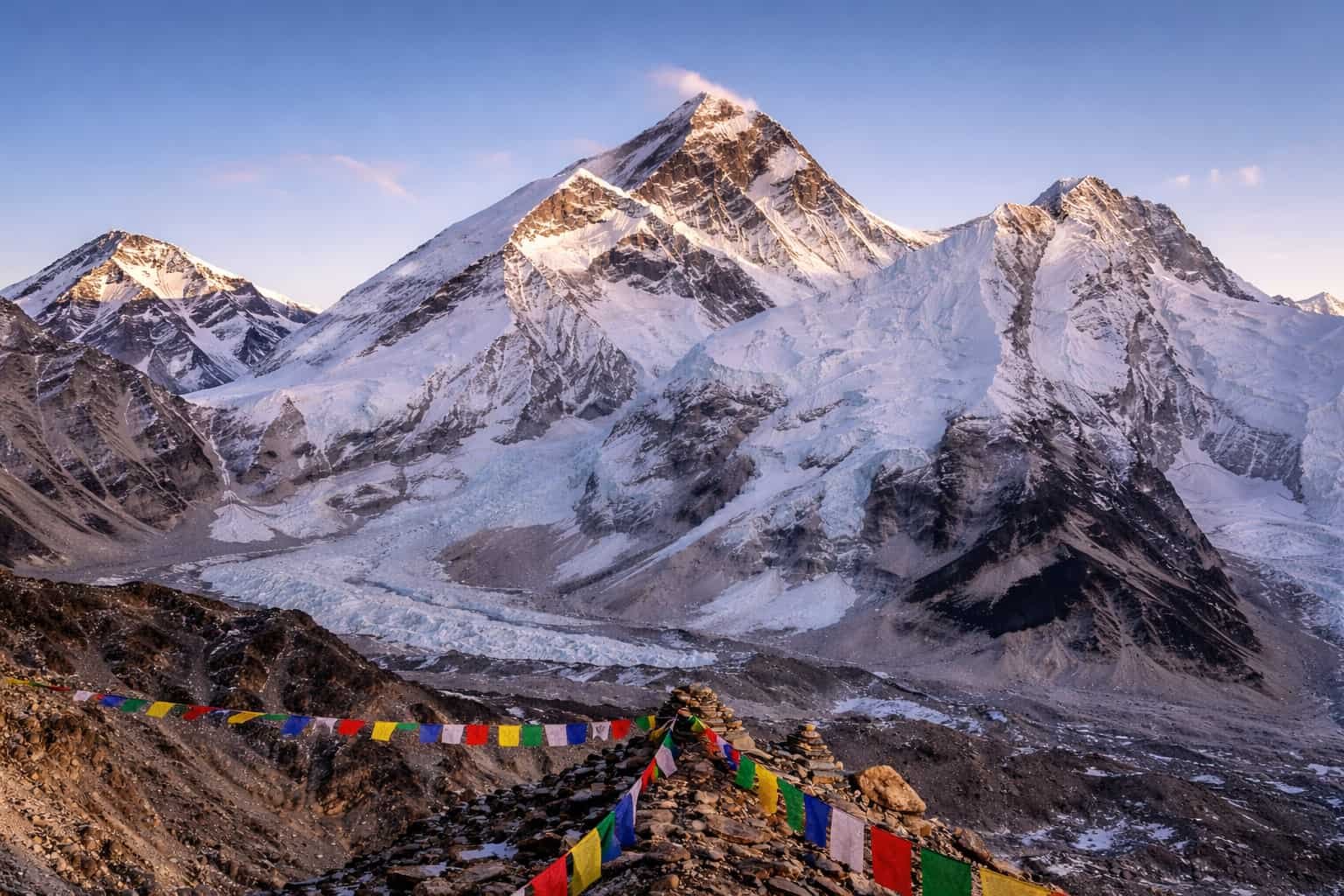
Below are 30 world-famous climbs. Each entry shows Country – Peak/Route – Season – Difficulty – Access – Famous for…. Cost ranges (USD) assume one climber in a small group, economy flights, and entry-level camping (low), mid-range guided (medium), or high-end expedition (high). See notes for details.
Nepal – Mount Everest (8,848 m) –
-
What is it? It is the “Big Boss” of mountains—the absolute highest peak on Earth. Known locally as Sagarmatha in Nepal, it sits right on the border of Nepal and Tibet.
-
Height: 8,848.86 meters (29,032 feet).
-
The Experience: There are two entirely different ways to experience Everest:
-
The Base Camp Trek: A beautiful, multi-day hike through the high Himalayas just to reach the bottom of the mountain.
-
The Summit Climb: A dangerous, extreme 2-month expedition. Climbers must cross the terrifying, shifting ice of the Khumbu Icefall and survive the “Death Zone” (above 8,000 meters), where there is so little oxygen that the human body begins to slowly shut down.
-
-
Difficulty: The Base Camp trek requires excellent stamina but no technical climbing skills. Reaching the summit, however, is one of the most dangerous and physically exhausting challenges a human can face.
2. Best Time to Visit
-
For Climbing to the Top: The only safe window is during Spring (April to May). This is when the weather is slightly warmer and the jet stream winds calm down just before the summer monsoon rains hit.
-
For Trekking to Base Camp: Spring (March to May) and Autumn (September to November) offer the best weather, clear skies, and safe walking conditions.
3. How to Reach (From Anywhere in the World)
-
Step 1: The International Flight: Fly into Kathmandu, Nepal (Tribhuvan International Airport – KTM).
-
Step 2: The “Scary” Flight: From Kathmandu, you take a thrilling 30-minute domestic flight in a tiny plane to Lukla. Lukla is famous for having one of the most extreme and dangerous airport runways in the world, carved right into the side of a cliff.
-
Step 3: The Walk: There are no roads to Everest. From Lukla, you must walk for about 8 to 12 days through deep valleys, crossing suspension bridges over rivers, to finally reach Everest Base Camp.
4. Where to Stay (Hotels & Tents)
-
In Kathmandu (Before/After): You can find everything from cheap backpacker hostels to luxurious 5-star hotels depending on your budget.
-
During the Trek: You will sleep in Teahouses. These are simple, family-run stone guesthouses located in the villages along the trail. You get a basic bed, a shared bathroom, a warm fire in the communal dining room, and hearty local food like Dal Bhat (lentil soup and rice).
-
At Base Camp & Above: Tents! If you are climbing to the top, you live in a freezing tent pitched directly on top of a moving glacier for weeks.
5. Estimated Costs (Per Person) This is where the difference between walking to the bottom and climbing to the top becomes huge!
For Trekking to Base Camp (approx. 14-16 Days):
-
Flights to Kathmandu: $500 – $1,500 USD (Depending on where you fly from globally).
-
Lukla Flight & Park Permits: ~$450 USD.
-
Teahouses & Food on the Trail: ~$30 – $50 USD per day.
-
Total Trek Budget: Roughly $1,500 – $3,000 USD. This usually includes hiring a local guide and a porter to help carry your heavy bags, which is highly recommended.
For Climbing to the Summit (approx. 2 Months):
-
The Climbing Permit: The Nepal Government raised the basic permit fee to $15,000 USD starting in 2026 just for the right to climb.
Total Expedition Cost: Once you add the mandatory fees, highly skilled Sherpa guides, survival gear, base camp food, and oxygen bottles, a standard summit expedition costs between $50,000 and $80,000+ USD per person. Luxury expeditions can easily pass $100,000 USD.
Pakistan – K2 (8,611 m)
-
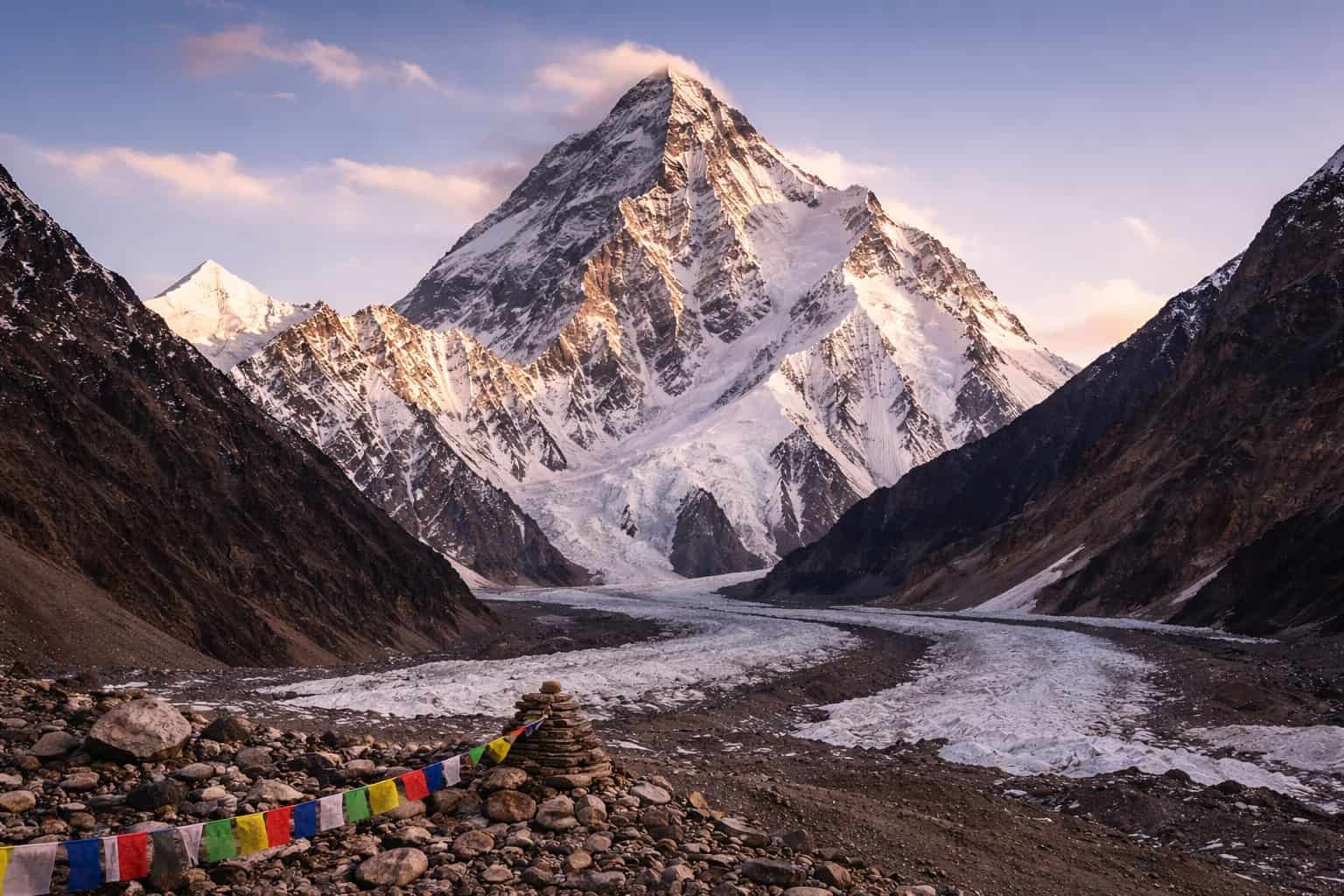
What is it? Known as the “Savage Mountain,” K2 is the second-highest peak in the world and sits in the Karakoram Range. It is famous for being far more difficult and dangerous to climb than Mount Everest.
-
Height: 8,611 meters (28,251 feet).
-
The Experience: Unlike Everest, K2 is a pyramid of pure rock and ice with almost no flat ground. It is incredibly remote—you have to trek for days just to see it. There is no “easy” route. It’s a place for the world’s most elite climbers and very serious high-altitude trekkers.
-
Difficulty: Extremely high. It has a much higher fatality rate than Everest. The weather is unpredictable, and the “Bottleneck” (a narrow gully under a giant wall of ice near the top) is one of the scariest places in mountaineering.
2. Best Time to Visit
-
The Window: Because the Karakoram weather is so harsh, the only real time to visit or climb is in the Summer (July and August).
-
Winter: Climbing K2 in winter was considered impossible for decades and was only achieved for the first time in 2021. For 99% of people, winter is a complete no-go.
3. How to Reach (From Anywhere in the World)
-
Step 1: The International Flight: Fly into Islamabad, the capital of Pakistan (Islamabad International Airport – ISB).
-
Step 2: To the North: From Islamabad, you take a spectacular (but often delayed) 1-hour flight to Skardu, or a long, bumpy 20-24 hour drive along the famous Karakoram Highway.
-
Step 3: The Jeep Ride: From Skardu, you take a rugged 4×4 jeep for about 6-8 hours to a small village called Askole. This is where the road ends and the wilderness begins.
-
Step 4: The Long Trek: You must trek for about 7 to 9 days across the massive Baltoro Glacier to reach K2 Base Camp.
4. Where to Stay (Hotels & Tents)
-
In Cities (Islamabad/Skardu): You can stay in very comfortable 3 to 5-star hotels. Skardu has beautiful resorts overlooking the Indus River.
-
On the Trek: Unlike Everest, there are no teahouses or lodges on the way to K2. This is a “full camping” expedition. You will sleep in tents every single night. You’ll need a trekking company to provide the tents, portable toilets, and a kitchen crew to cook your meals.
5. Estimated Costs (Per Person)
For Trekking to K2 Base Camp (approx. 20-22 Days):
-
International Flights: $700 – $1,500 USD.
-
All-Inclusive Trekking Package: ~$3,000 – $5,000 USD. (This covers your permits, jeeps, food, tents, and porters who carry everything).
-
Visa & Insurance: ~$200 – $400 USD.
-
Total Trek Budget: Roughly $4,000 – $7,000 USD.
For Climbing to the Summit (approx. 2 Months):
-
Climbing Permits: The permit fee is much lower than Everest (usually around $2,000 – $5,000 depending on the season and group size).
-
Total Expedition Cost: Even though permits are cheaper, the logistics are harder. A professional expedition with high-end support, oxygen, and western guides costs between $30,000 and $60,000 USD.
Argentina – Aconcagua (6,961 m)
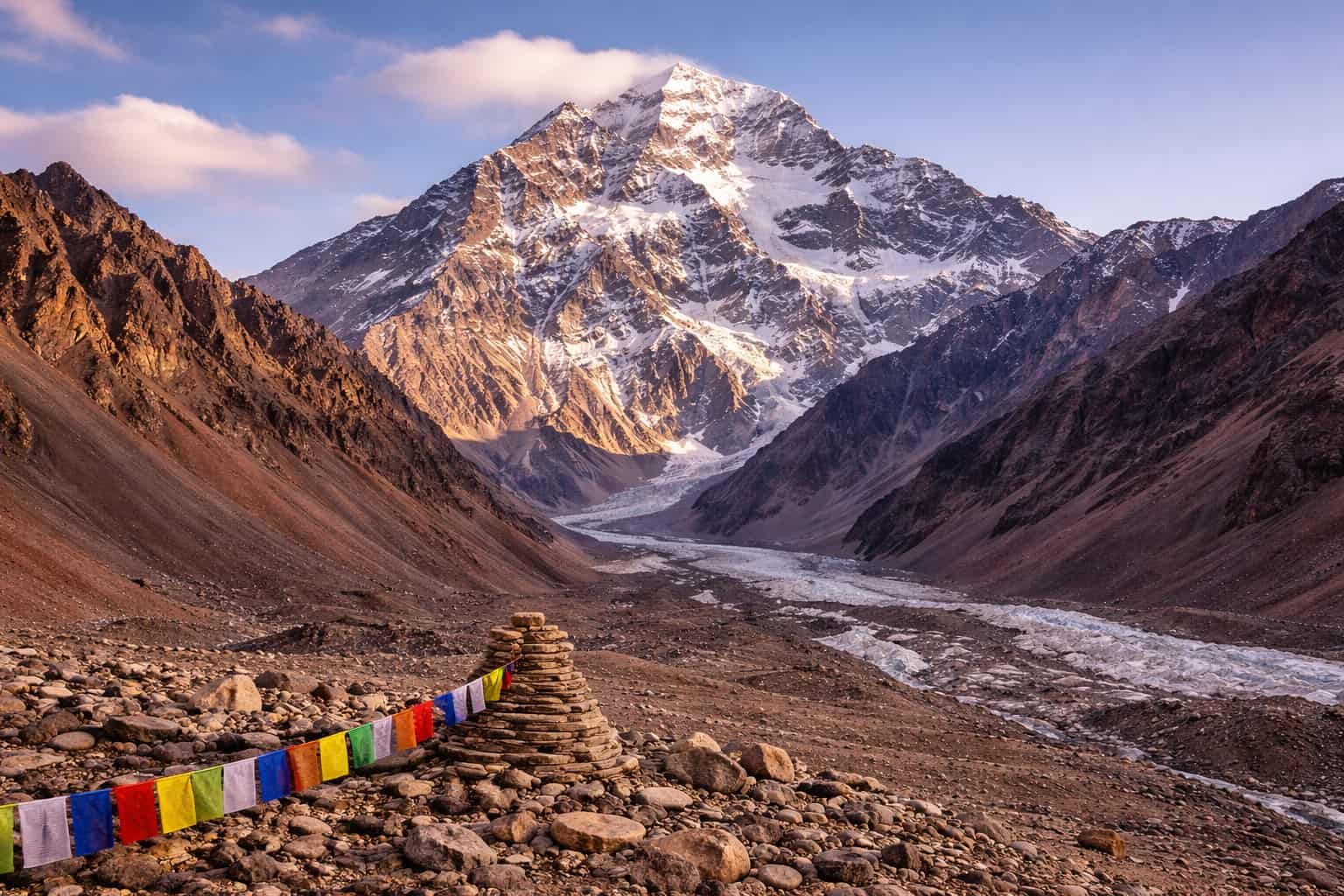
Aconcagua (6,961m), Argentina 🏔️ (The Complete Guide)
1. Mountain Details & Vibe
-
What is it? Known as the “Stone Sentinel,” Aconcagua is the absolute highest mountain in the Americas (and the highest peak in the world outside of the Himalayas). It is located in the stunning Andes mountain range in Argentina.
-
Height: 6,961 meters (22,838 feet).
-
The Experience: Aconcagua is often called the highest “trekking peak” in the world. This means that if you take the Normal Route, you do not need ropes, ice axes, or technical rock-climbing skills to reach the top. You are essentially hiking on a steep, dusty, and snowy trail.
-
Difficulty: Do not let the “trekking peak” label fool you. The extreme altitude, dangerously unpredictable storms (known as the viento blanco or white wind), and temperatures that drop to -30°C (-22°F) make this a brutal endurance test. The success rate is only about 30-40% because many climbers underestimate the physical toll.
2. Best Time to Visit
-
The Window: Because it is in the Southern Hemisphere, the climbing season runs during their summer, from late November to late February.
-
The Peak: December and January offer the warmest weather and best chances for a successful summit, though this is also when the mountain is the most crowded and permits are the most expensive.
3. How to Reach (From Anywhere in the World)
-
Step 1: The International Flight: Fly into Buenos Aires, Argentina (EZE) or Santiago, Chile (SCL).
-
Step 2: To the Wine Country: Take a short domestic flight from either of those cities directly to Mendoza, Argentina (MDZ). Mendoza is a beautiful city famous for its Malbec wine and serves as the gateway to the Andes.
-
Step 3: The Drive: From Mendoza, you take a 3-to-4-hour bus or private shuttle ride up into the mountains to a small ski-resort town called Penitentes (or nearby Los Puquios).
-
Step 4: The Trek: From the trailhead, it takes about 3 days of hiking through beautiful, arid valleys to reach the main Base Camp, called Plaza de Mulas (for the Normal Route) or Plaza Argentina (for the 360/Polish Traverse route).
4. Where to Stay (Hotels & Tents)
-
In Mendoza (Before/After): You can enjoy anything from budget hostels to luxury 5-star hotels and vineyard estates. Enjoying a giant Argentine steak (bife de chorizo) and a glass of red wine here is a tradition before and after the climb.
-
In Penitentes: Very basic, rustic lodges and hostels just to get a night of rest before hitting the trail.
-
On the Mountain: Tents only! There are no teahouses or permanent cabins on Aconcagua. You will sleep in tents at Base Camp and at all the higher altitude camps (Camp 1, Camp 2, etc.). Base Camp is quite vibrant, though—outfitters have large dining tents, and you can even pay for a hot shower or Wi-Fi!
5. Estimated Costs (Per Person) Aconcagua is a serious expedition and requires a hefty budget, especially due to rising park fees.
Logistics & Permits:
-
Flights to Mendoza: $800 – $1,500 USD (Depending on global starting point).
-
Aconcagua Climbing Permit: The Argentine government updates these yearly. For international climbers in the 2025/2026 high season, permits range from $800 to $1,200 USD just to step foot on the mountain. (Latin American residents get a slight discount).
-
Mules (If unguided): You will need mules to carry your heavy gear to Base Camp. They cost about $300 – $500+ per load.
Guided Expeditions (Highly Recommended for 20-Day Trips):
-
The Package: Most people hire a guiding company. This covers guides, tents, all food on the mountain, mules to carry gear to Base Camp, and emergency support.
-
Cost: A standard fully guided climb costs between $4,000 and $7,500 USD.
-
Gear: Because Aconcagua requires extreme-cold weather gear (like double-plastic mountaineering boots and -30°F sleeping bags), you will likely need to spend or rent an additional $1,000 – $2,000 USD on equipment if you don’t already own it.
-
Total Estimated Budget: Between $7,000 and $11,000 USD for the entire adventure from start to finish.
USA – Denali (McKinley) (6,190 m)
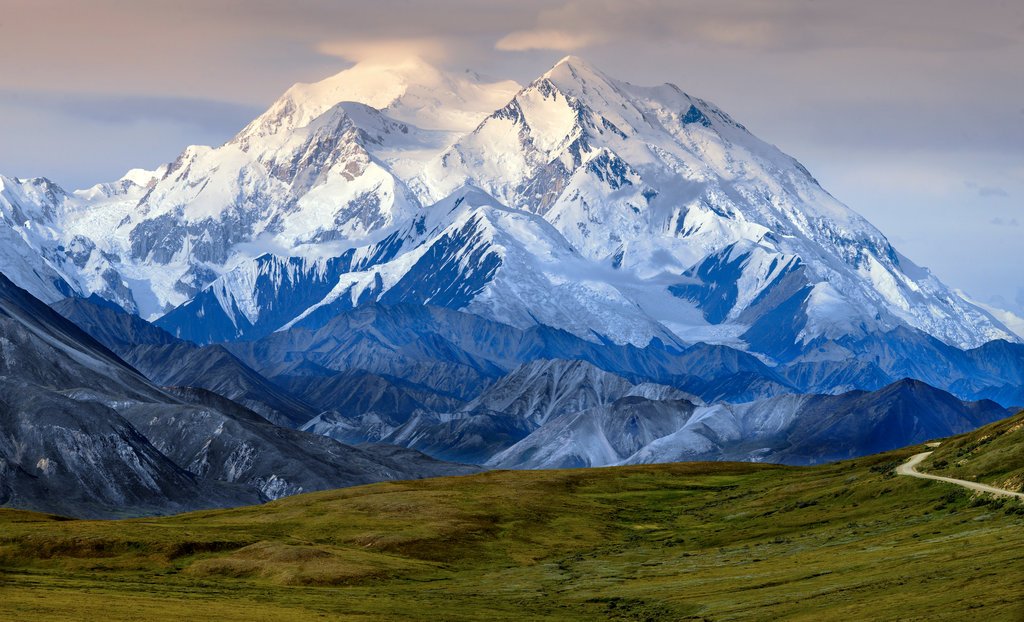
Denali (6,190m), USA 🏔️ (The Complete Guide)
1. Mountain Details & Vibe
-
What is it? Formerly known as Mount McKinley, Denali is the absolute highest peak in North America and sits deep in the wild, frozen heart of Alaska. Native Alaskans gave it the name Denali, which translates to “The High One.”
-
Height: 6,190 meters (20,310 feet).
-
The Experience: Denali is as close to a polar expedition as you can get without actually going to Antarctica. Because it is located so far north, the atmosphere is thinner, making the altitude feel much higher than it is. The most unique part? There are no porters or mules here. You must carry a heavy backpack and drag a plastic sled (a pulk) full of your gear and food across massive glaciers.
-
Difficulty: Extremely tough. While the standard West Buttress route isn’t highly technical, it is a brutal test of survival. You face massive, hidden cracks in the ice (crevasses) and absolutely vicious arctic storms where temperatures can plummet to -40°C (-40°F).
2. Best Time to Visit
-
The Window: The climbing season is incredibly short, strictly running from early May to early July.
-
The Sweet Spot: Mid-June is usually the sweet spot for weather. Because it is so close to the Arctic Circle, you will experience almost 24 hours of daylight during this time!
3. How to Reach (From Anywhere in the World)
-
Step 1: The International Flight: Fly into Anchorage, Alaska (ANC).
-
Step 2: The Drive to Town: From Anchorage, you take a 2-to-3-hour shuttle bus or drive a rental car north to a quirky, historic little climbing town called Talkeetna.
-
Step 3: The Glacier Flight: This is the best part. From Talkeetna, you board a small, ski-equipped bush plane. You fly through incredibly dramatic, jagged mountain peaks for about 45 minutes before the pilot lands the plane directly onto the snow of the Kahiltna Glacier. When the plane flies away, you are completely alone in the wild.
4. Where to Stay (Hotels & Tents)
-
In Anchorage/Talkeetna (Before/After): Anchorage has standard city hotels. Talkeetna is famous for rustic, cozy log-cabin lodges and local pubs where climbers gather to drink beer and eat giant burgers before and after their expeditions.
-
On the Mountain: Tents only! You will be camping on snow and ice the entire time. Because the winds are so fierce, a huge part of your daily routine will be using an ice axe and snow saw to build giant walls of snow around your tent to protect it from being blown away.
5. Estimated Costs (Per Person) Denali requires specialized arctic gear and relies heavily on expensive small airplanes.
Logistics & Permits:
-
Flights to Anchorage: $500 – $1,000+ USD.
-
Denali Climbing Permit: ~$430 USD (plus a $15 National Park entrance fee). You must register and pay this at least 60 days before your climb.
-
The Glacier Flight (Bush Plane): ~$650 – $750 USD round trip per person.
Guided Expeditions (Highly Recommended for a 21-Day Trip):
-
The Package: A professional guiding company will provide the group tents, cooking gear, sleds, and high-level safety expertise (which is crucial for navigating crevasses).
-
Cost: A fully guided climb costs between $9,500 and $12,000 USD.
-
Gear: You will need top-tier expedition gear (a massive down suit, specialized boots, etc.). If you have to buy this new, expect to spend an additional $2,000 – $4,000 USD.
-
Total Estimated Budget: Roughly $12,000 to $17,000 USD for the complete experience.
Tanzania – Mount Kilimanjaro (5,895 m)
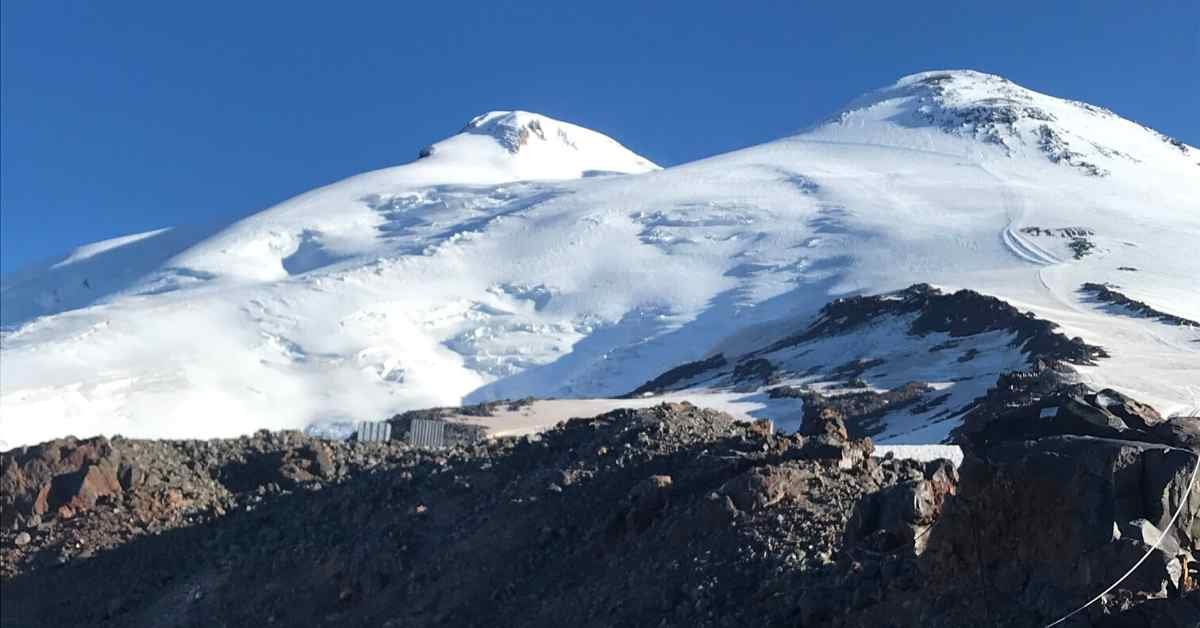
Mount Kilimanjaro (5,895m), Tanzania 🏔️ (The Complete Guide)
1. Mountain Details & Vibe
-
What is it? Kilimanjaro is the iconic “Roof of Africa” and the tallest free-standing mountain on the planet (meaning it stands alone, rather than as part of a connected mountain range).
-
Height: 5,895 meters (19,341 feet).
-
The Experience: The trek is like walking from the equator to the North Pole in a matter of days. You start in dense, humid rainforests filled with monkeys, hike up through alien-looking moorlands, and eventually cross a barren alpine desert to reach the icy, glaciated summit.
-
Difficulty: It is famous for being a “walk-up” mountain with no technical rock climbing required. However, the extreme altitude is the real challenge. The golden rule of the mountain is “Pole Pole” (Swahili for “slowly, slowly”) to give your body time to adjust to the thin air.
2. Best Time to Visit
-
The Prime Seasons: The best and safest times to climb are during the dry seasons. January to March is colder but offers crystal-clear views. June to October is slightly warmer but can be much busier with other climbers.
-
When to Avoid: The rainy seasons (April, May, and November) turn the trails into deep, slippery mud and obscure the beautiful views.
3. How to Reach (From Anywhere in the World)
-
Step 1: The International Flight: Book a flight to Kilimanjaro International Airport (JRO) in Tanzania. Major carriers like KLM, Qatar Airways, and Ethiopian Airlines have regular routes here.
-
Step 2: The Base Towns: From the airport, take a taxi or shuttle to either Moshi (about 45 minutes away) or Arusha (about 90 minutes away). Moshi is the most popular starting point.
-
Step 3: To the Trailhead: On the first morning of your trek, your guide company will drive you from your hotel directly to one of the national park gates (such as the Machame or Marangu gates) to begin the hike.
4. Where to Stay (Hotels & Mountain Camps)
-
Before/After the Trek: Moshi and Arusha have plenty of comfortable, affordable hotels and lodges where you can rest, grab a hot shower, and safely store your extra luggage.
-
On the Marangu Route: This is the only trail that features permanent, wooden A-frame huts with basic bunk beds and solar lights.
-
On All Other Routes (Machame, Lemosho, etc.): You will sleep in tents. The experience is surprisingly comfortable—your team of porters will hike ahead of you, set up your sleeping tent, and erect a large “mess tent” where your group will eat freshly cooked meals at a table.
5. Estimated Costs (Per Person) Climbing Kilimanjaro independently is illegal; you must hire a licensed local guide and crew.
-
Flights to Tanzania: $800 – $1,600 USD (Depending on your starting location).
-
National Park Fees: Around $800 – $1,000 USD (This massive fee goes directly to the government for conservation and rescue services, and is usually bundled into your trek package).
-
The Trekking Package (6-8 Days): A reputable, safe, mid-range outfitter will charge between $2,200 and $3,500 USD. This includes your guides, cooks, porters, tents, food, and transport to the gate.
-
Mandatory Tipping: Tipping the local crew that carries your gear and cooks your food is a deeply ingrained tradition. Budget an extra $250 – $400 USD to distribute among the team at the end of the climb.
-
Total Estimated Budget: Roughly $4,000 – $6,000 USD for the entire adventure.
Antarctica – Mount Vinson (4,892 m)
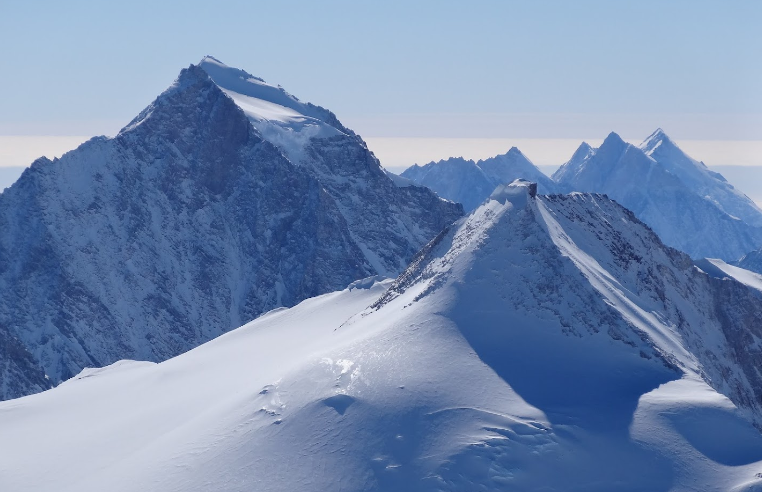
Mount Vinson (4,892m), Antarctica 🏔️ (The Complete Guide)
1. Mountain Details & Vibe
-
What is it? Mount Vinson is the absolute highest peak on the frozen continent of Antarctica. Tucked away in the Sentinel Range, it is the most remote and isolated of the famous “Seven Summits.”
-
Height: 4,892 meters (16,050 feet).
-
The Experience: Climbing Vinson feels like stepping off Earth and onto an ice planet. You are surrounded by an endless ocean of white, totally untouched by human civilization, under a sun that never sets (24-hour daylight). The climb isn’t technically sheer rock climbing, but you have to hike up massive glaciers while tied to your teammates, dragging a plastic sled (a pulk) full of all your survival gear behind you.
-
Difficulty: The altitude is tough, but the real enemy is the brutal, unforgiving cold. Temperatures routinely hover around -40°C (-40°F), and sudden polar windstorms can pin you down in your tent for days at a time. It requires immense mental resilience.
2. Best Time to Visit
-
The Window: There is only a tiny sliver of time when humans can survive here: the peak of the Antarctic Summer, strictly from December to January.
-
The Weather: During these two months, the weather is stable enough for specialized airplanes to land on the ice. Even in “summer,” it remains brutally freezing.
3. How to Reach (From Anywhere in the World)
-
Step 1: The International Flight: You first need to fly to the very bottom of South America. Book a flight to Punta Arenas, Chile.
-
Step 2: The Ice Flight: In Punta Arenas, you wait for a clear weather window. Once given the green light, you board a massive, specialized Ilyushin IL-76 military-style cargo plane. After a 4.5-hour flight over the treacherous Southern Ocean, the plane touches down directly on a natural runway made of solid blue ice at Union Glacier Camp in Antarctica.
-
Step 3: The Ski Plane: From Union Glacier, you climb into a much smaller Twin Otter bush plane fitted with skis. This plane flies you about an hour deeper into the mountains and drops you off right onto the snow at Vinson Base Camp.
4. Where to Stay (Hotels & Tents)
-
In Chile (Before/After): You’ll stay in warm, standard hotels in Punta Arenas, enjoying proper beds and great Chilean food before venturing into the deep freeze.
-
At Union Glacier: This is a surprisingly high-tech summer base for scientists and explorers. You sleep in heavy-duty, double-walled tents that actually get quite warm under the 24-hour sun. The camp even features a heated dining tent with fresh meals and satellite internet.
-
On the Mountain: Once you start the actual climb from Base Camp, it is strict survival camping. You sleep in specialized 4-season extreme weather tents on top of the ice. There are strict “leave no trace” rules—you cannot leave a single wrapper, and you must carry all of your human waste back down the mountain to keep Antarctica completely pristine.
5. Estimated Costs (Per Person) Because you are chartering cargo planes to the bottom of the world, Vinson is arguably the most expensive standard climb on Earth.
-
Flights to Chile: $1,000 – $2,500 USD (Depending on your home country).
-
The Expedition Package: You must book with a licensed polar outfitter. A fully guided expedition (which includes the flights from Chile to the ice, the ski planes, elite polar guides, group gear, and food) costs between $54,000 and $58,000 USD.
-
Extreme Polar Gear: If you do not own expedition-grade equipment (like an insulated down suit, double-plastic polar boots, and a -40°F sleeping bag), expect to spend an additional $3,000 – $5,000 USD.
-
Total Estimated Budget: Roughly $60,000 to $65,000+ USD for an incredible 15 to 20-day polar adventure.
France/Italy – Mont Blanc (4,810 m)
-
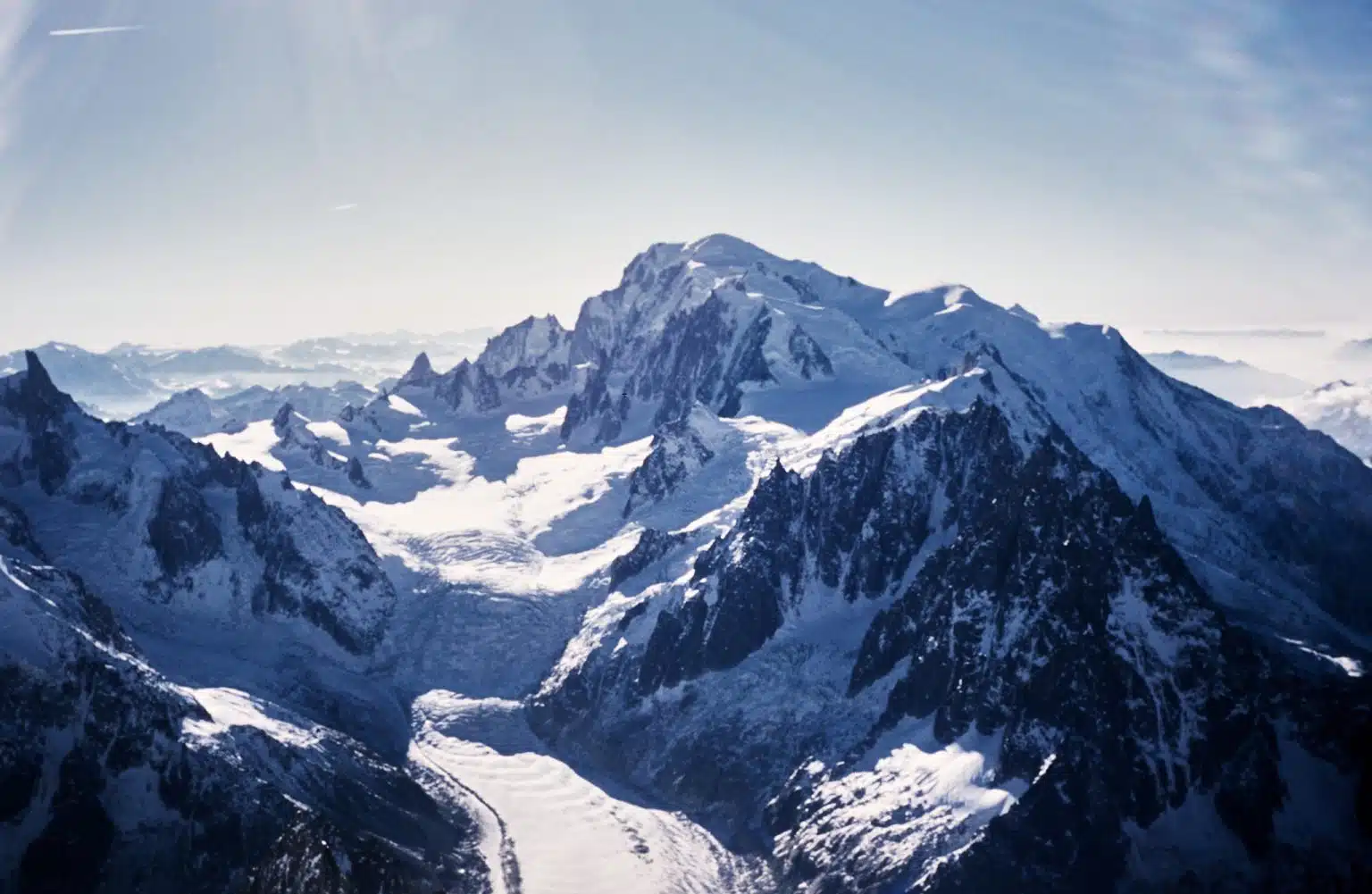
What is it? The “White Mountain” is the highest peak in the Alps and the roof of Western Europe. It sits right on the border between France and Italy and is famously known as the birthplace of modern mountaineering.
-
Height: 4,810 meters (15,780 feet).
-
The Experience: Mont Blanc is absolutely stunning, surrounded by jagged granite peaks, deep valleys, and massive glaciers. Climbing it is a classic alpine adventure.
-
Difficulty: Do not let its popularity fool you! Unlike Kilimanjaro, Mont Blanc is not a simple trekking peak. It is a serious mountaineering challenge that requires you to wear crampons (spikes on your boots), carry an ice axe, and be roped to a guide to safely cross glaciers with hidden crevasses and scramble up steep, exposed rocky ridges (like the famous Grand Couloir).
2. Best Time to Visit
-
The Window: The climbing season is strictly during the European summer, from mid-June to September.
-
The Sweet Spot: July and August have the best weather and the best conditions on the snow, but this is also when the mountain is incredibly crowded, and securing a spot in the mountain huts becomes a fierce competition.
3. How to Reach (From Anywhere in the World)
-
Step 1: The International Flight: The easiest and fastest way is to fly into Geneva, Switzerland (GVA).
-
Step 2: The Alpine Transfer: From the Geneva airport, you hop on an airport transfer van or a bus. It is a beautifully scenic, direct 1 to 1.5-hour drive across the border to the world-famous alpine town of Chamonix, France (the main hub for the climb).
-
Step 3: The Cable Car: From Chamonix, you don’t start walking from the valley floor. You take a combination of cable cars and a historic mountain train (the Tramway du Mont-Blanc) to reach the trailhead at around 2,372 meters (7,782 feet) before you start the actual physical climb.
4. Where to Stay (Hotels & Refuges)
-
In Chamonix (Before/After): Chamonix is a vibrant, magical ski town filled with French bakeries, gear shops, and bars. You can stay in anything from cheap backpacker hostels to luxurious alpine chalets with hot tubs and views of the glaciers.
-
On the Mountain: There is no tent camping allowed on the main routes to protect the environment. You must sleep in a mountain hut (called a Refuge in French).
-
The Huts: The most famous are the Refuge Tête Rousse and the spectacular Refuge du Goûter (which sits precariously on the edge of a sheer cliff at 3,835 meters). They are warm, serve hearty French meals, and have dorm-style beds. Important: You absolutely must have a confirmed reservation months in advance, or the mountain police will turn you around.
5. Estimated Costs (Per Person) Compared to remote Himalayan peaks, Mont Blanc is much more accessible and affordable, but hiring a guide is highly recommended for safety.
-
Flights to Geneva: $600 – $1,200 USD (Depending on your starting location).
-
Airport Transfer to Chamonix: ~$30 – $50 USD each way.
-
Pre/Post Hotel in Chamonix: $80 – $250+ USD per night.
-
The Guided Package (Usually 5-6 Days): Because you need proper acclimatization and technical skills, most people book a package that includes a few days of training on lower glaciers before tackling the summit. A guided package (which includes the guide, train/cable car tickets, hut reservations, and meals on the mountain) costs between $1,500 and $3,000 USD.
-
Gear Rental: If you don’t own mountaineering boots, crampons, a harness, and an ice axe, you can easily rent them all in Chamonix for about $150 – $250 USD for the week.
-
Total Estimated Budget: Roughly $3,000 to $5,000 USD for a fantastic week-long vacation in the French Alps.
Pakistan – Nanga Parbat (8,126 m)
-
-
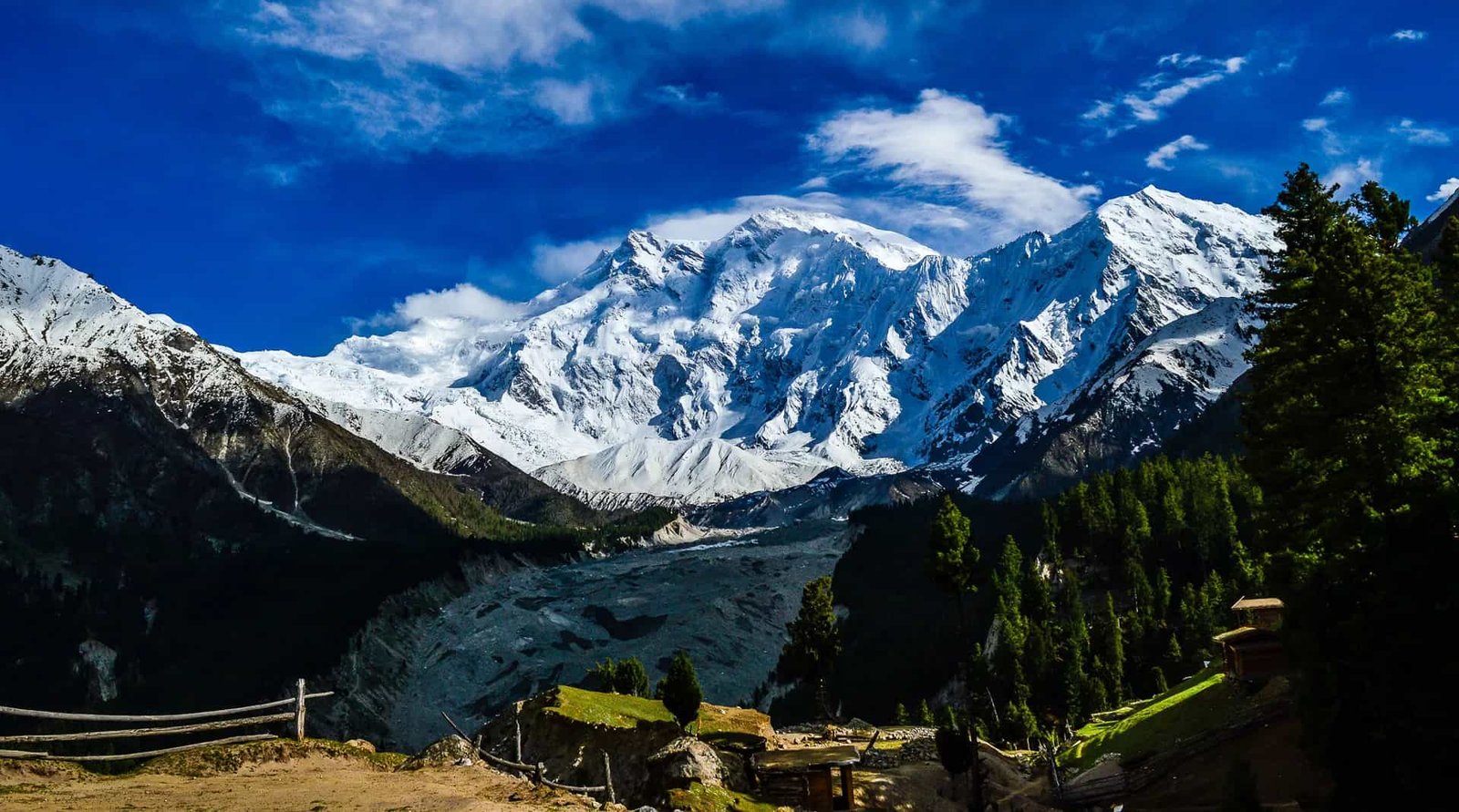
What is it? Nanga Parbat is the 9th highest mountain in the world and marks the dramatic western edge of the massive Himalayan range. It is famous for its sheer, colossal drop-offs, including the Rupal Face, which is the highest vertical mountain wall on Earth (rising 4,600 meters straight up).
-
Height: 8,126 meters (26,660 feet).
-
The Experience: Nanga Parbat has an intimidating nickname: the “Killer Mountain.” It earned this because it is notoriously steep, avalanche-prone, and incredibly difficult to climb. However, there is a beautiful twist—the trek to its base is one of the safest, most accessible, and most stunning hikes in the world, leading you to a place literally called “Fairy Meadows.”
-
Difficulty: Climbing to the summit is strictly for the world’s most elite and daring mountaineers. But trekking to the Fairy Meadows and on to Base Camp is a moderate, rewarding hike that anyone with basic physical fitness can enjoy.
2. Best Time to Visit
-
The Window: Whether you are trekking to the meadows or attempting a climb, the best time to visit is during the summer months, from June to September.
-
The Sweet Spot: July and August are perfect. The weather is warm, the alpine pine forests are lush and green, and the skies are clear enough to give you a towering view of the snow-capped peak.
3. How to Reach (From Anywhere in the World)
-
Step 1: The International Flight: Fly into the capital city of Islamabad, Pakistan (ISB).
-
Step 2: The Journey North: From Islamabad, you can either take a spectacularly scenic 1-hour domestic flight to Gilgit, or you can drive for 12 to 14 hours up the famous, winding Karakoram Highway to a spot called Raikot Bridge.
-
Step 3: The “Scary” Jeep Ride: This is an adventure in itself. At Raikot Bridge, you must hire a local 4×4 jeep. The driver will take you on a legendary 1.5-hour ride up a narrow, terrifying, unpaved cliffside road to a small drop-off village called Tato.
-
Step 4: The Walk to Paradise: From Tato, there are no more roads. You hike for about 2 to 3 hours through a dense, beautiful pine forest until the trees suddenly part, revealing the Fairy Meadows—a lush green plateau sitting right at the foot of the colossal, icy mountain.
4. Where to Stay (Log Cabins & Tents)
-
In Islamabad/Gilgit (Before/After): You will find comfortable, modern hotels in the cities.
-
At Fairy Meadows: Unlike the remote K2 trek, Fairy Meadows has wonderful tourist infrastructure. You don’t have to rough it in a tiny tent if you don’t want to. You can rent rustic, cozy wooden log cabins equipped with real beds, thick blankets, and wood-burning stoves. There are also designated camping spots and small local cafes serving hot tea, fresh bread, and chicken karahi.
-
At Base Camp: If you choose to hike a few hours past the meadows to the actual Nanga Parbat Base Camp, the cabins disappear. Here, you will need to sleep in traditional mountain tents.
5. Estimated Costs (Per Person) Because most people visit Nanga Parbat just to experience the Fairy Meadows, it is one of the most affordable high-altitude trips in the world.
For Trekking to Fairy Meadows & Base Camp (Approx. 7-10 Days):
-
Flights to Islamabad: $700 – $1,500 USD (Depending on your starting country).
-
Local Transport (Flights/Buses & Jeeps): ~$150 – $250 USD round trip.
-
Log Cabin / Tent & Food at the Meadows: ~$30 – $60 USD per day.
-
All-Inclusive Guided Trek: If you prefer to have a local company handle all the transport, hotels, and guides from Islamabad, a 7-day package usually costs between $600 and $1,200 USD.
For Climbing to the Summit (Approx. 6 Weeks):
-
The Expedition: For the elite mountaineers attempting the summit, a fully supported commercial expedition (including climbing permits, high-altitude porters, and oxygen) costs between $20,000 and $35,000 USD.
-
Nepal – Annapurna I (8,091 m)
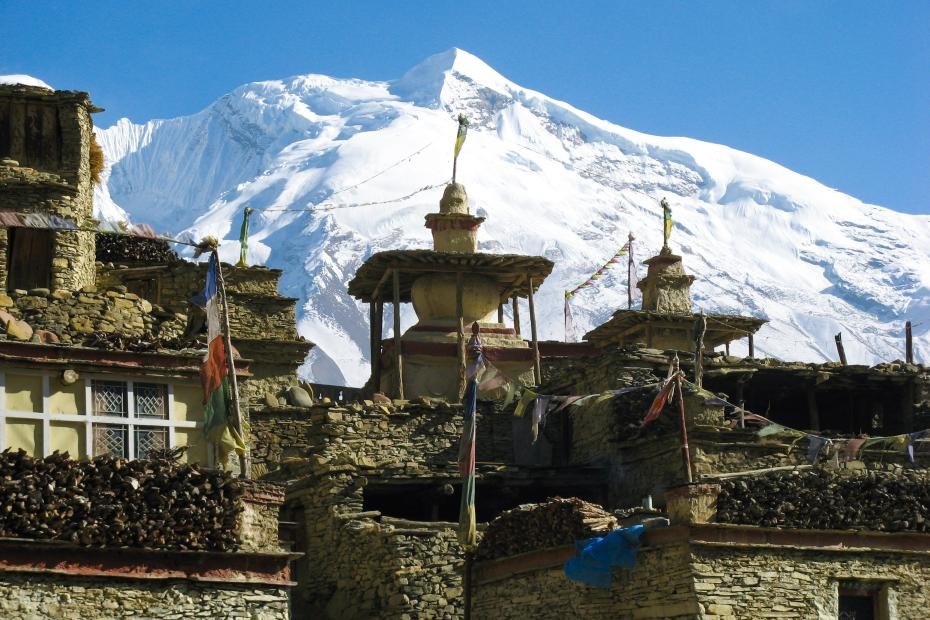
1. Mountain Details & Vibe
-
Height: 8,091 meters (26,545 feet).
-
The Experience: There are two completely different worlds here:
-
The Trek: The Annapurna Base Camp (ABC) trek is one of the most popular and breathtaking hikes on Earth, taking you through lush rhododendron forests and traditional villages directly into the heart of a massive amphitheater of snow-capped peaks.
-
The Climb: The summit is reserved for the absolute elite. Annapurna I is notorious for its sheer north face and highly unstable, avalanche-prone ice walls.
-
-
Difficulty: The trek to Base Camp is a moderate to strenuous multi-day hike suitable for fit beginners. However, climbing to the summit is widely considered one of the deadliest and most dangerous mountaineering feats on the planet, with a much higher fatality rate than Everest.
2. Best Time to Visit
-
For Trekking and Climbing: You have two prime windows. Spring (March to May) is fantastic as the weather warms up and the trails are surrounded by blooming wildflowers. Autumn (September to November) is the peak season, offering the most stable weather and crystal-clear mountain views after the monsoon rains have washed the dust away.
-
When to Avoid: The winter months are dangerously cold with deep snow, while the summer monsoon (June to August) brings heavy rain, leeches, and completely obscured views.
3. How to Reach (From Anywhere in the World)
-
Step 1: The International Flight: Fly into Nepal’s capital at in Kathmandu.
-
Step 2: To the Lakes: From Kathmandu, take a scenic 25-minute domestic flight or a 7-to-8-hour bus ride to the beautiful lakeside city of , which serves as the jumping-off point for the Annapurna region.
-
Step 3: The Trailhead: From Pokhara, you will take a taxi or a rugged 4×4 jeep for about 1.5 to 3 hours to towns like Nayapul, Siwai, or Tatopani, where the road ends and the walking begins.
4. Where to Stay (Teahouses & Tents)
-
In Pokhara (Before/After): You will find everything from cheap backpacker hostels to luxurious lakeside resorts. It is a fantastic place to relax and eat great food before hitting the trail.
-
During the Trek: You will sleep in Teahouses. These are basic, family-run mountain lodges spaced out along the trail. In lower villages like Ghorepani, you can get a private room, a hot shower, and Wi-Fi. As you get closer to Base Camp, the teahouses become much more basic, often with thin walls, shared dorms, and squat toilets. The communal dining rooms with their warm stoves are the social heart of the trek.
-
For the Summit: If you are an elite mountaineer pushing past Base Camp, you will be living strictly in extreme-weather tents pitched on the ice.
5. Estimated Costs (Per Person) The cost varies wildly depending on whether you are walking to the base or attempting to touch the sky.
For the Base Camp Trek (Approx. 7-10 Days):
-
International Flights to Kathmandu: $600 – $1,500 USD.
-
Local Travel (Flights/Buses): $50 – $250 USD.
-
Mandatory Permits: ~$40 USD.
-
The Trek Package: A guided trek (including your guide, a porter, teahouse accommodation, and all meals on the trail) usually ranges from $700 to $1,200 USD.
For Climbing to the Summit (Approx. 40-50 Days):
-
The Expedition: Because of the extreme danger and the need for highly specialized Sherpa support, extensive fixed ropes, and oxygen, a commercial climbing expedition costs between $12,500 and $20,000+ USD.
Nepal – Manaslu (8,163 m)
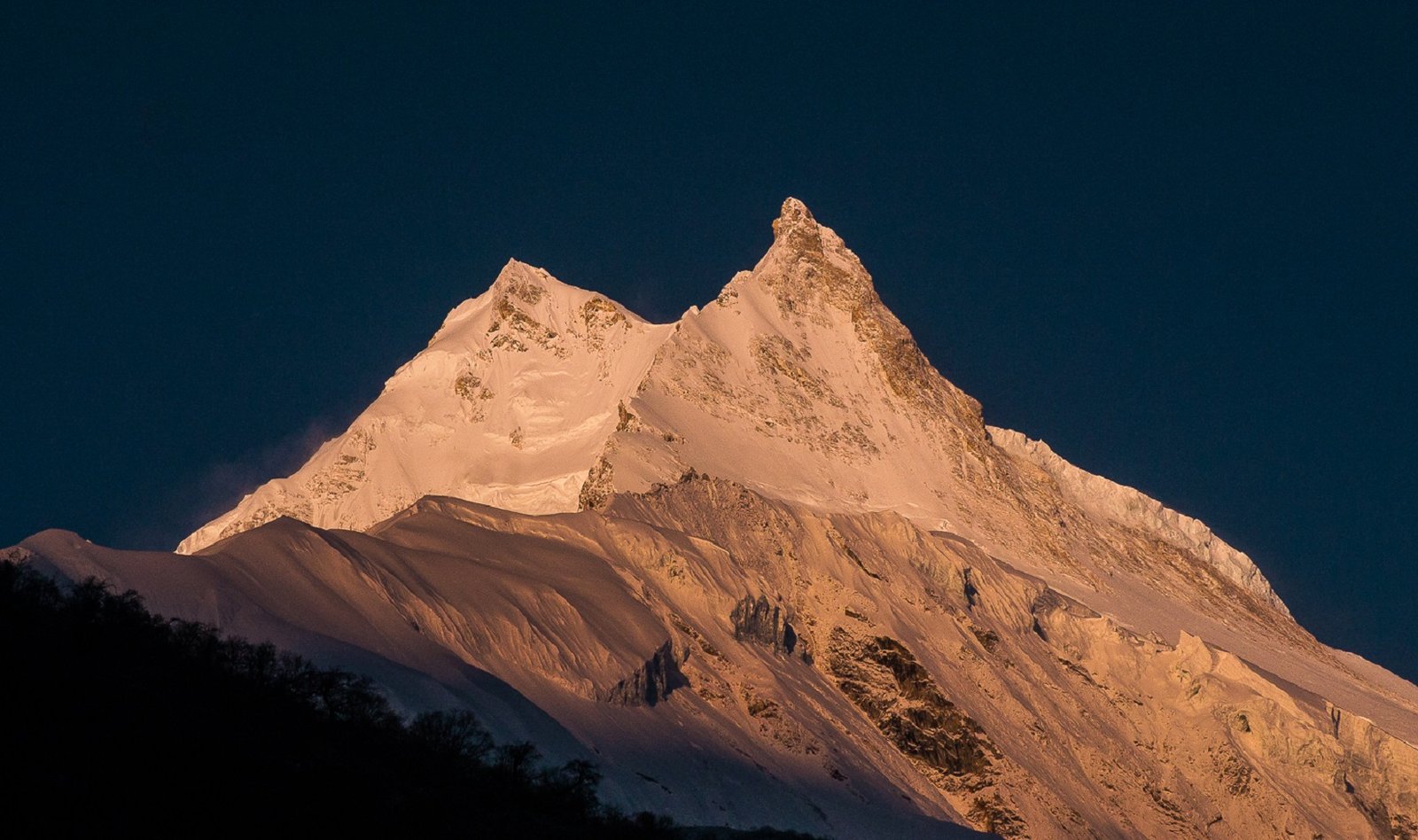
Manaslu (8,163m), Nepal 🏔️ (The Complete Guide)
1. Mountain Details & Vibe
-
What is it? Manaslu is the 8th highest mountain in the world. Its name comes from the Sanskrit word Manasa, which means “intellect” or “soul,” giving it the beautiful nickname “Mountain of the Spirit.”
-
Height: 8,163 meters (26,781 feet).
-
The Experience: Manaslu offers two distinct adventures. The Manaslu Circuit Trek is a spectacular, culturally rich, and less-crowded alternative to the famous Annapurna Circuit. You walk along ancient salt-trading routes right near the Tibetan border. For elite climbers, reaching the actual summit of Manaslu is often used as the ultimate “practice run” before attempting Mount Everest.
-
Difficulty: The trek is challenging but perfectly doable for fit hikers, taking you over a massive mountain pass called the Larkya La. Climbing to the summit, however, is a serious, extreme-altitude expedition with steep ice walls and significant avalanche risks.
2. Best Time to Visit
-
For Trekking and Climbing: The prime windows are Spring (March to May) and Autumn (September to November). Spring brings warmer weather and colorful blooming forests, while Autumn offers the crispest, clearest views of the snow-capped peaks after the monsoon rains have washed the sky clean.
-
When to Avoid: Summer (June to August) brings heavy monsoon rains, leeches, and muddy trails. Winter (December to February) brings freezing temperatures and deep snow that can completely block the high mountain passes.
3. How to Reach (From Anywhere in the World)
-
Step 1: The International Flight: You will fly into Nepal’s capital, Kathmandu, landing at Tribhuvan International Airport.
-
Step 2: The Bumpy Drive: There are no domestic flights to the base of Manaslu. From Kathmandu, you must take a long, bumpy 7 to 9-hour drive on a local bus or in a private 4×4 jeep to trailhead villages like Soti Khola or Machha Khola.
-
Step 3: The Trek: From the point where the dirt road ends, you strap on your backpack and begin your multi-day walk up the beautiful Budhi Gandaki river valley.
4. Where to Stay (Teahouses & Tents)
-
In Kathmandu (Before/After): You can stay in comfortable, modern hotels in the bustling Thamel district, enjoying hot showers and great restaurant food before your trip.
-
During the Trek: You will sleep in Teahouses. These are basic, family-run stone lodges in the remote mountain villages. You get a simple bed, a shared bathroom, and a warm communal dining room where you can eat hearty local meals like Dal Bhat (lentil soup and rice).
-
During an Expedition: If you are a mountaineer climbing to the top, you leave the teahouses behind at Base Camp. From there, you sleep strictly in heavy-duty mountain tents pitched directly on the ice and snow.
5. Estimated Costs (Per Person) Note: Nepal requires all foreigners trekking in the Manaslu region to have a licensed guide, and you must travel with at least one other person (solo trekking is not allowed here).
For the Manaslu Circuit Trek (Approx. 14 Days):
-
International Flights to Kathmandu: $600 – $1,500 USD.
-
Restricted Area Permits: ~$100 to $150 USD (depending on the exact month).
-
The Trek Package: A guided trek package (which includes your mandatory guide, a porter to carry your bags, teahouse accommodation, and all meals on the trail) typically ranges from $900 to $1,500 USD.
For Climbing to the Summit (Approx. 40 Days):
-
The Expedition Cost: Because you need specialized climbing Sherpas, supplemental oxygen, high-altitude food, and extensive base camp infrastructure, a commercial climbing expedition to the top of Manaslu costs between $10,000 and $18,000+ USD.
Nepal – Cho Oyu (8,188 m)
-
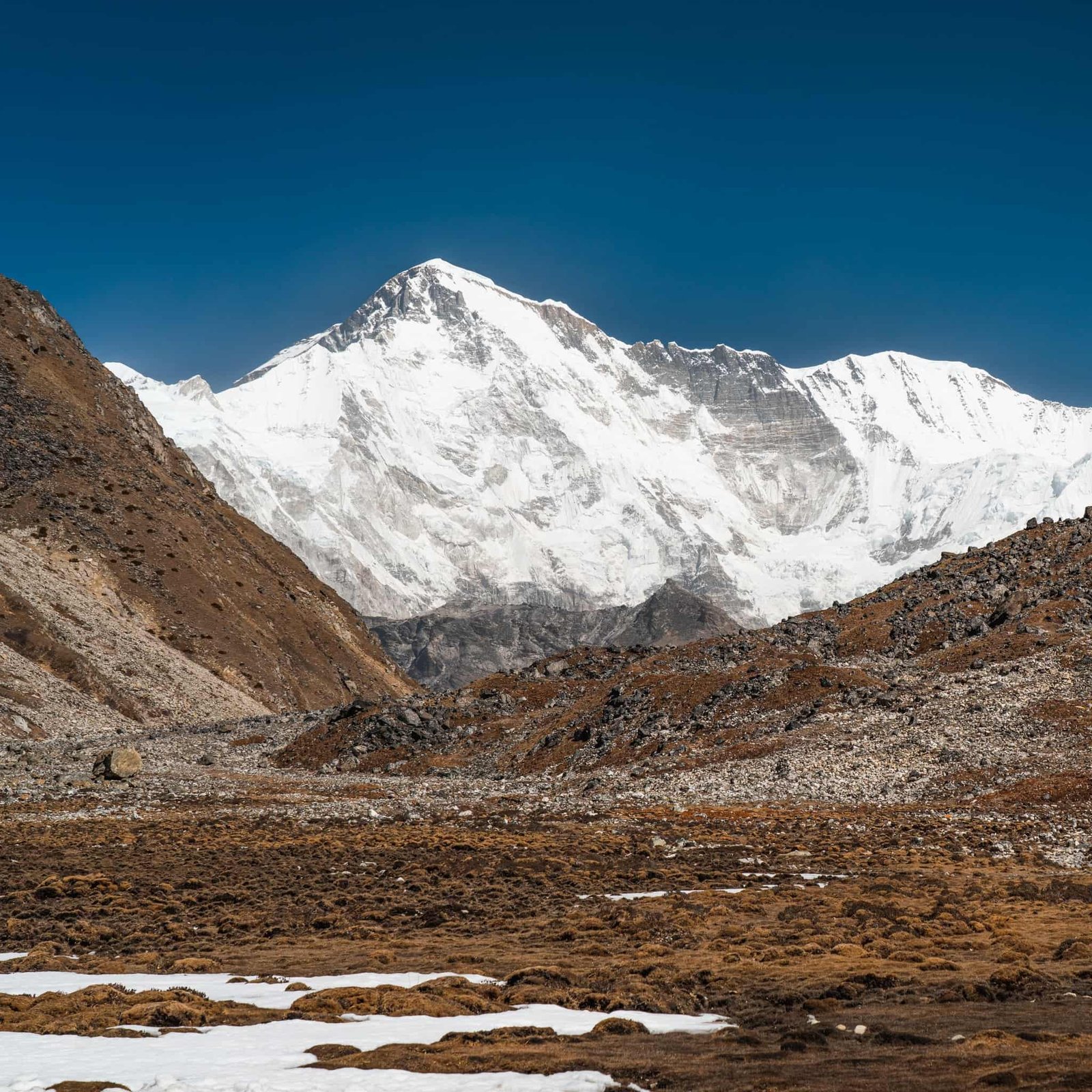
What is it? Cho Oyu is the 6th highest mountain in the world. Its beautiful name translates to “Turquoise Goddess” in Tibetan. It sits right on the border between Nepal and Tibet (China).
-
Height: 8,188 meters (26,864 feet).
-
The Experience: In the mountaineering world, Cho Oyu is famously known as the most achievable and “easiest” of all the fourteen 8,000-meter peaks. Because of its relatively gentle, wide snow slopes on the Tibetan side, it is the ultimate training ground for climbers who dream of tackling Mount Everest later.
-
Difficulty: Please don’t let the word “easiest” fool you! You are still climbing deep into the “Death Zone” where oxygen is incredibly thin. It requires extreme endurance, basic mountaineering skills, and the mental toughness to survive brutal temperatures that can drop to -35°C (-31°F).
2. Best Time to Visit
-
The Prime Window: While Mount Everest is mostly climbed in the Spring, Cho Oyu is famous for being an Autumn mountain. The absolute best time to go is from September to October. After the summer monsoons, the snow conditions are much safer and the weather is highly stable.
-
Secondary Window: Spring (April to May) is possible, but Autumn has a much higher success rate for this specific peak.
3. How to Reach (From Anywhere in the World)
-
Step 1: The International Flight: Even though the easiest and most popular climbing route is in Tibet, almost all expeditions start in Nepal. You will first fly into Kathmandu, Nepal.
-
Step 2: The Paperwork & Border Crossing: You will spend a few days in Kathmandu while your guides finalize your special Chinese/Tibet group visas. From there, you take a multi-day, scenic drive across the Nepal-China border, passing through high-altitude Tibetan towns like Kerung and Tingri.
-
Step 3: The Drive to Base Camp: This is very unique for an 8,000m peak! Unlike Everest or Manaslu where you have to walk for a week just to see the mountain, you can actually drive directly to the Chinese Base Camp (at 4,900 meters) in comfortable 4×4 vehicles. From there, you hike with the help of yaks carrying your heavy gear up to the Advanced Base Camp (ABC).
4. Where to Stay (Hotels & Tents)
-
In Cities (Kathmandu & Tibet): You will stay in comfortable modern hotels in Kathmandu. During the drive across the Tibetan plateau, you will sleep in basic local guesthouses to slowly get your body used to the high altitude.
-
At Advanced Base Camp (ABC): This becomes your home for several weeks. It is a massive, comfortable tented village on the rocks. You will have a heavy-duty personal sleeping tent, a warm communal dining tent, and expedition chefs cooking you fresh, hot meals.
-
On the Mountain: Once you start pushing toward the summit, you are in pure survival mode. You will sleep in extreme-weather mountain tents pitched directly in the snow and ice at Camp 1, Camp 2, and Camp 3.
5. Estimated Costs (Per Person)Cho Oyu is a serious expedition. Because it involves complicated Chinese climbing permits, oxygen tanks, and elite Sherpa support, it requires a massive budget.
-
International Flights to Kathmandu: $600 – $1,500 USD (Depending on your starting country).
-
The Expedition Package (Approx. 40-45 Days): You cannot do this alone; you must join a commercial expedition. A fully supported package—which includes your Chinese climbing permits, 1-on-1 Sherpa guides, supplemental oxygen bottles, all food, yaks, and transport from Kathmandu into Tibet—ranges heavily from $30,000 to $45,000+ USD.
Nepal – Lhotse (8,516 m)
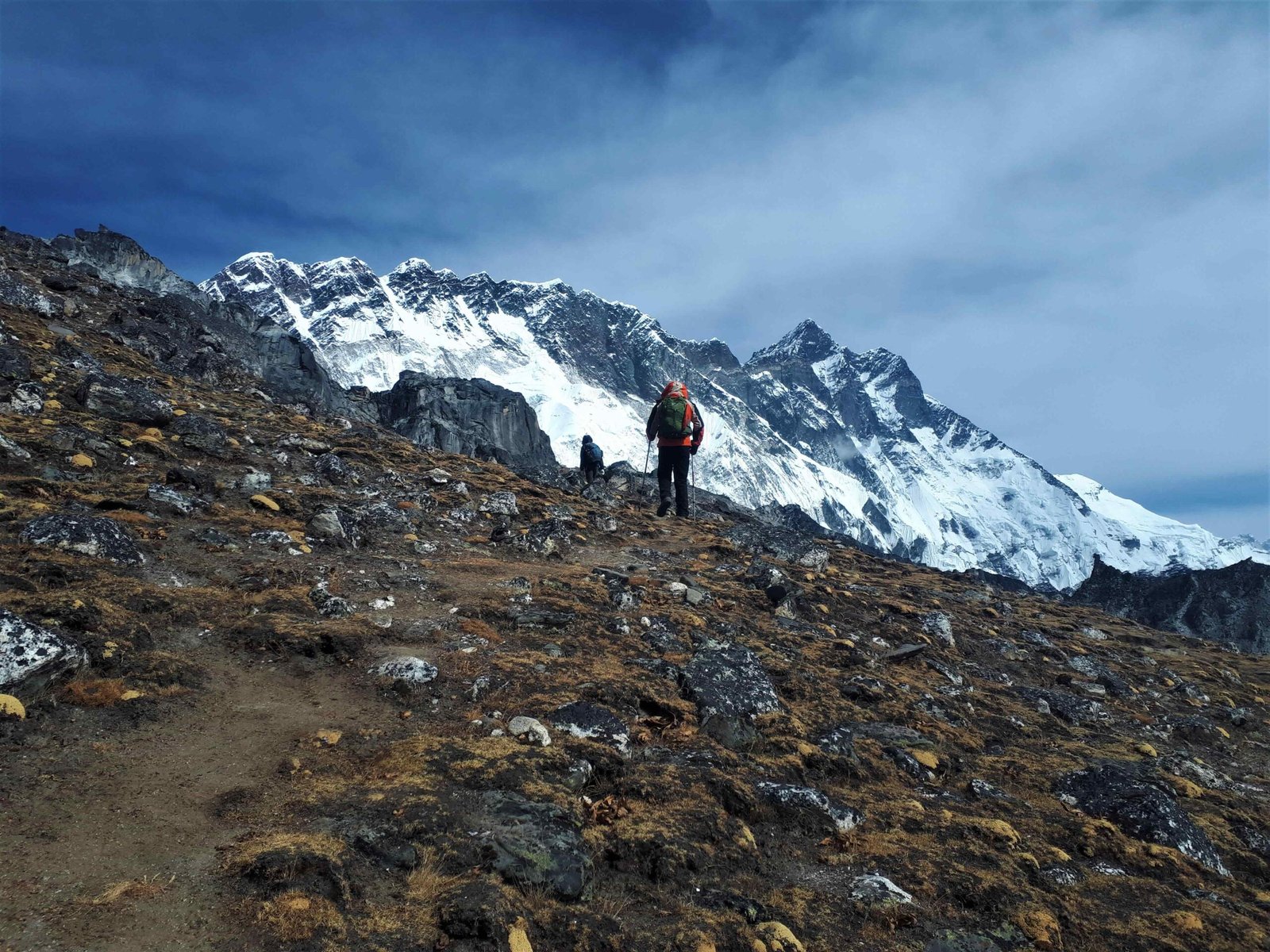
-
What is it? Cho Oyu is the 6th highest mountain in the world. Its beautiful name translates to “Turquoise Goddess” in Tibetan. It sits right on the border between Nepal and Tibet (China).
-
Height: 8,188 meters (26,864 feet).
-
The Experience: In the mountaineering world, Cho Oyu is famously known as the most achievable and “easiest” of all the fourteen 8,000-meter peaks. Because of its relatively gentle, wide snow slopes on the Tibetan side, it is the ultimate training ground for climbers who dream of tackling Mount Everest later.
-
Difficulty: Please don’t let the word “easiest” fool you! You are still climbing deep into the “Death Zone” where oxygen is incredibly thin. It requires extreme endurance, basic mountaineering skills, and the mental toughness to survive brutal temperatures that can drop to -35°C (-31°F).
2. Best Time to Visit
-
The Prime Window: While Mount Everest is mostly climbed in the Spring, Cho Oyu is famous for being an Autumn mountain. The absolute best time to go is from September to October. After the summer monsoons, the snow conditions are much safer and the weather is highly stable.
-
Secondary Window: Spring (April to May) is possible, but Autumn has a much higher success rate for this specific peak.
3. How to Reach (From Anywhere in the World)
-
Step 1: The International Flight: Even though the easiest and most popular climbing route is in Tibet, almost all expeditions start in Nepal. You will first fly into Kathmandu, Nepal.
-
Step 2: The Paperwork & Border Crossing: You will spend a few days in Kathmandu while your guides finalize your special Chinese/Tibet group visas. From there, you take a multi-day, scenic drive across the Nepal-China border, passing through high-altitude Tibetan towns like Kerung and Tingri.
-
Step 3: The Drive to Base Camp: This is very unique for an 8,000m peak! Unlike Everest or Manaslu where you have to walk for a week just to see the mountain, you can actually drive directly to the Chinese Base Camp (at 4,900 meters) in comfortable 4×4 vehicles. From there, you hike with the help of yaks carrying your heavy gear up to the Advanced Base Camp (ABC).
4. Where to Stay (Hotels & Tents)
-
In Cities (Kathmandu & Tibet): You will stay in comfortable modern hotels in Kathmandu. During the drive across the Tibetan plateau, you will sleep in basic local guesthouses to slowly get your body used to the high altitude.
-
At Advanced Base Camp (ABC): This becomes your home for several weeks. It is a massive, comfortable tented village on the rocks. You will have a heavy-duty personal sleeping tent, a warm communal dining tent, and expedition chefs cooking you fresh, hot meals.
-
On the Mountain: Once you start pushing toward the summit, you are in pure survival mode. You will sleep in extreme-weather mountain tents pitched directly in the snow and ice at Camp 1, Camp 2, and Camp 3.
5. Estimated Costs (Per Person)Cho Oyu is a serious expedition. Because it involves complicated Chinese climbing permits, oxygen tanks, and elite Sherpa support, it requires a massive budget.
-
International Flights to Kathmandu: $600 – $1,500 USD (Depending on your starting country).
-
The Expedition Package (Approx. 40-45 Days): You cannot do this alone; you must join a commercial expedition. A fully supported package—which includes your Chinese climbing permits, 1-on-1 Sherpa guides, supplemental oxygen bottles, all food, yaks, and transport from Kathmandu into Tibet—ranges heavily from $30,000 to $45,000+ USD.
Makalu (8,485m), Nepal
1. Mountain Details & Vibe
-
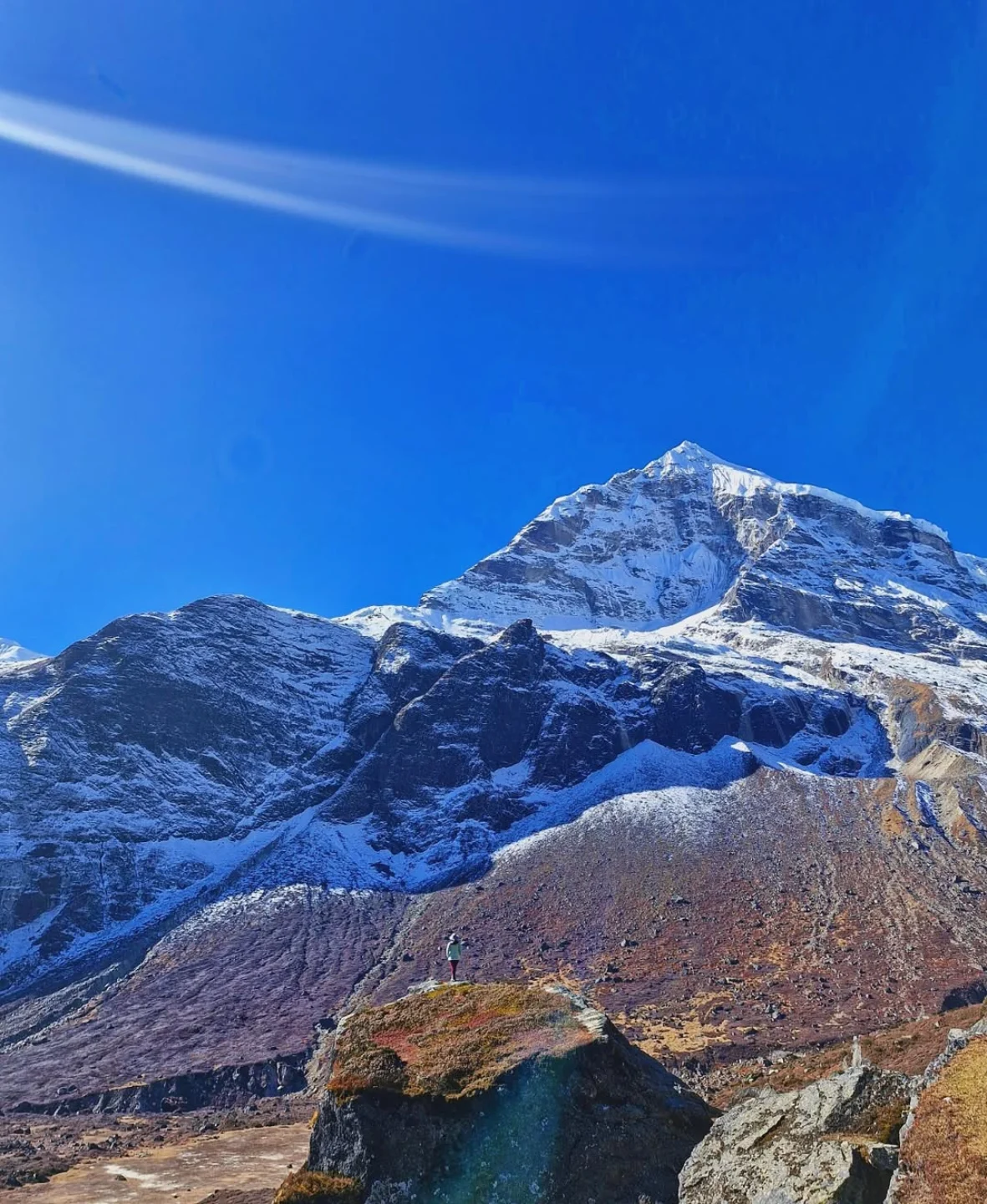
What is it? Makalu is the 5th highest mountain in the world. It sits just 19 kilometers southeast of Mount Everest, but it sees only a tiny fraction of the visitors. It is famous for its striking, perfect four-sided pyramid shape. Because the heavy winds blow the snow off the steep upper slopes, it leaves behind exposed dark granite, giving it the nickname the “Great Black.”
-
Height: 8,485 meters (27,838 feet).
-
The Experience: The trek to Makalu Base Camp is a journey deep into raw, untouched wilderness. You walk through the stunning Makalu Barun National Park, an isolated valley that feels entirely disconnected from the modern world. For mountaineers, Makalu is legendary. It is widely considered one of the most difficult 8,000-meter peaks to climb due to its steep, icy pitches and razor-sharp ridges.
-
Difficulty: The Base Camp trek is very strenuous. It involves steep ups and downs through dense forests and over high mountain passes, requiring great stamina and comfort with roughing it. Climbing to the summit is strictly for elite, highly experienced mountaineers—it is much more technical than Everest.
2. Best Time to Visit
-
The Prime Windows: Just like the rest of the Himalayas, you want to aim for Spring (March to May) or Autumn (September to November). Spring is amazing because the lower valley forests are bursting with blooming red and pink rhododendrons. Autumn gives you the absolute best, crispest views of the massive mountain pyramid against bright blue skies.
-
When to Avoid: Summer (June to August) brings heavy monsoon rains that wash out the trails and bring out the leeches. Winter (December to February) brings brutal cold and deep snow that completely blocks the high mountain passes, making the trek impossible.
3. How to Reach (From Anywhere in the World)
-
Step 1: The International Flight: Fly into Tribhuvan International Airport in Kathmandu, Nepal.
-
Step 2: The Domestic Flight: From Kathmandu, you skip the long bus rides and take a scenic 45-minute domestic flight east to a small town called Tumlingtar.
-
Step 3: The Rough Drive: From Tumlingtar, you hire a 4×4 jeep for a very bumpy, dusty 4 to 5-hour drive into the mountains to a trailhead village like Num or Chichila.
-
Step 4: The Wild Trek: From the village, you strap on your boots and begin a 14 to 19-day round-trip trek over high ridges and deep down into the isolated Barun Valley to finally reach Base Camp.
4. Where to Stay (Teahouses & Tents)
-
In Kathmandu (Before/After): You will enjoy hot showers, great food, and comfortable beds in modern city hotels.
-
During the Trek: You will sleep in Teahouses. However, because Makalu is so incredibly remote compared to the Everest or Annapurna regions, these teahouses are very rustic. You get a simple wooden bed and basic local meals. As you get closer to Base Camp, these turn into very simple stone shelters.
-
At Base Camp & Above: Once you reach Makalu Base Camp (and if you are a climber pushing higher), it is strictly a tent camping experience. You will sleep in extreme-weather tents pitched right on the rocks and ice.
5. Estimated Costs (Per Person)
Because this area is so remote, bringing in supplies is hard, but the overall cost is still lower than Everest due to cheaper permit fees.
For the Base Camp Trek (Approx. 16-19 Days):
-
International Flights to Kathmandu: $600 – $1,500 USD.
-
The Trek Package: A fully guided trek (which usually includes your domestic flights to Tumlingtar, the jeep rides, a guide, a porter, basic teahouse beds, and food) typically costs between $1,400 and $2,200 USD.
For Climbing to the Summit (Approx. 45-50 Days):
-
The Expedition Cost: A fully supported commercial climbing expedition—which includes your climbing permits, elite Sherpa guides, high-altitude tents, and supplemental oxygen—usually ranges from $18,000 to $25,000+ USD.
Pakistan – Gasherbrum I (8,080 m)
Pakistan – Gasherbrum II (8,035 m)
Gasherbrum II (8,035m), Pakistan 🏔️ (The Complete Guide)
1. Mountain Details & Vibe
-
What is it? Gasherbrum II (also known as K4) is the 13th highest mountain in the world. Its name comes from the local Balti words rgasha (beautiful) and brum (mountain), making it the “Beautiful Mountain.”
-
Height: 8,035 meters (26,362 feet).
-
The Experience: Located deep in the majestic Karakoram Range, Gasherbrum II shares the same breathtakingly wild neighborhood as K2. For mountaineers, it is famous for being one of the most accessible and “safest” 8,000-meter peaks in Pakistan, making it a very popular choice for climbers looking to conquer their first peak of this extreme height.
-
Difficulty: The trek to the base camp is a rugged, multi-day hike over moving glaciers. The climb to the summit is mostly a steep snow and ice climb. While it lacks the terrifying vertical rock walls of K2, it is still an extreme high-altitude challenge requiring excellent fitness, crampon skills, and the ability to endure freezing, unpredictable weather.
2. Best Time to Visit
-
The Window: Because the Karakoram Range is further north and much harsher than the Himalayas, the climbing season is very short. You must go during the peak of summer, from late June to August.
-
The Weather: During this time, the days on the lower glacier can actually get surprisingly hot under the blazing sun, while the nights up on the mountain remain bitterly cold. Winter ascents here are nearly impossible and strictly for extreme professionals.
3. How to Reach (From Anywhere in the World)
-
Step 1: The International Flight: Fly into Pakistan’s capital, Islamabad (Islamabad International Airport – ISB).
-
Step 2: The Gateway City: From Islamabad, take a spectacular 1-hour domestic flight over the mountains to the town of Skardu. (If the flight is canceled due to weather, which happens often, you have to take a grueling 20+ hour drive up the Karakoram Highway).
-
Step 3: The Jeep Safari: In Skardu, you load into a rugged 4×4 jeep for a bumpy, thrilling 6 to 8-hour drive along sheer cliff edges to a remote farming village called Askole. This is where the road ends.
-
Step 4: The Glacier Trek: From Askole, you begin an epic 7 to 9-day trek. You will walk directly up the massive, icy Baltoro Glacier, passing the iconic peaks of Trango Towers and K2, before finally reaching Gasherbrum Base Camp.
4. Where to Stay (Hotels & Tents)
-
In Cities (Islamabad/Skardu): You will stay in comfortable, modern hotels. Skardu has lovely tourist resorts with great food and hot showers.
-
On the Trek & Base Camp: Pakistan’s Karakoram mountains are completely wild. There are no teahouses or permanent lodges here like there are in Nepal. From the moment you leave Askole, you will sleep strictly in tents. You will have a dining tent for meals cooked by your local crew, and a sleeping tent pitched on the rocks and ice for the entire expedition.
5. Estimated Costs (Per Person) Because this shares the exact same trekking route as K2, the base camp trekking costs are very similar.
For Trekking to Gasherbrum Base Camp (Approx. 20-22 Days):
-
International Flights to Islamabad: $700 – $1,500 USD.
-
The Trek Package: A fully guided trek (which includes your domestic flights/transport to Askole, camping gear, food, and the incredible Balti porters who carry the supplies) usually costs between $3,500 and $5,500 USD.
For Climbing to the Summit (Approx. 45-50 Days):
-
The Expedition Cost: Since Gasherbrum II is considered a slightly “easier” 8,000-meter peak to manage logistically compared to K2, the climbing packages are somewhat more affordable. A fully supported commercial expedition (including permits, high-altitude tents, food, and Sherpa/guide support) typically ranges from $15,000 to $22,000 USD.
How to Turn Messy Notes into a Study Schedule with Notion AI