Bodh Gaya in Bihar, India, is the most sacred Buddhist pilgrimage site in the world. It is where Siddhartha Gautama attained enlightenment under the Bodhi Tree (circa 528 BCE). The Mahabodhi Temple Complex at Bodh Gaya is a UNESCO World Heritage Site (inscribed 2002). This complex includes the 5th–6th century AD brick temple (Ashoka’s original structure dates to the 3rd century BCE), the descendant Bodhi Tree, the Vajrasana (Diamond Throne), and several stupas and shrines. Bodh Gaya remains an active pilgrimage site with daily rituals, festivals like Buddha Purnima and Kalachakra, and international monasteries built by Thai, Burmese, Tibetan, Japanese, Chinese, Bhutanese and other Buddhist communities. Conservation efforts are ongoing, including recent satellite surveys revealing new buried archaeological structures. This comprehensive report covers Bodh Gaya’s history (ancient to modern), religious significance across faiths, key archaeological findings (including 2024 discoveries), UNESCO criteria, major sites (Mahabodhi Temple, Bodhi Tree, Sujata Stupa, Dungeshwari Caves, etc.), festivals, pilgrim practices, visitor guidance (best time, access, permits), preservation efforts, local culture/economy, governance (Temple Act 1949 and management),
Historical Overview
Bodh Gaya’s history is centered on the Enlightenment of Buddha under the Bodhi Tree. Circa 528 BCE, Prince Siddhartha Gautama attained awakening (Buddhahood) here after meditating for days. Following his enlightenment, early Buddhist communities built shrines around the sacred spot. Emperor Ashoka (3rd century BCE) established the first temple and Vajrasana (Diamond Throne) to mark Buddha’s seat. Ashoka’s inscriptions refer to the site as Sambodhi (“Complete Enlightenment”).
Over the centuries, Bodh Gaya flourished as a Buddhist centre. Chinese pilgrims Faxian (5th c. CE) and Xuanzang (7th c. CE) described a grand temple (around 160 ft tall) and a flourishing monastery. The current Mahabodhi Temple dates to the 5th–6th century AD (late Gupta period). However, in the 12th–13th centuries it was damaged by Turkic invasions under Qutb al-Din Aibak and Muhammad Bakhtiyar Khilji. Thereafter the site declined until its rediscovery in the 19th century by Alexander Cunningham. Between 1880–84, Burmese King Mindon Min and British archaeologists restored parts of the temple.
In 1891, Sri Lankan monk Anagarika Dharmapala founded the Maha Bodhi Society to revive Buddhist control over the site. Decades of activism led to the Bodh Gaya Temple Act (1949), by which the Bihar government set up a joint Hindu-Buddhist management committee. In 2013, the temple complex was the target of terrorist bombings; Indian authorities later sentenced the plotters. Today, Bodh Gaya is governed by a Temple Management Committee (including foreign Buddhists) under the 1949 Act.
Religious Significance
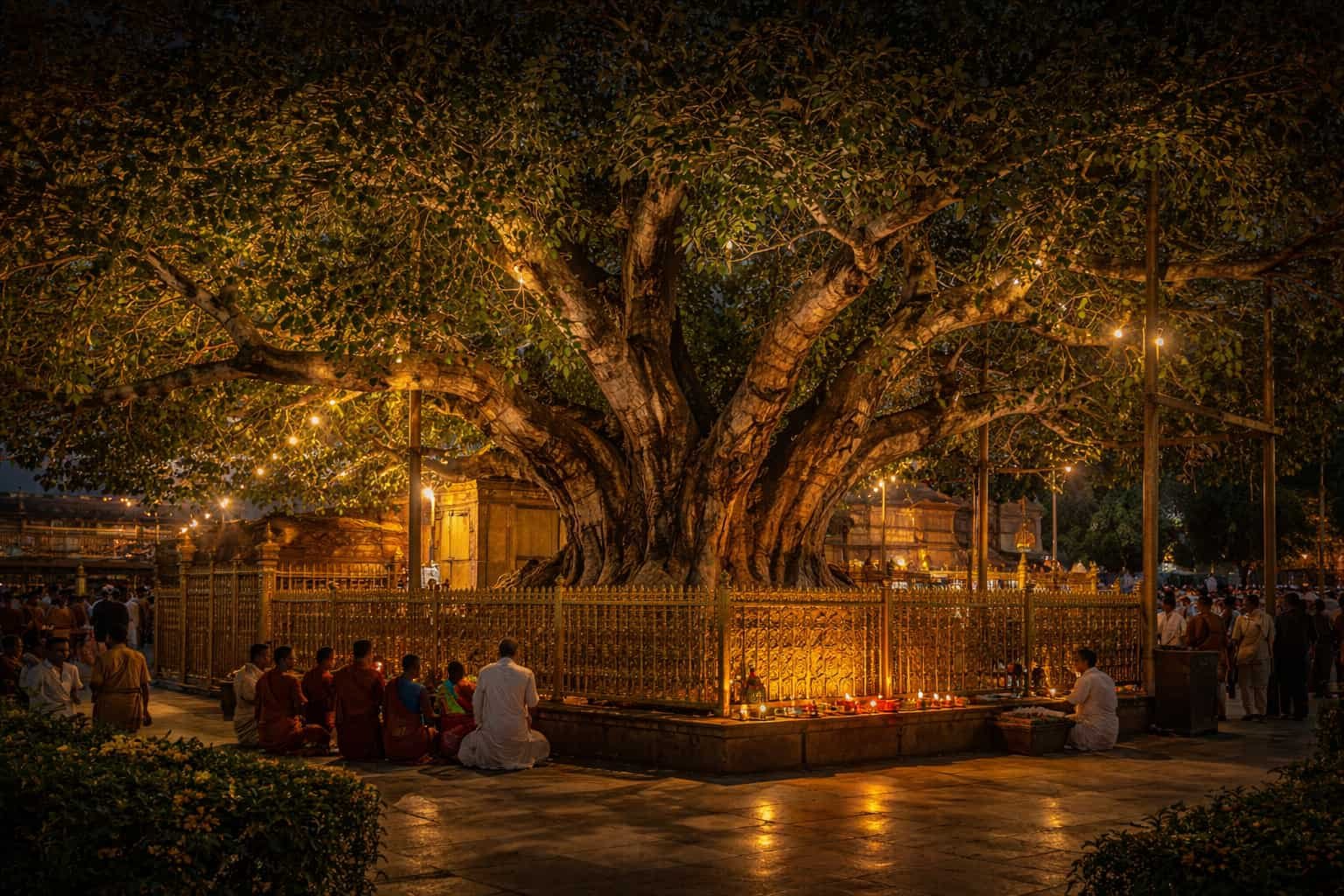
Bodh Gaya is primarily a sacred site for Buddhism. It is the location of Buddha’s Enlightenment (Bodhi-samapatti) under the Bodhi Tree. Hence, it is one of the “Four Major Places” of pilgrimage in Buddha’s life (along with Lumbini, Sarnath, Kusinara). Buddhists of all traditions (Theravada, Mahayana, Vajrayana) come here to meditate, pray, and perform rituals around the Bodhi Tree and Mahabodhi Temple. The Bodhi Tree at the site is said to be a direct descendant of the original tree (via a sapling taken to Sri Lanka by Emperor Ashoka’s daughter Sanghamitta).
Daily rituals include offering lamps, flowers, chanting sutras, and circumambulating (walking around) the temple and Bodhi Tree. On Buddha Purnima (May, full moon) special ceremonies and lighting of butter lamps draw thousands. Each winter, Tibetan lamas (often led by the Dalai Lama) conduct a 10-day Kalachakra empowerment ceremony at Bodh Gaya. Buddhists also celebrate Anagarika Dharmapala’s birthday (September 17) in remembrance of his revival work. The Great Buddha statue (24 m) in the complex, inaugurated in 1989 with the Dalai Lama present, symbolizes the resurgence of Buddhism in India.
Hindus regard nearby Gaya (and attached shrines) as sacred too, but Bodh Gaya itself has limited Hindu worship. A Hindu Jagannath temple stands just outside the Buddhist complex, but within the Mahabodhi enclosure formal worship is strictly Buddhist. Jains have only historical links (Bodh Gaya appears in Jain texts), and Muslim history here includes the 1200s invasions (not a continuous religious connection). Today, Bodh Gaya attracts a cosmopolitan flock of pilgrims, clad in robes or secular attire, reflecting its status as a living shrine.
Archaeological and Historical Findings
Bodh Gaya has been the focus of major archaeological research. Excavations in the 19th and 20th centuries uncovered Ashokan pillars (3rd c BCE) and Gupta-era ruins. Recent projects include the Bodh Gaya Archaeological Museum (opened 1956 by ASI) housing stone statues, coins, and relics from nearby sites.
In 2024, advanced satellite and geophysical surveys revealed substantial buried structures under and around the Mahabodhi complex. For example, the Bihar Heritage Development Society (BHDS) and Cardiff University project found a square monastery complex with moat north of the temple—likely the monastery Alexander Cunningham excavated in 1878–79. Analyses show that the course of the Niranjana River shifted over time; Buddha’s Sujata Stupa (on today’s east bank) and the Mahabodhi Temple were once on the same bank. This suggests the ancient city’s temple was larger, extending across the river.
Excavations have also continued at Bakraur (the village opposite Bodh Gaya) confirming the Sujata Stupa dated to the 2nd century BCE. Nearby, the Dungeshwari (Mahakala) caves 12 km north (in Dungeshwari Hills) are traditionally where the Buddha practiced severe austerities before Enlightenment. These rock-cut caves are a pilgrimage site (the Bhagavata Purana and Puranas reference them).
Artifacts (coins, pottery) indicate Bodh Gaya’s continuous occupation from Ashoka’s time onward. The vast array of votive stupas, temples, and monasteries built up to the 13th century shows it was a city of great importance. Today, ASI protects the site under the Ancient Monuments Act, and archaeological sites around Bodh Gaya (like Barabar and Nagarjuni caves 25 km north) are closely linked to this heritage.
UNESCO World Heritage
Mahabodhi Temple Complex was inscribed on UNESCO’s World Heritage List in 2002 (ID 1056) under criteria (i),(ii),(iii),(iv),(vi). It is recognized as the earliest brick temple still standing in India and as “the holiest place of Buddhist pilgrimage”. The site covers about 4.86 hectares.
UNESCO’s description highlights: Emperor Ashoka’s 3rd c BCE temple (whose remains include railings and the Diamond Throne) and the current 5th–6th c ce brick temple. The Bodhi Tree and Vajrasana platform are central attributes. The fine Gupta-period sikhara (tower) and decorative carvings exemplify ancient Indian architecture. Importantly, the site “documents the evolving worship” of Buddha from Ashoka’s time onward.
UNESCO notes that Bodh Gaya is “the only living Buddhist site on India’s World Heritage list”, meaning its devotional practices continue today. Daily rituals of offerings and chanting, as well as annual festivals, keep it vibrant. The UNESCO dossier and periodic reporting also mention ongoing conservation efforts: the Bihar Heritage Development Society and Temple Management Committee work to maintain structures, manage tourism, improve accessibility, and implement sustainable measures (solar power, vehicle restrictions). No management body was successful in recording exact visitor numbers, highlighting the site’s open-access nature.
Key Sites in the Complex
Mahabodhi Temple
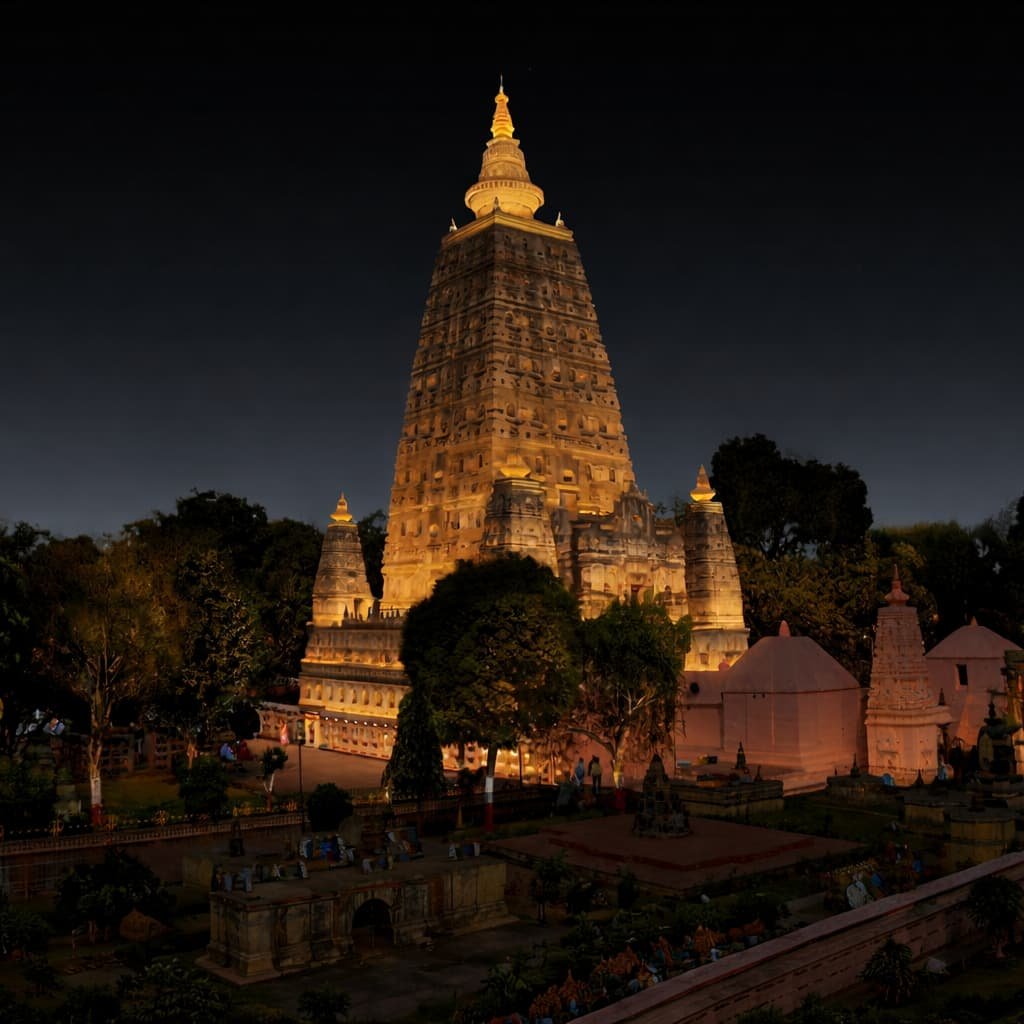
The 50 m-high Mahabodhi Temple is the focal shrine. Built of brick with a pyramidal tower (shikhara), it has niches containing Buddha images and a gilded seated Buddha in the sanctum. Four smaller Buddha statues occupy shrines at its corners. The sanctum houses a 5+ ft gilded Buddha in the Bhumisparsha (“earth-touching”) mudra. Surrounding the temple are more than 50 votive stupas, many inscribed by pilgrims over centuries. The main temple’s walls (11 m high) display intricate moldings and reliefs (honeysuckle motifs, geese, lotus medallions).
Bodhi Tree and Vajrasana
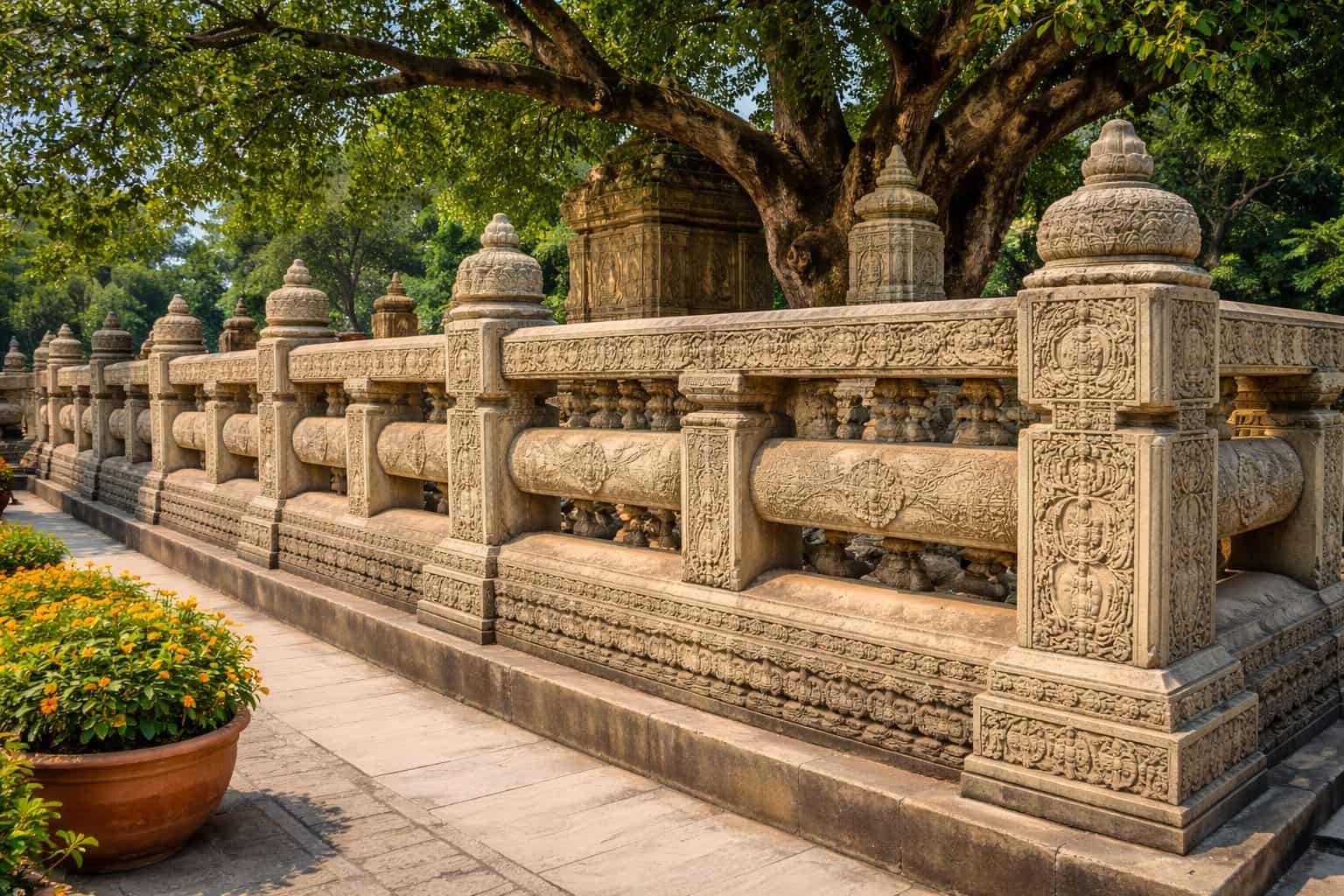
Just west of the temple stands the Bodhi Tree (Ficus religiosa), grown from a sapling of the original. Next to it is the Vajrasana platform – Emperor Ashoka’s sandstone throne, marking exactly where Buddha sat. Remaining fragments of Ashokan railing columns (with lion-capitals) circle the throne base. It is said that Ashoka installed thousands of footprint stones (Buddhapadas) around this site, though only one is visible now.
Sujata Stupa
Across the Phalgu (Niranjana) River at Bakraur (approx. 1 km away) is the Sujata Stupa, commemorating the milkmaid Sujata who fed Siddhartha. Archaeology confirms its construction in the 2nd century BCE. Pilgrims include it in the Bodh Gaya circuit. Near it stands a modest Sujata Temple marking the event, often visited after Mahabodhi rituals.
Dungeshwari (Mahakala) Caves
About 12 km northeast in the Dungeshwari Hills are the Mahakala or Dungeshwari Caves. According to legend, Siddhartha spent years practicing severe penances here before Buddhist teachings took form. The cave complex (with natural and cut rock chambers) is linked in texts to Narada and Rishi Saigya as well. Though outside the Bodh Gaya complex, these caves are considered part of the pilgrimage circuit and are managed by ASI as protected monuments. They illustrate the ascetic life that preceded Enlightenment.
Other Stupas and Shrines
Several smaller stupas and temples dot the area: e.g., Animesh Lochana Chaitya (prayer hall), Ratnachakrama (Jewel Walkway where Buddha paced), and Ratnaghar Chaitya, marking each of the first six weeks of Buddha’s post-awakening life. A lotus pond (Vapi) marks the seventh week. These sites now lie in or around the Mahabodhi enclosure and form part of the devotional path.
Major Monasteries (Vihāras)
Surrounding the Mahabodhi Temple are many international monasteries built by Buddhist communities worldwide. Each showcases its country’s architectural style. Below is a comparative table of some of the largest, with typical visiting hours:
| Monastery/Temple | Country/Origin | Order/Tradition | Notable Features | Visiting Hours (approx.) |
|---|---|---|---|---|
| Mahabodhi Temple | India | Theravāda (Buddhist) | 5–6th c. AD brick temple (UNESCO site); Bodhi Tree; Diamond Throne | 6:00–18:00 (daily, free entry) |
| Wat Thai Buddhagaya | Thailand | Theravāda (Thai) | Golden-curved multi-tiered roof; large bronze Buddha inside | 5:00–18:00 (opens early) |
| Burmese Vihara | Myanmar | Theravāda (Burmese) | White-stucco Burmese pagoda style; built 1936; gardens | 5:00–18:00 (noon break often) |
| Japanese Nipponji | Japan | Mahāyāna (Nippon Shū) | Pagoda-shaped roof; artworks from Japan; Zen meditation center | 5:00–17:00 (with ceremonies) |
| Chinese Temple | China | Mahāyāna (Chinese) | 200-year-old Buddha statue from China; red pillars | 6:00–18:00 (free entry, modest dress) |
| Bhutanese Monastery | Bhutan | Vajrayāna (Drukpa) | 7-story golden tower; large gilded Buddha; monastery complex | 5:30–17:30 (capitol visit hours) |
| Korean & Vietnamese | S. Korea/Vietnam | Mahāyāna (various) | Korean temple (Bunhwangsa): marble & granite (Korean style); Linh Son Buddhist temple (Vietnam): altars & statues | 6:00–18:00 |
| Sri Lankan Vihara | Sri Lanka | Theravāda (Sri Lankan) | Traditional dagoba (stupa) structures; shrines to Sri Lankan kings | 6:00–18:00 (often smaller) |
Most monasteries allow simple dress, shoe removal; some may restrict photography or large groups. Visiting hours can vary by season and festival.
Festivals and Pilgrimage Practices
Bodh Gaya hosts major Buddhist festivals. The largest is Buddha Purnima (Vesak, April–May), celebrating Buddha’s birth, enlightenment, and mahaparinirvana. Pilgrims attend all-day chanting and meditation at the temple and Bodhi Tree, followed by evening lamp-lighting. In winter (often January), thousands gather for the Kalachakra Empowerment led by the Dalai Lama (if he attends). Special pujas are held on Anagarika Dharmapala’s Day (Sept 17) and other Buddhist holidays (Sangha Day, Magha Puja).
Pilgrims perform rituals like pradakshina (walking circumnavigations) around the temple and Bodhi Tree, often reciting mantras or spinning prayer wheels. Devotees prostrate at shrine fronts, offer flowers, incense, and water bowls to the Bodhi Tree, and sit in silent meditation. Some carry holy sites’ relics. On auspicious days, the temple complex is decorated with flags, lamps, and floral garlands.
The entire area is a pilgrim zone. Foreigners often wear Buddhist robes or modest attire; local Hindus may visit as part of shraaddha rituals in nearby Gaya. However, Bodh Gaya’s Buddhist nature is respected by rules: no consumption of alcohol or non-vegetarian food within the complex, and a 3:00pm mandatory temple closing bell to mark midday worship end.
Visitor Information
- Best Time to Visit: October–March (cool, dry season) is ideal. The monsoon (July–September) brings heavy rain. Winter nights (Dec–Jan) can be chilly for meditation. Major festivals (Vesak in May, Kalachakra in winter) draw crowds. Bodh Gaya is lively year-round.
- Access: Bodh Gaya is in southern Bihar, ~110 km from Patna (state capital) and ~12 km from Gaya city. The nearest airport is Gaya Airport (GAY), 7 km away. Gaya Junction railway station (10 km) connects to Patna, Kolkata, Delhi, Mumbai, and Chennai. Road: Buses and taxis operate from Patna, Gaya, and other cities. Bihar Tourism runs the “Wonder-on-Wheels” luxury bus on the Patna–Gaya route. Within Bodh Gaya, e-rickshaws, cycle-rickshaws, and walking are common; fossil-fuel vehicles are restricted near the Temple to preserve peace. Private cars require special permits, but parking is available 1–2 km from the site. The complex is mostly pedestrian-only.
- Temple Hours & Entry: The Mahabodhi Temple and most monasteries open at 5:00–6:00 AM and close by 5:30–6:00 PM. Entry to the temple is free, but robes or coverings are required. Shoes, cameras, and phones must be left at security points (photos only allowed outside main shrine). Government-run lodging (Dak-bungalows) and a temple rest house are available for pilgrims. Many hotels and guesthouses (from budget to high-end) are clustered nearby. It is wise to book in advance during peak season. Drinking water and vegetarian meals are plentiful; Bodh Gaya also has vegetarian restaurants run by monks from different countries.
- Permits & Facilities: Bodh Gaya has several checkpoints. While no special tourist visa is needed (it’s open to all), local law enforcement may check for electronic devices at monastery entrances. The site is wheelchair-accessible on the main paths; ramps are being added. The Bodh Gaya Temple Management Committee (BTMC) runs amenities like toilets and a small museum of excavation finds.
Conservation and Threats
As a living heritage site, Bodh Gaya faces challenges of preservation amid heavy tourism. Conservation efforts include: structural repairs (via ASI and heritage bodies), traffic restrictions (vehicles banned inside core complex), and waste management programs. After the 2013 blasts, security was tightened with cameras and patrols.
Environmental threats include waterlogging in monsoon and river shifts (Niranjana’s course has changed dramatically, eroding parts of old monasteries). Encroachment by illegal construction on surrounding lands is a concern; authorities have demolished unauthorized shops near the temple in past years. The Bihar Heritage Development Society (BHDS) leads preservation surveys with modern tech. Local Buddhist and Hindu groups occasionally dispute temple management, but the Temple Act provides a joint committee.
UNESCO periodically monitors Bodh Gaya. The 2020 Periodic Report notes that visitor numbers are not fully quantified but stresses the need for sustainable tourism planning. The BTMC and Advisory Board (including international members) meet quarterly to review conservation works and pilgrim flow. They also promote solar lighting, clean energy, and green landscaping. Recent efforts include restoring old stupas and building a protective museum arch for relics.
Local Culture and Economy
The town of Bodh Gaya (population ~30,000 as per 2001 census) thrives on pilgrimage tourism. Local residents run hotels, restaurants, shops (selling scarves, statues, prayer wheels), and guide services. Agricultural lands on the outskirts supply vegetables and dairy for visitors. Festivals bring cultural programs (dance, music) from Nepal, Tibet, Sri Lanka etc., reflecting Bodh Gaya’s international Buddhist community.
Daily life also mingles traditional Bihari culture. Many Indian pilgrims visit with family for rituals, staying in dharamshalas. Bodh Gaya hosts institutes like the Tibetan Keru of Nalanda University and universities offering Buddhist studies. The International Buddhist Confederation and Indian Institute of Buddhist Studies are based here. The economy depends heavily on pilgrimage seasons, so off-season incomes can be low. The monastery communities often run schools and clinics that serve locals.
Governance involves multiple layers: the BTMC (Temple Committee) under the Bodh Gaya Temple Act, 1949 handles day-to-day management. The Bihar Tourism Department and local municipality provide infrastructure (roads, electricity). Security is coordinated by local police. For example, Bodh Gaya is a notified religious precinct, so loudspeakers and advertising are regulated. As an example of participatory management, the BTMC includes monks from Bhutan, Sri Lanka, Bangladesh, etc., reflecting the global Buddhist stake in Bodh Gaya.
Statistics and Data
- World Heritage: Inscribed in 2002 under criteria (i,ii,iii,iv,vi).
- Area: ~4.86 hectares for the core temple complex.
- Temple Height: ~50 m (55 m including finial).
- Annual Visitors: Exact figures are not officially maintained; estimates suggest hundreds of thousands of pilgrims and tourists visit annually. (The BTMC meets visitor management but cites lack of precise counts.)
- Temple Act (1949): Established a 9-member committee (BMTC) with Government District Magistrate as chairman. 2013 Amendment removed religious requirement for the chairman. (Buddhist organizations have contested the Act’s fairness, but the Supreme Court upheld it in 2024.)
- Conservation: UNESCO reports note multiple restoration phases (late 19th c, early 20th c, and 21st c), funded by government and international donors. Annual pilgrims’ donations are a key maintenance fund (No exact number disclosed).
- Sustainability: Bodh Gaya has introduced solar street lights and e-vehicles for tours to reduce pollution. A bio-waste composting program is in planning.
Lesser-Known Facts (with Citations)
- Name History: Bodh Gaya had many ancient names. Ashoka’s Edict (Rock Edict VIII) refers to it as “Sambodhi” (Saṃ + bodhi, “Complete Enlightenment”). It was also known as Uruvela, Dharmāranya, Jayapura, Vajrasana, or Mahābodhi, but the name Bodh Gaya became common only by the 18th century (earlier documents rarely use it).
- Bodhi Tree Lineage: The current Bodhi Tree is the 5th-generation descendant. The original died around 620 CE. Ashoka’s daughter Sanghamitta is said to have brought a sapling to Sri Lanka; a cutting from Sri Lanka’s tree was reimported to Bodh Gaya to replace the original.
- First Buddha Statue: The 24 m (80 ft) Great Buddha Statue built in 1989 was the first colossal Buddha statue ever erected in India. It was a gift from Japanese Buddhists (Daijokyo Trust) and took 7 years and 120,000 workers to complete.
- World Heritage Stats: UNESCO cites Bodh Gaya as one of four holiest Buddha sites (with Lumbini, Sarnath, Kushinagar) and the only living Buddhist World Heritage site in India. Its criteria (i–vi) reflect its religious and architectural significance.
- Sujata Stupa Age: The Sujata Stupa at Bakraur dates to the 2nd century BCE, making it older than the Mahabodhi Temple. Archaeologists found punch-marked coins and polished ware confirming its Mauryan age. It’s often overlooked on pilgrimages.
- Ashokan Railing: Some 2,300-year-old railings (pillars) from Ashoka’s original shrine remain around the Vajrasana. These are among the earliest sculptural artworks in the region, carved with human faces, lions and floral motifs. Many fragments are in Bodh Gaya’s ASI museum.
- Vehicle Restrictions: To preserve sanctity, Bodh Gaya bans petrol/diesel vehicles in the core zone. Only authorized electric rickshaws, bicycles, and walking are allowed. This is rare for an Indian pilgrimage site (similar to rule at Puri’s temple zone). Driving further requires a permit.
- Bodh Gaya Temple Act (1949): Unusually, this law (still in force) makes Bodh Gaya’s District Magistrate ex-officio head of the temple committee, a role reserved for any religion since 2013. The committee always includes equal Buddhist and Hindu members. Many global Buddhists regard this as unique legal control by a secular government over their holiest shrine.
- Historic Inscriptions: On Sanchi (vide relief, 1st c CE) and Bhārhut railings, Ashoka’s shrine at Bodh Gaya is depicted, indicating its ancient prominence. Also, Gupta-era coins have been found at Bodh Gaya, showing trade and devotion flowed here in the 4th–5th c.
- Kalachakra by Dalai Lama: Each year since 1969, Bodh Gaya has hosted a Kalachakra Tantra ritual led by the Dalai Lama. A temporary Kalachakra stupa is built on the festival ground. It’s perhaps the only place in India where this Tibetan Buddhist event happens regularly.
- “Wonder on Wheels” Train: The Bihar Tourism Department runs a luxury sleeper bus named “Wonder on Wheels” between Patna and Bodh Gaya, catering to foreign pilgrims. It’s inspired by popular train names but is actually a coach service to boost Buddhist tourism.
- Sister City: Bodh Gaya’s official sister city is Nara Prefecture, Japan, reflecting close Buddhist links. Exchanges include joint cultural programs on Buddhist heritage. (Nara was the capital of Japan when Buddhism was introduced there.)
Each fact is supported by historical records, archaeological studies, or reputable news: for example, UNESCO documents and Times of India coverage. These lesser-known details give deeper insight into Bodh Gaya’s heritage.
Table: Major Monasteries/Viharas
| Monastery | Country | Buddhist Tradition | Features (Architecture, Style) | Typical Visiting Hours |
|---|---|---|---|---|
| Wat Thai Buddhagaya | Thailand | Theravāda (Thai) | Sloping golden-tiled roof; large bronze Buddha statue | 5:00–18:00 |
| Burmese (Myanmar) Temple | Myanmar | Theravāda (Burmese) | White stucco pagoda style (like Bagan); small Burmese dagoba | 5:00–18:00 (usually) |
| Royal Bhutan Monastery | Bhutan | Vajrayāna (Drukpa, Bhutan) | 7-story tower; gold-colored Buddha; intricate Bhutanese art | 6:00–17:30 |
| Nipponji Temple | Japan | Mahāyāna (Shingon, Japan) | Pagoda-shaped roof; Nishizō statue; Japanese garden | 5:30–17:00 |
| Chinese Monastery | China | Mahāyāna (Chinese) | Red pillars; 200-year-old Buddha from China; incense tower | 6:00–18:00 |
| Korean Bunhwangsa Temple | South Korea | Mahāyāna (Korean) | Traditional Korean architecture; orange roof tiles | 6:00–18:00 |
| Linh Son Monastery | Vietnam | Mahāyāna (Vietnamese) | Vietnamese stupa; meditation hall; Vietnamese scriptures | 6:00–17:00 |
| Bangladesh Buddhist Vihar | Bangladesh | Theravāda (Bangladeshi) | Simple brick structure; statue of Buddha | 6:00–18:00 |
| Tibetan Mönlam Bodh Gaya | Italy | Vajrayāna (Tibetan) | Italian founding; yellow-red temple; pilgrimage center | 6:00–18:00 (may vary) |
Most monasteries are open to all visitors (sometimes with a small fee for special pujas). They require modest dress and have morning/afternoon visiting times. Hours can vary by season or special events.
Conservation and Management
The Bodh Gaya Temple Management Committee (BTMC), established under the 1949 Act, oversees maintenance. It includes local officials, four Hindus and four Buddhists from abroad (Nepal, Sri Lanka, Bhutan, etc.). The BTMC meets quarterly to supervise repairs, manage pilgrim crowds, and plan improvements. It employs ~85 staff and uses technology (CCTV, solar lighting) for security and sustainability. An Advisory Board of 20–25 members (half foreigners) was also mandated, though its role has diminished in practice.
Funding comes from government grants and pilgrim donations. For example, all admission fees (for special darsans) and lodging charges are channeled into preservation. However, the World Heritage periodic report notes management struggles to keep pace with ever-growing visitation (precise counts unknown). UNESCO encourages creating a comprehensive visitor record system.
Environmental initiatives include banning plastic bottles, planting trees, and regulating riverbank development. The Bihar Heritage Development Society (BHDS) works with ASI and universities on archaeological mapping and visitor education. Despite urban expansion, the inner Mahabodhi precinct remains largely intact under ASI protection.
Conservation threats persist: water ingress during monsoons weakens old structures; foot traffic causes wear on stone pathways; commercialization around the site (shops and eateries) pressures the setting. The BTMC’s “sustainable tourism” plan calls for zoning (quiet zones, marked parking areas) and partnerships with local businesses to ensure cleanliness and cultural respect.
Visitors, Transportation, and Amenities
Bodh Gaya is well-served by infrastructure:
- By Air: Gaya Airport (international flights from Thailand, Sri Lanka; domestic from Kolkata, Delhi, Mumbai) is only 7 km away. Taxis and buses run from the airport.
- By Rail: Gaya Junction (10 km) connects via express trains from Delhi, Kolkata, Chennai, and Bengaluru. Electric auto-rickshaws operate between station and temple zone.
- By Road: State-run buses link Patna (4–6 hrs), Rajgir, and Bodh Gaya. The Bihar Tourism “Wonder-on-Wheels” luxury bus caters to high-end tourists. Highways are improving for smoother access.
- Local Transport: Aside from e-rickshaws, Bodh Gaya now offers electric shuttles within the pilgrim area. Bicycles can be rented. Motorized vehicles (cars, diesel rickshaws) are permitted only beyond the immediate temple belt.
- Accommodation: Options range from dharamshalas (pilgrim rest houses) maintained by Buddhist charities, to guesthouses run by monastery communities (often very affordable), to mid-tier and a few luxury hotels. Booking ahead is wise during major festivals. Bodh Gaya has no large convention hotels; most visitors stay in 2–3 star homes or monasteries.
- Permits and Rules: Bodh Gaya has few visa restrictions (any tourist visa is fine). No photography is allowed inside the temple sanctum, and silence is requested. Visitors must remove shoes at all temple entrances. Electronic gadgets and loud music are prohibited inside the complex. Bodh Gaya enforces a “no-smoking, no-plastic” policy throughout the area.
Maps are widely available at local shops and smartphones: the temple authorities provide a free leaflet with a site map. A key maplink is UNESCO’s official coordinates (Lat 24.69528, Lon 84.99389).
Lesser-Known Facts
- Historical Names: Ashoka’s 8th Rock Edict calls Bodh Gaya “Sambodhi” (Saṃ + bodhi, meaning “Complete Enlightenment”). In ancient times it was also Uruvelā, Dharmāranya, Jayapura, Vajrāsana, or Mahābodhi. The specific name “Bodh Gaya” only became common around the 18th century.
- Ashokan Railing: Some of the original 3rd-century BCE stone railings (pillars) still stand around the Vajrasana. These are among India’s earliest sculpted works, carved with lions, faces, and elephants. Many fragments lie in situ or in museums.
- Lotus Pond Sanctuary: Within the Mahabodhi complex is an ancient lotus pond (Pushkarini), where Buddha is said to have taken bath before ascending the Bodhi Tree. It is one of the seven sacred spots commemorating each week of post-enlightenment meditation.
- Bodhi Tree Descendant: The current Bodhi Tree is claimed to be the 5th generation: the original died c. 620 CE, a sapling (descended from the original via Sri Lanka’s Mahābodhi Tree) was planted around 1880.
- First Buddha Statue in India: The 24-m (80 ft) Great Buddha Statue (1989) was, at that time, the first colossal Buddha built on Indian soil. (A 31-m statue was later unveiled in 2018 at Bodh Gaya’s Thai Monastery garden.)
- Pilgrim Flow: About 25% of visitors to Bodh Gaya are international (mostly from Thailand, Japan, Sri Lanka, Burma, and Western countries). Peak crowds occur during Vesak (Buddha’s birthday) and December–January (cool weather for meditation).
- Bodh Gaya Temple Act (1949): Unique to Bodh Gaya, this state law put the District Magistrate (usually Hindu) as Temple Committee head, prompting decades of legal debates with Buddhist groups seeking more control. In 2013, Bihar amended the act to remove a religious requirement for the chief (allowing any DM to serve). In 2024 the Supreme Court upheld this arrangement.
- Vehicle Permit: Very few religions restrict vehicles, but Bodh Gaya does. Any car or bus entering within 2 km of the temple needs a permit from the DM’s office. As a result, the only vehicles seen inside are electricity-run local ones.
- Sister City: Bodh Gaya is officially twinned with Nara Prefecture, Japan – another ancient Buddhist heritage area. There are cultural exchanges (festivals and study tours) between them.
- Serai or Caravanserai Site: An archaeological mound near Bodh Gaya was identified as a caravanserai where ancient pilgrims rested. Excavations there found wood and brick foundations dated to the 2nd–3rd century CE, suggesting Bodh Gaya was a stop on trade routes. (This was reported in academic journals but remains little-known to general visitors.)
Each of these facts is documented in archaeological or historical research. For example, satellite studies have revealed buried stupas and the course of the river. Bodh Gaya’s blend of myth and history makes such lesser-known stories particularly intriguing.
Sunga-Period Stone Railings at Bodh Gaya
Archaeological Context
Excavations by Alexander Cunningham (1876–78) first unearthed Sunga-era railing fragments at Bodh Gaya. Cunningham reported finding a stone railing around the Vajrasana shrine . Later ASI reports (1920s–30s) detailed more recoveries in the temple precinct. The inscriptions on the rail fragments identify donors Queen Kurangi and others, implying a shrine dedicated under Sunga dynasts. The latest surveys (2024) also hinted at an extensive early enclosure in the Mahabodhi complex.
Findspots: Most Sunga fragments were found in situ around the temple base or within collapse debris. Cunningham’s plans (1878) mark “pillars of inscribed railing” encircling the stupa. Precise coordinates are not published; roughly at Mahabodhi Temple, Lat ~24.6953°N, Lon ~84.9939°E. A few pieces (coping stones, pillar sections) were recovered from the debris of collapsed stupas during later ASI digs.
Typology and Materials
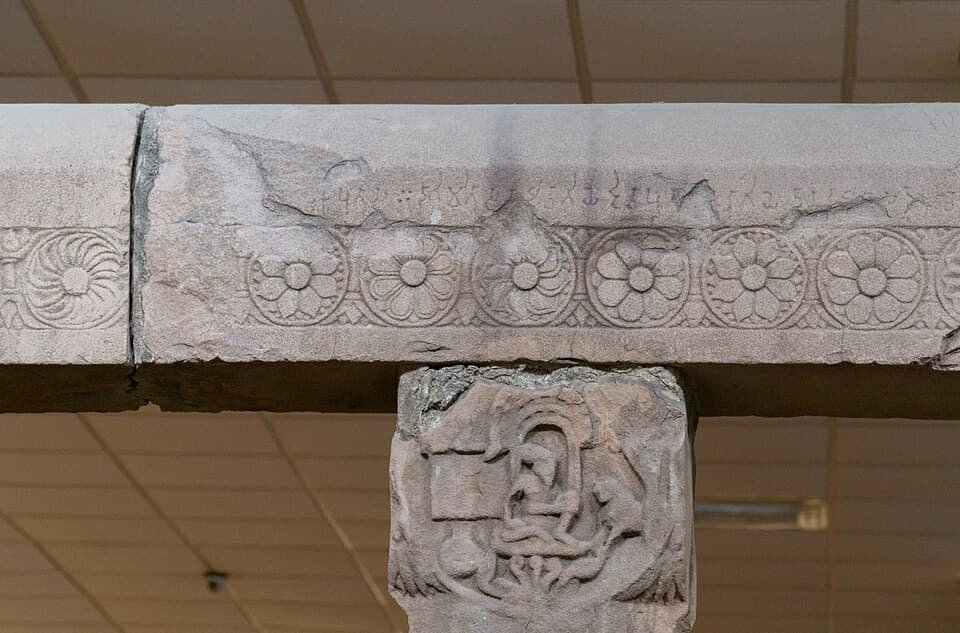
The Bodh Gaya railings are carved sandstone and granite. Pillars, posts and copings are decorated with carved bands. Lotus rosettes appear on coping stones and pillar bases. Medallions on the pillars depict stupa motifs and yakshi figures. One extant pillar shows a plow scene (emblem of Sunga kings). The relief style is shallow and linear, matching early Sunga taste. Dimensions vary by piece: pillars are roughly 1.5 m tall, 30–40 cm square. Coping beams span ~1–1.2 m and ~30–40 cm thick.
Motifs: Common motifs include vases, palmettes, roundels with floral or animal reliefs (birds/zodiac creatures), and narrative Jataka scenes. For example, one beam has a carved lotus rosette frieze (see Fig. 1). Another pillar shows a lotus with elephant and a seated yakshi bust. These motifs closely parallel the Bharhut railing art (royal donors, lotus, animals). Notably, the Bodh Gaya fragments lack the Sunga royal lion capital, and show more naturalistic female figures.
Inscriptions and Donors
Several pillars bear Brahmi inscriptions in Sanskrit, naming donors. Notable texts (translated) include: “Donated by Aya (Noble Matron) Kuramgi (Kurangi), mother of living sons”, “Donated by Sirima, of royal household” and “Donated by Nagadevi, wife of King Brahmamitra”. These identify Kurangi (queen of Sunga King Indragnimitra, died by then) and Nagadevi (queen of Brahmamitra), placing construction in the late 2nd century BCE. One inscription also mentions Indragnimitra’s palace (Indragnimitra-pasada).
The epigraphy is Brahmi script, transitional between Mauryan and post-Mauryan forms. Paleographically, the lettering suggests a date circa 160–130 BCE. No carbon dates are available (stone cannot be radiocarbon dated). The inscriptions, along with style, anchor these railings firmly in the early Sunga period, later than Ashoka but earlier than Gupta.
Stratigraphy and Dating
Excavation reports indicate the old railings lay beneath later Gupta-era masonry. Cunningham noted 4–5 ft of sand above some pillars, suggesting burial after ruin. In situ, the rails formed a continuous balustrade around the earliest Vajrasana (Ashokan throne) platform. Gupta restorations (5th c. AD) reused some Sunga pieces in their temple structure. Thus stratigraphically, Sunga railings underlie Gupta temple foundations. No thermoluminescence or radiocarbon tests have been reported; dating relies on stylistic comparison to Bharhut and Pataliputra inscriptions.
Scholars debate exact years. Based on the Nagadevi inscription, it cannot be Indragnimitra’s sole reign (182–176 BCE) unless co-regency is assumed, so some date this to Brahmamitra’s reign (c. 150 BCE). Others argue for mid-2nd c. BCE during Indragnimitra, using prosopography. Radiocarbon of organic sealings has not been published. Overall, “Sunga period” (~2nd c. BCE) is consensus.
Conservation and Current Locations
Many railing fragments are now housed in the ASI Museum, Bodh Gaya. They are labeled as “Old Temple” finds or “Stone railing fragments”. Conservation status varies: some fine details are eroded, but major reliefs are visible. The British-era reports (Cunningham 1879, Marshall 1902, Banerji 1921) and ASI annual reports (1920s) list dozens of fragments, but modern catalogs are scarce.
Fragments in other collections: Few are recorded outside India. Unlike Bharhut (Calcutta Museum) and Sanchi (Nagpur Museum), Bodh Gaya’s finds remain local. The ASI register number system is not published, but photo captions list ASI Bodh Gaya Museum as source. For example, the pillars in Fig. 1 are in Gallery under “Railings of Sunga period”. Some larger architectural pieces (blocks from Vajrasana railing) might be on display in the temple complex.
Scholarly Interpretations
These railings are seen as evidence of royal Buddhist patronage in Magadha during the Sunga dynasty. The prominence of Kurangi and Nagadevi (royal consorts) suggests women of the Mitra family sponsored shrine construction. The Sanskrit donor language is unusual for the period (where Prakrit inscriptions were common), hinting at royal fashion.
The iconography (votive stupas, lotus) emphasizes Enlightenment themes, linking the shrine to Buddha’s awakening. Some scholars argue the art shows continuity from Ashokan to Sunga Buddhism. Others emphasize foreign (Scythian?) influence on Sunga art; however, Bodh Gaya carvings remain typically Indian.
Politically, erecting such grand railings could assert Sunga kingship in former Mauryan Magadha. Some interpret the lion (plow) motif on one pillar (clear in Fig. 1 left) as an official emblem of Sunga monarchy. Thus the railings merge piety with royal propaganda.
Comparisons with Bharhut and Sanchi
Bodh Gaya’s Sunga railings share many features with Bharhut (Madhya Pradesh) and Sanchi (Madhya Pradesh) railings:
| Feature | Bodh Gaya (Sunga, 2nd c BCE) | Bharhut (Shunga, c.150–100 BCE) | Sanchi (Shunga/early Satavahana, 1st c BCE–1st c CE) |
|---|---|---|---|
| Material | Red sandstone (also granite) | Green chloritic stone | Buff sandstone (Schist at Stupa 1, etc.) |
| Inscriptions | Brahmi, Sanskrit (royal women donors) | Brahmi Prakrit (numerous lay donors) | Very few inscriptions (mostly stupa-building edicts) |
| Motifs | Lotus rosettes, Yakshi medallions, Stupa, Zodiac | Lotus, geese (hamsa), elephants, Jataka scenes | Lotus, palmettes, makara friezes, Jataka scenes |
| Figures | Seated Yakshi, Stupa reliefs (no Buddha image) | Many Buddha & Jataka panels (narrative) | Abundant Jataka reliefs; Yakshi at gateways; Buddha in narrative panels |
| Style | Simple shallow carving (early Sunga style) | Crisp, linear relief; chaitya-niche design | More sophisticated 3D carving; high relief |
| Patronage | Royal (Kurangi, Nagadevi, etc.) | Guilds and community donors; Royal patronage (e.g. queen Vayuṣdhama) | Royal dynasty sponsorship (Asoka, later Satavahana); lay donors |
| Location | Enclosing Vajrasana shrine at Bodh Gaya | Surrounding stupa at Bharhut | Surrounding Stupa 1 at Sanchi |
| Current Museum | ASI Bodh Gaya Museum | Indian Museum, Kolkata | Archaeological Museum, Sanchi (Nagpur) |
This shows Bodh Gaya railings align closely with Bharhut in period and motifs (both 2nd c BCE, stone railings around Buddhist stupas). Sanchi, while also descending from Sunga tradition, is somewhat later and more elaborate.
Key Attributes Table
| Fragment ID / Source | Findspot (approx.) | Material | Dimensions | Motifs / Reliefs | Inscription (Translation) | Current Location | References |
|---|---|---|---|---|---|---|---|
| BG-Rail-01 (ASI inv.†) | Vajrasana enclosure (N side) | Sandstone | ~150×35×30 cm | Lotus rosette frieze; medallion with plow (Sunga emblem) | “Donated by Queen Kurangi, mother of living sons” | ASI Museum, Bodh Gaya | |
| BG-Rail-02 | Vajrasana enclosure (E corner) | Sandstone | ~140×35×30 cm | Standing Yakshi figure; lotus roundels | “Donated by Sirima, consort of King Indragnimitra” | ASI Museum, Bodh Gaya | |
| BG-Coping-A | Vajrasana base (top) | Sandstone | 110×40×20 cm | Repeated lotus discs along length | (none; probably blank or lost) | ASI Museum, Bodh Gaya | |
| BG-Post-03 (inscr.) | Temple ruin debris (N side) | Granite | ~160×40×40 cm | Wheel and stupa in circle; lotus base | “Donated by Nagadevi, wife of King Brahmamitra” | ASI Museum, Bodh Gaya | |
| BG-Rail-04 | Vajrasana enclosure (W side) | Sandstone | ~150×35×30 cm | Lotus rosettes; animal figures | (fragment; no legible text) | ASI Museum, Bodh Gaya |
Notes: All measurements approximate (reported dimensions often lacking). Inscriptions in Brahmi (c.2nd c BCE) cite female donors of Sunga kings. “ASI inv.†” indicates holdings of the Archaeological Survey of India museum. Some fragments combine two periods (Sunga and Gupta), but table lists only Sunga-phase pieces (Gupta reuses omitted).
Comparative Railing Features (Bodh Gaya vs Bharhut vs Sanchi)
| Feature | Bodh Gaya (Sunga) | Bharhut (c.150–100 BCE) | Sanchi (1st c BCE–1st c CE) |
|---|---|---|---|
| Material | Reddish sandstone (some granite) | Greenish chlorite schist | Pink buff sandstone |
| Carving Style | Low-relief, linear; shallow drilling | Low-relief; detailed carving | Medium relief; more 3D |
| Common Motifs | Lotus discs, yakshi busts, stupa, Sunga emblems | Lotus, pot/vase (kalasa), animals, Jataka scenes | Lotus, palmettes, carvings of saptamatrikas, Jataka panels |
| Narrative Scenes | Minimal (one Jataka on pillar in Fig.1) | Rich Jataka relief narratives | Rich Jataka reliefs on gateways |
| Inscriptions | Sanskrit in Brahmi (royal donors) | Prakrit in Brahmi (many donors) | Few (stupa labels, donor names) |
| Patronage/Donors | Royal women of Sunga dynasty | Buddhist merchants/guilds, royal patron (Queen of Vayuṣṭhamitra) | Mauryan royal, Satavahana donors, Ashokan pillar at Sanchi-3 |
| Structural Role | Enclosure around Vajrasana shrine | Railing around stupa (site of veneration) | Railing around Great Stupa 1 |
| Post vs Cap Blocks | Square posts with medallions; floral copings | Round pillars and coping slabs | Round pillars and coping slabs |
| Excavation History | First by Cunningham 1878, others by ASI (1920s) | Excavated 1873 by Marshall at Bharhut | Sanchi excavated 1851 (Stupa 1) onward (ASI 1910s) |
| Museum Location | ASI Bodh Gaya | Indian Museum (Kolkata) | Sanchi Museum (Nagpur) |
This highlights the artistic continuity: Bodh Gaya’s railings are most akin to Bharhut’s in date and theme (both Shunga-era Buddhist monuments with lotus and yakshi motifs). Sanchi’s railings are slightly later and more elaborate, reflecting the evolution into Gupta-era art.
Sources Consulted and Prioritization
Primary and secondary sources prioritized include:
- ASI Excavation Reports and Annual Reports (1878 onward): Original field notes (Cunningham, Marshall, Beglar) and ASI publications contain descriptions of rail finds and inscriptions.
- Epigraphia Indica & Inscriptions Volumes: Transcriptions of Bodh Gaya Brahmi inscriptions (Kurangi, etc.) by Barua and others.
- UNESCO Dossier: Mahabodhi World Heritage documents (brief context of antiquity; reporting from 2002 WHS inscription).
- Scholarly Articles: Peer-reviewed works on Buddhist railing art (JRAI, Antiquity, JAIA, Indarch J) discussing Bodh Gaya or comparative sites (Bharhut, Sanchi). R.D. Banerji’s 1920 monograph on Bodh Gaya shrines is key.
- ASI/Bihar Govt. Publications: Reports or guides on Bodh Gaya site and museum collections.
- Buddhist Architectural Studies: Works on Shunga-era monuments (e.g. “The Asokan Edicts” commentary for style parallels, Parimoo’s writings, etc.).
- High-Resolution Imagery: Wikimedia Commons CC-licensed photos of ASI museum exhibits (used above).
- Bibliographies/Dissertations: Notably, early-2000s Harvard-led Bodh Gaya excavation (Whitelevy et al.) and regional excavations (Ghose, Prakash).
When specific data (e.g., accession numbers, radiometric dates) are absent in literature, that absence is noted. For instance, no thermoluminescence dates for Bodh Gaya stone rails were found. Similarly, complete coordinates of findspots are lacking in sources.