Human development stages. People grow and change all through life. Babies learn to smile, crawl, and say first words. School-age children learn reading, math, and make friends. Teens go through puberty and form their own identity. Young adults build careers and relationships. In midlife, bodies change slowly but many stay strong with good habits. In older age, people may slow down but often gain wisdom. At every stage, health, nutrition, sleep, and a loving environment matter. Good food, exercise, and enough sleep help the brain and body develop well. Warm care and play support a child’s growth. This article lists typical milestones and changes for each life stage, notes when to seek help, and gives tips to support development. Cultural and family differences can shape how people grow, but basic needs like love, safety, and health are universal.
Thank you for reading this post, don't forget to subscribe!The Journey of Growing Up: Physical Changes
Infancy (0–2 years)
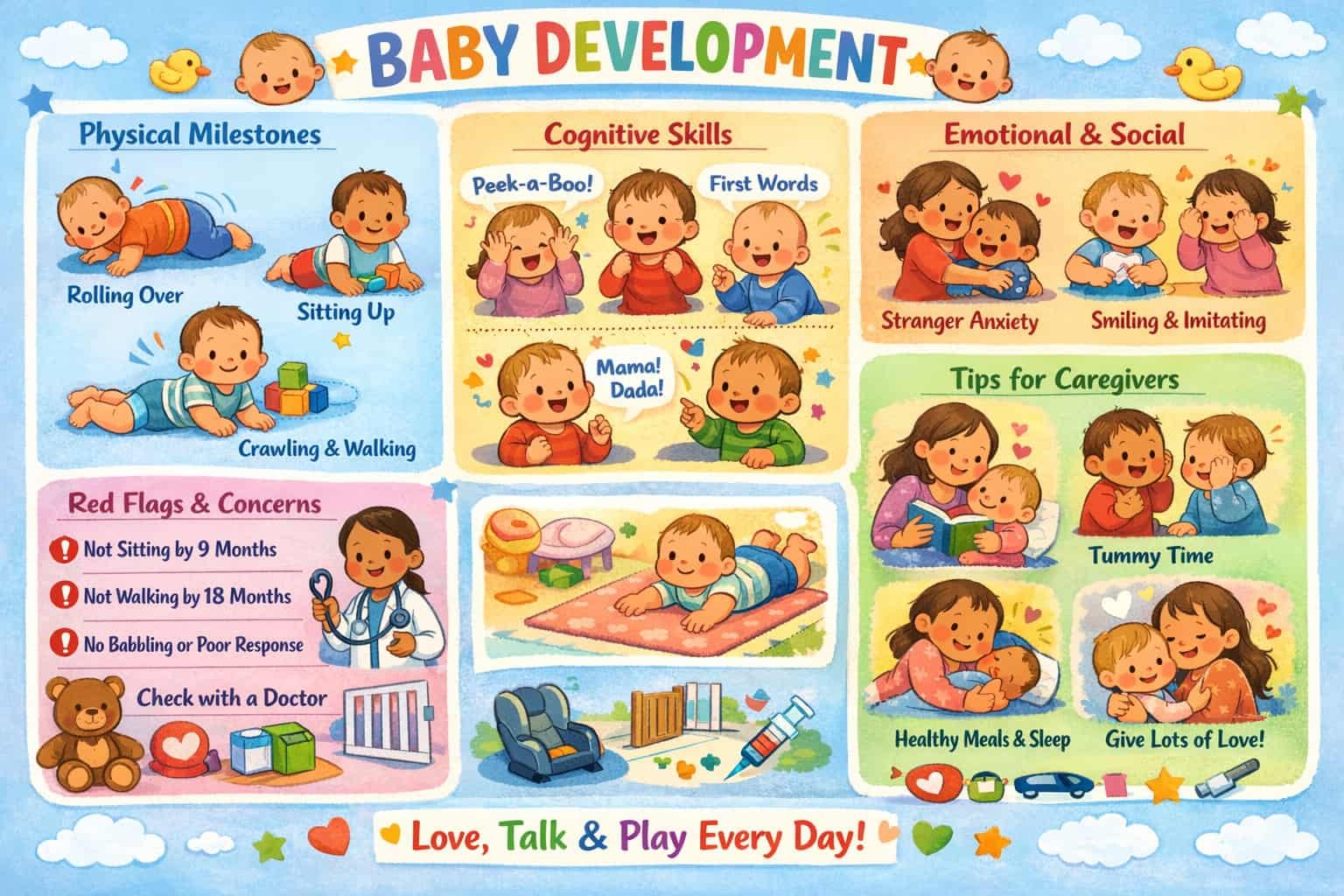
- Physical: Babies grow fast. By about 6–9 months most roll over, sit with support, and reach for toys. By 12–18 months many crawl and walk. They learn to use hands (pick up objects, feed themselves) and drink from a cup.
- Cognitive (Thinking): Babies begin to understand the world. They recognize faces and voices, smile at people, and play peek-a-boo. By 1 year they often say simple words (“mama”, “dada”). By age 2 they may speak in two-word phrases and follow simple instructions. They love looking at books and exploring toys to learn cause and effect.
- Emotional & Social: Infants form strong bonds with caregivers. They smile back, laugh, and show attachment. They may cry to show needs (hungry, tired). Around 6–12 months babies show joy when you smile and may get upset when separated (stranger anxiety). By age 2 toddlers show some independence but still want comfort. They begin to imitate others and play simple games like “peek-a-boo”.
- Common Variations / Red Flags: Babies vary a lot, and some preterm babies catch up later. But certain delays are worrisome. For example, by 12 months most babies babble and point; if they don’t make sounds or respond to name, see a doctor. Not sitting by 9 months or not walking by 18 months are red flags. If a baby has very weak muscle tone (floppy) or extreme stiffness, or loses skills they had, get medical advice.
- Tips for Caregivers: Give lots of love and attention. Hold and cuddle the baby often. Talk, sing, and read even simple books — this helps the baby’s brain grow. Provide safe places to explore (a play mat, soft toys) and encourage movement (tummy time for babies to strengthen neck muscles). Follow feeding and sleep routines. Health experts recommend exclusive breastfeeding for the first 6 months, if possible. Ensure immunizations and doctor visits are on track. Keep the environment safe (use car seats, gates) and smoke-free. Every day, respond warmly to the baby’s needs; this builds trust and emotional health.
Early Childhood (3–5 years)
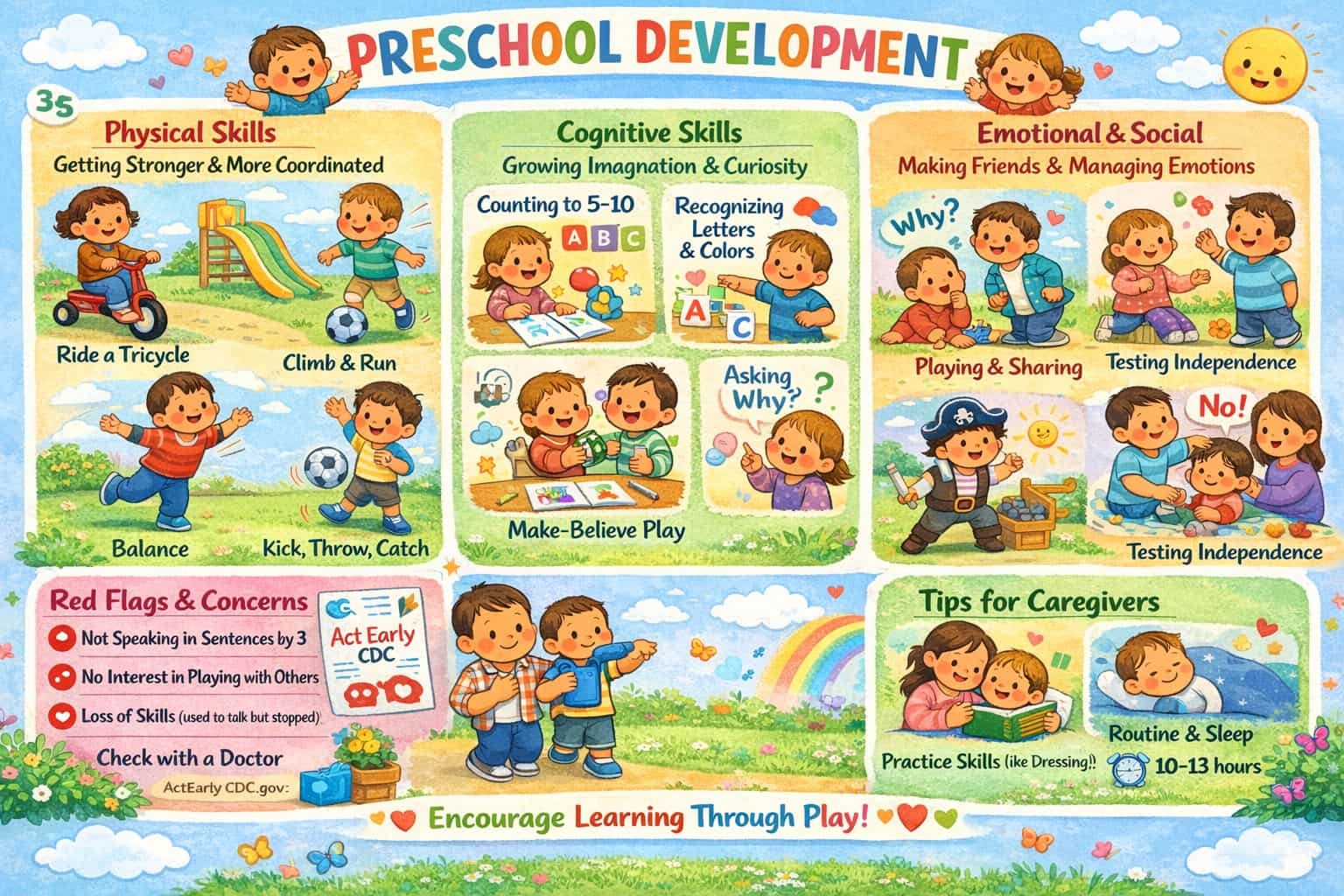
- Physical: Preschoolers get strong and active. By 3–4 years they can run, jump, and ride a tricycle. They can climb stairs, kick and throw a ball. Fine motor skills improve: they draw simple shapes, cut with safety scissors, and feed themselves with a fork or spoon. By 5 years many can balance on one foot, use buttons or zippers, and write some letters.
- Cognitive (Thinking): Curiosity blooms. Children can count (many count to 5–10 by age 5) and recognize letters and colors. They understand more of the world and ask lots of “why” questions. They begin to follow multi-step instructions (“put on shoes then wash hands”). Imagination is strong: they tell stories and play make-believe. By 4–5 years they can retell a simple story they heard and remember parts of it.
- Emotional & Social: Early childhood is rich in feelings. Children may have big moods and need help managing anger or frustration. They start to understand empathy: a 3-year-old often notices if someone is sad. Preschoolers love playing with others. They learn to share toys and take turns (though arguments still happen!). Friends and pretend play become important. They also test independence (saying “no” a lot) as they assert themselves. Praise good behavior and talk about emotions (“I see you’re happy/proud”).
- Common Variations / Red Flags: Variations are normal (some 3-year-olds speak very well; others still mix words). Still, watch for clear concerns. For instance, not speaking in short sentences by 3, or not playing with other kids at all, may need evaluation. A red flag is if a child lost skills (e.g., used to speak words but stopped). A lack of eye contact, or not engaging at all with parents, could signal issues (see CDC’s “Act Early” guide). Also note behavior: extreme aggression or fear that stops everyday life is worrisome.
- Tips for Caregivers: Encourage learning through play. Read together daily – point to pictures and ask what’s happening. Sing songs with numbers, days, and simple rhymes to build language skills. Let children practice skills: dress themselves, pour small amounts of water, or help set the table. Celebrate their attempts even if not perfect. Establish routines (bedtime story, mealtime at table) so they feel secure. Offer healthy foods and limit sweets and juice. Ensure about 10–13 hours of sleep for good growth and behavior. For social growth, arrange playdates or pre-school so they learn sharing. Set gentle limits: give small choices (e.g. “Which book shall we read, the cat book or the pig book?”) to support independence. Talk to them about feelings, and label emotions (“It’s okay to be upset; I see you’re sad”), as this helps emotional learning.
Middle Childhood (6–12 years)
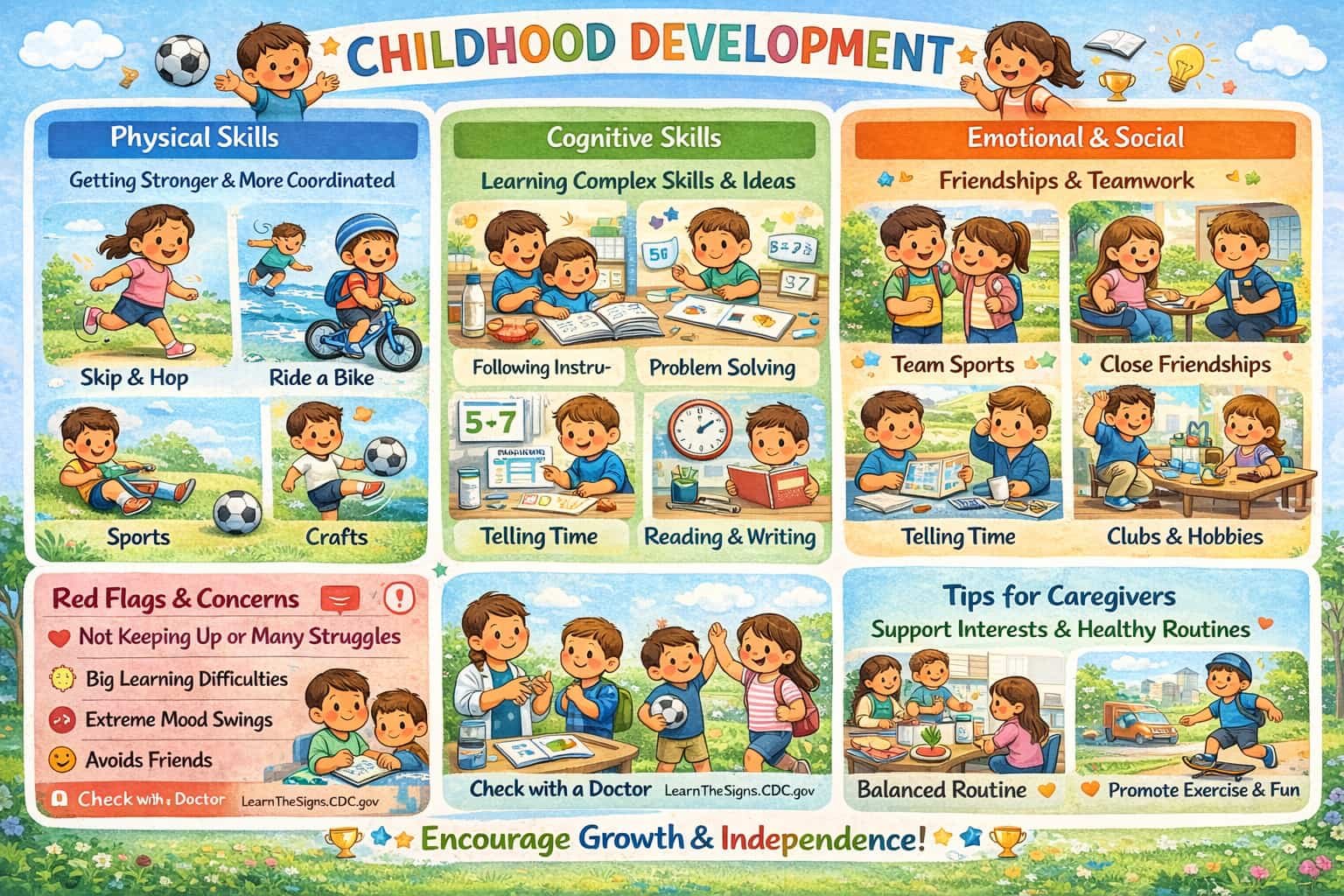
- Physical: Children grow steadily. Each year they gain a few inches in height. Gross motor skills refine: they can skip, hop, ride bikes without training wheels, and swim. Fine motor skills improve too: they tie shoelaces, write more neatly, and do crafts or sports that require hand-eye coordination. By the end of this stage, many start showing early signs of puberty (girls might grow breasts or boys develop hair), usually around age 10–12.
- Cognitive (Thinking): School is a big driver here. Kids learn reading, math, and science basics. They understand more complex ideas: they grasp cause and effect, can follow multiple-step instructions, and do logical problem-solving (e.g., simple math problems like adding and subtracting). Many 6–7-year-olds can read simple books, tell time, and do puzzles. Older children (10–12) write stories and enjoy reading on their own. Their attention span grows, so they can work on projects for longer periods. They also become more aware of different cultures and can understand fairness and rules.
- Emotional & Social: Friendship matters a lot now. Kids often form close friends or groups and may show loyalty. They enjoy team activities (sports, clubs) or hobbies (art, music). They learn to cooperate and follow rules in games or class. Self-esteem builds from achievements (good grades, sports wins) but can be hurt by teasing. Emotional changes can include worry about performance (“Am I good enough?”) or peer approval. They better understand others’ feelings and can resolve small conflicts with peers. Family relationships stabilize; they may argue less with parents as they grow.
- Common Variations / Red Flags: Children vary in learning pace. However, severe troubles in school or social life may need attention. For instance, if a 7-year-old still confuses basic numbers or letters, or if a child avoids all friends or bullies others constantly, consider asking a professional. Other red flags include extreme anxiety about leaving home or sudden mood swings that disrupt daily life. If hearing or vision problems interfere with learning (e.g. not catching balls or missing answers), have them checked.
- Tips for Caregivers: Encourage hobbies and talents. Help your child read by choice and practice math in fun ways (cook together to measure ingredients). Praise effort and progress to build confidence. Keep a balanced routine: regular sleep and healthy meals help school performance. Talk about school and friendships – be ready to listen if they have problems. Encourage physical activity (biking, sports) to stay healthy. Limit screen time so they read or play outdoors more. Involve them in family tasks (letting them do dishes or care for a pet) so they gain responsibility. Show interest in their friends and new interests to support their growing independence.
Adolescence (13–18 years)
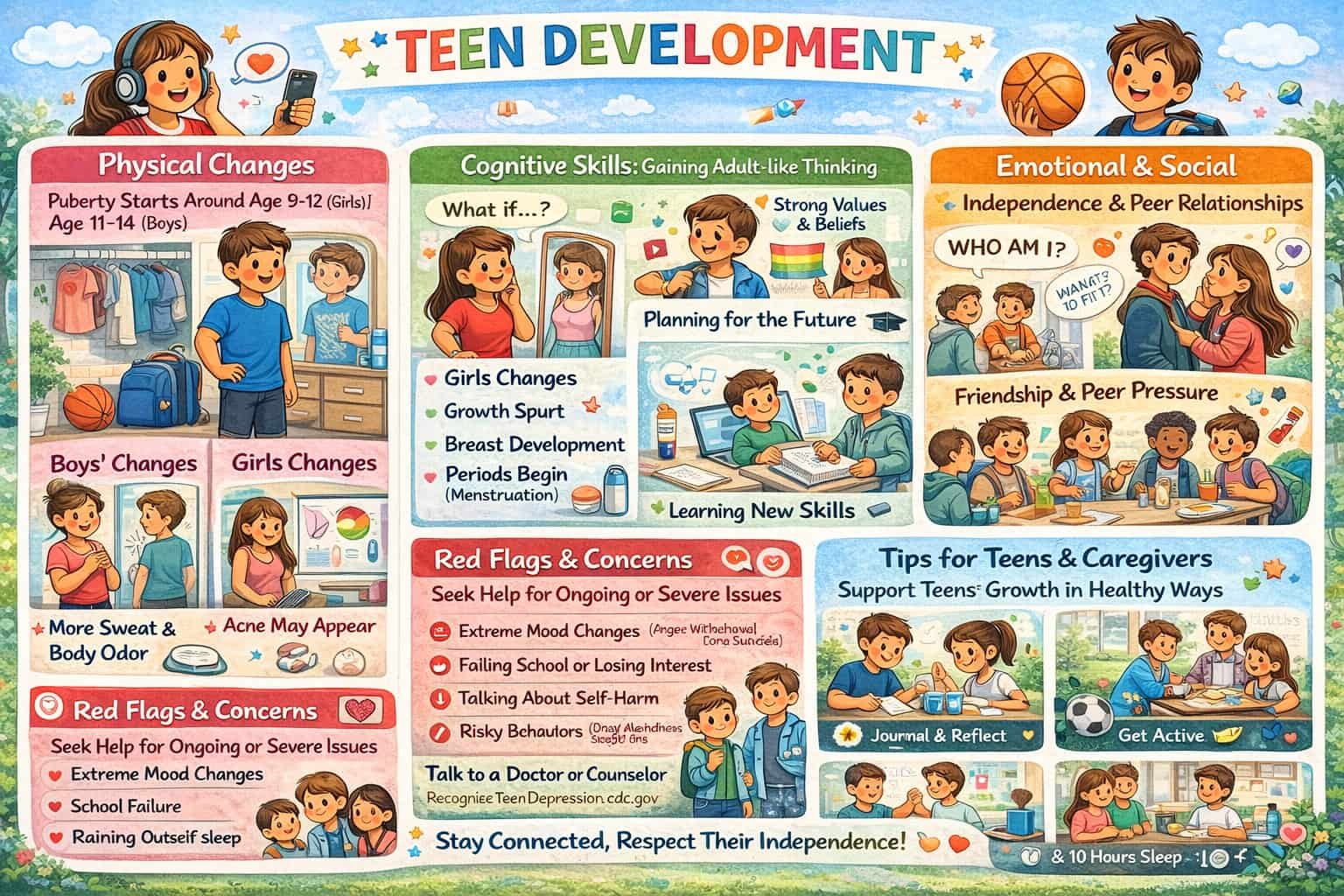
- Physical: Teens experience puberty with rapid changes. Girls often begin puberty around 9–12: breast development, growth spurt (peaks ~11.5 years), and start of periods (around 12 on average). Boys typically begin a bit later: testicle and penis growth starts (~age 11–12), voice deepens, body hair appears, and a growth spurt peaks around 13½. Acne and body odor are common as hormones rise. Physical strength and skills continue to improve, though growth may be uneven (one teen can hit a growth spurt while another is just starting puberty).
- Cognitive (Thinking): Teen brains gain adult-like thinking. They move from concrete to abstract thought: they can reason about “what if” situations and think about moral or philosophical ideas. Planning for the future (education, career) and personal values develops. Many teens form stronger opinions and question earlier beliefs (“Who am I? What do I believe?”). Memory and learning capacity are high, so education and skill-building (like driving or learning programming) can be very rewarding.
- Emotional & Social: Teens seek independence. Friend groups are extremely important – peers often become a “safe haven” and influence choices. Romantic interests typically begin; many may date and explore relationships. It’s also normal to test boundaries and have mood swings due to hormones and stress. Most adolescents want more privacy but still need parental support. Identity formation is key: they explore who they are, which can lead to conflicts with parents over rules. Emotions like anxiety or moodiness are common, but watch for signs of depression or severe withdrawal. Peer pressure (for example to try alcohol or drugs) can be strong, so guidance is crucial.
- Common Variations / Red Flags: Puberty timing varies (some start at 9, others at 15). Still, very late or no development by 17 could need medical advice. If an adolescent shows extreme mood changes (like severe anger for weeks) or persistent sadness, or if they stop caring about hygiene or school, get help. In terms of social development, inability to make any friends or refusing to leave the house by late adolescence is a concern. Risky behaviors (drugs, unsafe sex, self-harm talk) also need professional attention.
- Tips for Caregivers and Teens: Keep talking and listening in a non-judgmental way. Encourage healthy outlets for emotions (sports, arts, journaling). Set reasonable limits: ensure teens get 8–10 hours of sleep (less sleep harms school performance and mood). Teach safe habits (e.g. contraception, avoiding drunk driving). Support their independence by involving them in decisions (like curfews). Praise responsible choices to build self-esteem. Family meals and time help maintain connection. Remind them that good nutrition and regular exercise help mood and growth. Be alert: if you notice drastic changes in behavior, gently suggest talking to a counselor or doctor.
Young Adulthood (19–30 years)
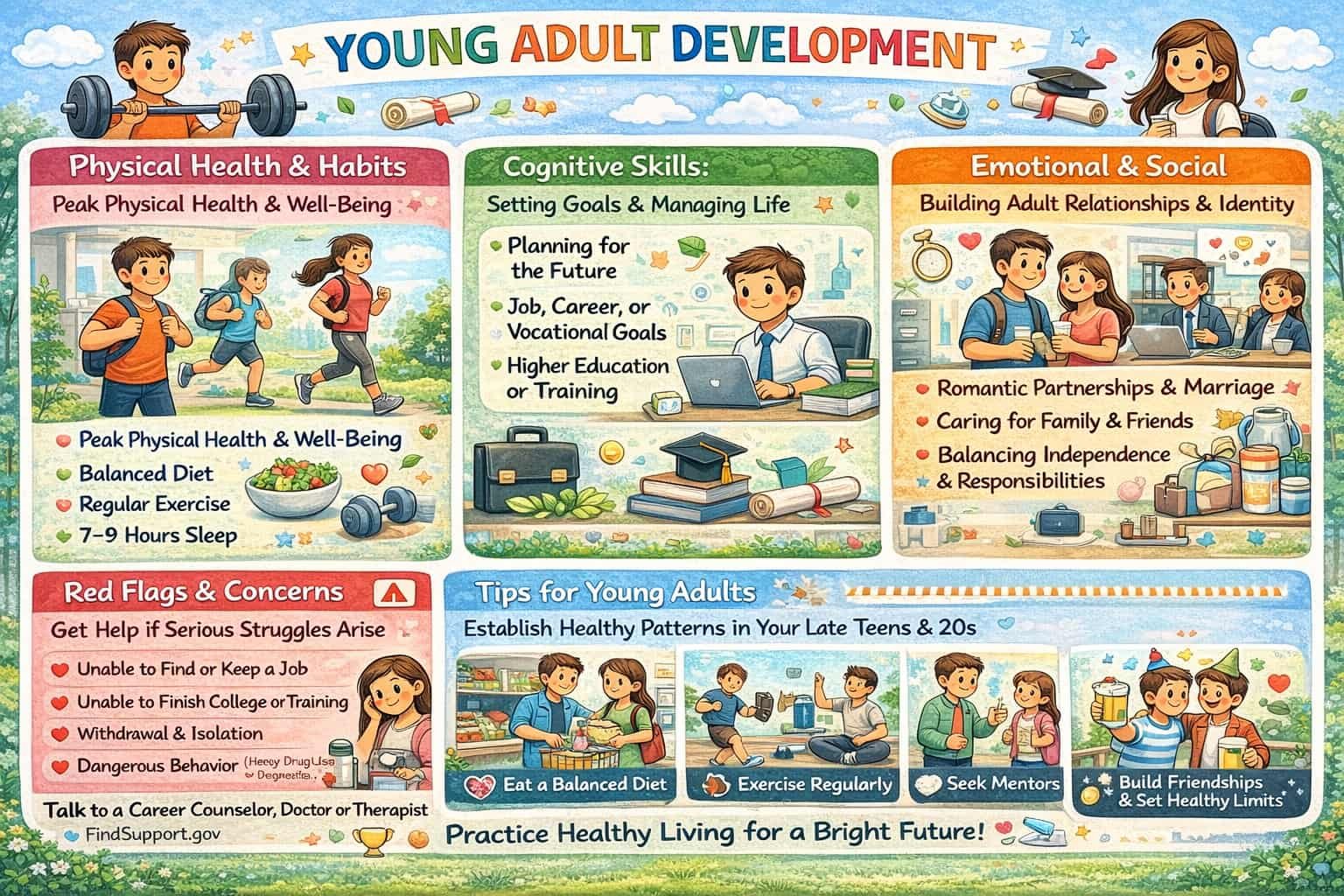
- Physical: By their late teens/20s, most people reach physical peak strength, stamina, and reproductive health. Young men and women are usually at their healthiest bodily state. Height is set (no more growing taller). Vision and hearing are normally sharp. Later twenties may see metabolism slightly slowing, but overall the body is at peak condition.
- Cognitive (Thinking): Young adults fully use abstract reasoning and advanced learning. They often complete education or training and enter careers. They set long-term goals (job, education, skills) and plan for the future. Problem-solving becomes more practical, drawing on both school learning and life experience. Many pursue higher education or vocational training to advance their careers.
- Emotional & Social: Young adults build adult relationships. This often includes romantic partnerships, marriage, and maybe starting a family. Friendships can be deeper, though some childhood friends may drift away as lives change. People often develop a stronger personal identity and values. Many young adults feel confident and “invincible,” which can be positive or lead to risky behaviors if unchecked. Balancing independence with family ties is common (e.g., moving out but still caring for parents). Emotional well-being usually improves after the teenage years, but stress from work or new responsibilities can arise.
- Common Variations / Red Flags: Some enter college or jobs later, which can be fine. However, struggles such as inability to work or get an education by late 20s may need support (career counseling or special services). Mental health issues often first appear in this age (anxiety, depression). If a young adult withdraws, abuses substances, or has major mood swings, encourage professional help. Also note any chronic health issues (diabetes, high blood pressure) – young adults should have general check-ups to catch problems early.
- Tips: This is a time to set healthy patterns. Maintain a balanced diet and regular exercise (CDC recommends 150 minutes of moderate exercise weekly). Protect mental health with stress management (sleep, hobbies, talking with friends/family). Consider career or life mentors for guidance. For women, consider plans for pregnancy health (folic acid, etc. if family planning). For all, avoid tobacco and limit alcohol. Keep up vaccinations (flu, HPV, etc.). Lean on family or friends for support but also build independence (manage money, cook meals). It’s never too late to adopt healthy habits: WHO and CDC stress good nutrition, exercise, sleep, and social connections at all ages.
Middle Adulthood (31–60 years)
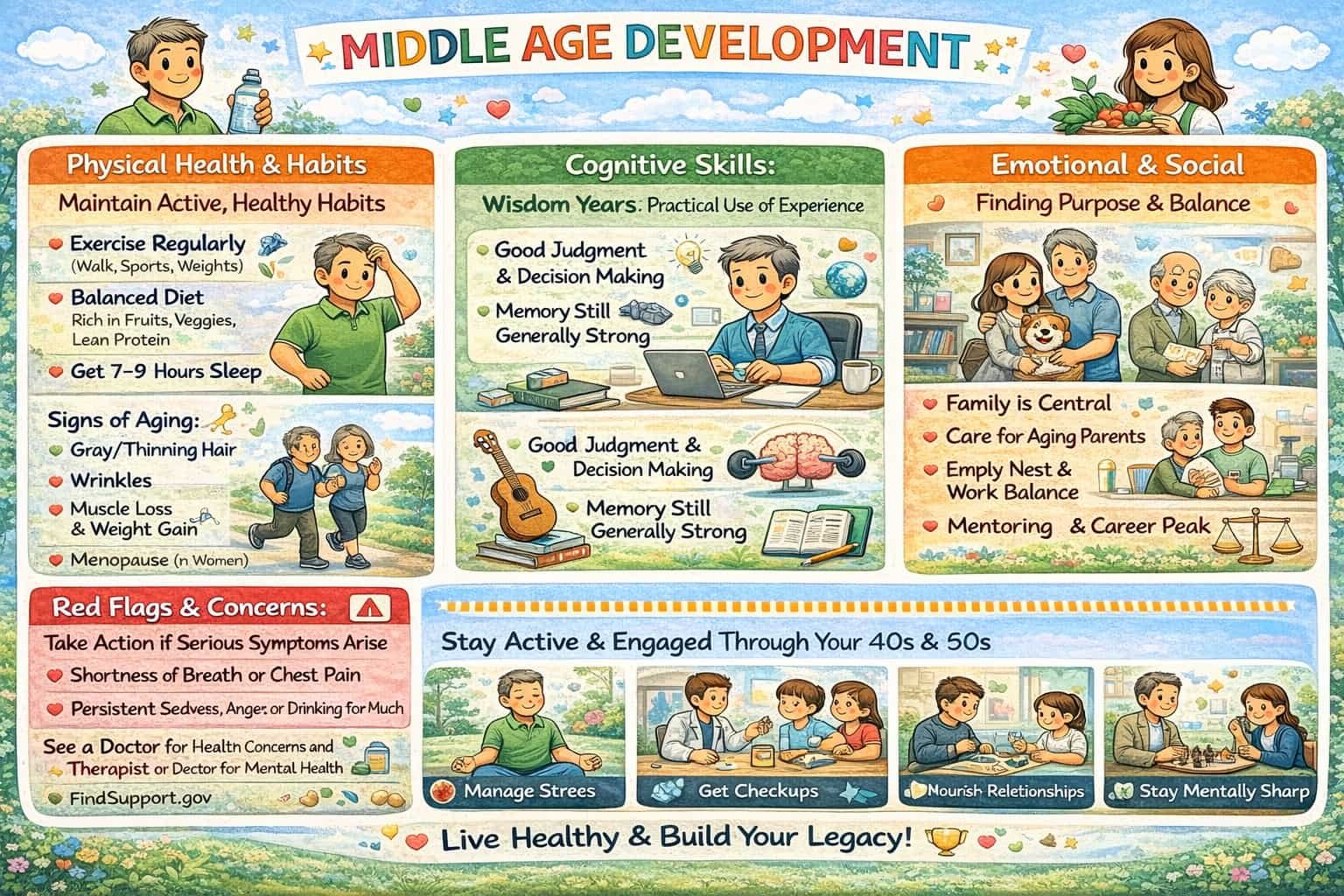
- Physical: Changes are gradual. Many adults notice subtle signs of aging: hair may gray or thin, skin may get wrinkled (often from sun exposure). Muscle strength and metabolism typically slow a bit; people may gain weight if diet or exercise isn’t adjusted. Men often develop a “belly” if sedentary. Women experience menopause (around 45–55), ending menstrual periods and causing hot flashes or mood changes. Senses like hearing or vision may decline slightly (needing glasses or more ear-friendly noise levels). Importantly, healthy habits can slow aging: as one open-source text notes, many middle-aged adults adopt healthier diets and experience less mental illness than at younger ages. In fact, regular exercise and diet can keep heart and muscles strong far into older years.
- Cognitive (Thinking): Brains continue to work well. Most people’s memory and problem-solving remain strong; some even say they are “wisdom years” with good judgment from experience. Research shows memory in 40s-50s is similar to that of younger adults. Processing speed may feel slower (it takes a bit longer to recall a name), but knowledge and decision-making often improve. Many middle-aged people shift focus from knowledge-gathering to applying what they know. Learning new skills (languages, instruments) is still very possible.
- Emotional & Social: By midlife, many feel stable in their role. Their career may peak, children may leave home (“empty nest”), and some reevaluate life goals (this can trigger a “midlife crisis” in a few, but not most). Relationships often settle: marriages can be strong or may face challenges. People often value family and close friends highly. They may take on mentoring roles at work or in community. Stressors include caring for aging parents and balancing work-life. According to Erikson’s theory, middle adulthood is about “generativity” – contributing to future generations through parenting or work. Emotions often center on legacy and satisfaction in life’s accomplishments.
- Common Variations / Red Flags: Health screenings become important. By 40–50s, risk for high blood pressure, diabetes, and heart disease rises; regular doctor visits are wise. A red flag is ignoring health advice or symptoms (chest pain, uncontrolled weight gain). If someone in midlife shows persistent sadness, anxiety, or excessive alcohol use, encourage them to get support. Cognitive red flags (memory loss affecting life) are still uncommon at this age, but be alert to changes. If someone can’t do daily tasks they could before (e.g. manage finances, drive safely), seek help. Chronic conditions (arthritis, sleep apnea) can emerge – treating them can improve life quality.
- Tips: Maintain an active, healthy lifestyle. Keep exercising (walking, sports, gym) as CDC advises to prevent chronic illness. Eat a balanced diet rich in fruits, vegetables, whole grains, and lean protein. Adequate sleep (7–9 hours) is crucial for mood and metabolism. Stay mentally sharp by reading, puzzles, or new hobbies. Manage stress with mindfulness, support groups, or therapy if needed. Keep social connections (join clubs, volunteer) – social well-being is linked to health. Don’t skip regular health check-ups (blood pressure, cholesterol, cancer screenings). It’s normal to feel uneasy about aging, but many find middle age rewarding as family and career mature. Share feelings with friends or a counselor if overwhelmed. If possible, continue learning or teach others – that engagement supports cognitive health.
Older Adulthood (61+ years)
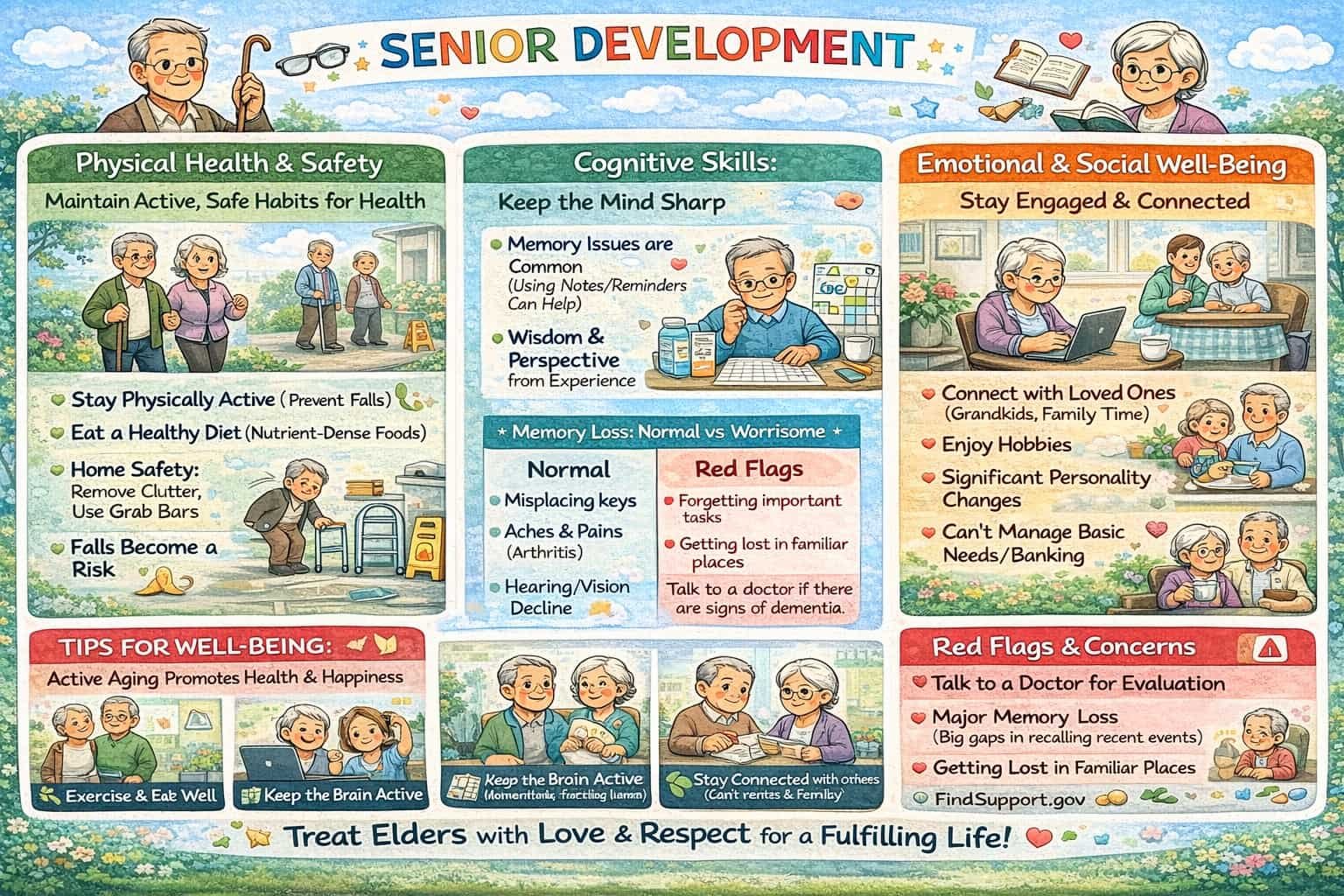
- Physical: Aging bodies naturally slow down. Muscle mass and bone density decrease, so strength and balance may weaken. Reaction time is slower, and joints may ache (arthritis is common). Senses often decline: vision (difficulty with low light or fine print) and hearing (especially high-pitched sounds) may worsen. It’s normal to need glasses or hearing aids. Skin thins, and older people bruise or cut more easily. However, many seniors stay very active; the CDC notes that good habits from earlier life (healthy diet, exercise) help seniors stay healthy. Falls become a risk, so homes should be safe (remove tripping hazards, install grab bars). Nutrition needs change: older adults need nutrient-dense foods (less junk food) to maintain health.
- Cognitive (Thinking): Many older adults maintain sharp thinking and memory. As NIH reports, some slowing in recalling words or names is normal with age. Long-term memory (facts, events) usually stays strong, especially when stimulated by reading or conversation. Serious memory problems are not normal: forgetting how to do common tasks or severe confusion (like getting lost in familiar places) are red flags that need medical attention. Many older adults use strategies (notes, calendars) to help memory. Decision-making can remain good, often drawing on a lifetime of experience. Some wisdom and perspective often come with age. However, risk of dementia (like Alzheimer’s) rises with age; about 1 in 10 over 65 has some dementia. Knowing “normal” vs “warning” signs is key (see box below).
- Emotional & Social: Retirement, health changes, and loss of peers or spouse can be emotional challenges. Erikson described this stage as “integrity vs. despair”: older adults reflect on life. Those who feel they led a satisfying life usually feel peaceful and grateful. Others who have regrets may feel sadness or hopelessness. Socially, some elders enjoy more family time (grandchildren, family gatherings) and hobbies, while others feel lonely if isolated. Staying socially active is important: volunteering, senior centers, clubs, or living near family help. Engaging in meaningful activities (gardening, part-time work, learning) boosts morale.
- Common Variations / Red Flags: Normal aging can include some memory slips (forgetting a name). But troubling signs include: repeating questions or stories, getting lost in familiar places, significant changes in personality, or inability to manage daily activities. If these occur, talk to a doctor. Chronic illnesses (heart disease, diabetes, arthritis, vision/hearing loss) are common; proper treatment improves life quality. Depression is NOT a normal part of aging; if an older person loses interest in life, seek help. Nutritional problems (eating little due to poor appetite) can be a concern – ensure they eat balanced meals. Sleep patterns may change (lighter sleep, early rising); as long as they get enough rest, it’s fine. Safety is crucial: prevent falls (good shoes, well-lit paths) and have routine health checks (eye exams, hearing tests).
- Tips for Well-Being: Follow CDC healthy aging advice. Stay physically active (walking, tai chi, light exercise) to maintain strength and prevent falls. Eat a varied diet with calcium and vitamin D for bones. Keep socially connected – phone friends, join groups, or video-call family. Keep the brain active: read, do crosswords, learn new skills (even computer use can help). Sleep at least 7–8 hours; short naps are okay. Keep a regular medical routine (vaccines, screenings). Avoid smoking and limit alcohol. Involve elders in family life – ask their advice or read to grandchildren together. If mobility is an issue, use assistive devices (canes, walkers) as needed. Above all, show respect and affection; a supportive family and community greatly improve older adults’ well-being.
Milestone Comparison Table
| Life Stage | Physical Milestones | Cognitive/Thinking | Social/Emotional |
|---|---|---|---|
| Infancy (0–2) | Smiles by ~2 mo; sits (~6 mo); crawls, walks (~12–18 mo) | Responds to name; first words (~1 yr); 2-word phrases (~2 yr) | Forms attachment to caregivers; shows joy/sadness; stranger anxiety (~6–12 mo) |
| Early Childhood (3–5) | Jumps, runs, rides tricycle; throws/kicks ball; uses utensils | Counts to 5–10; identifies colors and shapes; asks many “why” questions | Plays with others (sharing, turn-taking); basic empathy (notices others’ feelings) |
| Middle Childhood (6–12) | Rides bike, swims, ties shoes; fine motor: writing, drawing | Reads and writes stories; understands math (add/subtract) and time | Values friendships; participates in team games; understands fairness and rules |
| Adolescence (13–18) | Puberty changes (growth spurt, body hair); builds strength | Abstract thinking emerges; develops personal values and identity | Seeks independence; close peer bonds; forms romantic interests; mood swings normal |
| Young Adulthood (19–30) | Peak fitness and endurance; full adult build | Advanced reasoning; pursuing career/education; planning future | Deepening romantic and family relationships; establishing independence |
| Middle Adulthood (31–60) | Gradual changes: weight gain, gray hair, menopause | Stable cognition; lots of life experience; often at career peak | Focus on family and career; mentoring others; introspective on life’s meaning |
| Older Adulthood (61+) | Slower movement; strength/flexibility decrease; some sensory decline | Some memory slow-down normal; wisdom from experience | Retirement, family role change; looking back on life (integrity vs despair) |
Frequently Asked Questions (Developmental Milestones)
1. What are the most critical motor milestones in the first year of life?
In the first 12 months, babies typically learn to roll over (6–9 months), sit with support, crawl, and eventually take their first steps (around 12 months).
2. When should a parent be concerned about an infant’s speech development?
According to the article, a “red flag” occurs if a baby is not babbling or pointing by 12 months, or if they do not respond to their name.
3. How does “Abstract Thinking” differ between a child and an adolescent?
Middle childhood (6–12) focuses on concrete logic and rules. In contrast, adolescents (13–18) develop adult-like thinking, allowing them to reason about “what if” scenarios and complex moral or philosophical ideas.
4. At what age do children typically begin to show empathy for others?
Empathy begins to bloom in Early Childhood (3–5 years). For instance, a 3-year-old often notices if someone is sad and may try to comfort them.
5. What is the “Physical Peak” for human beings?
Most people reach their physical peak in terms of strength, stamina, and reproductive health during Young Adulthood (19–30 years).
6. What are the common physical signs of aging in Middle Adulthood (31–60)?
Gradual changes include graying or thinning hair, wrinkles, a slight slowing of metabolism (weight gain), and for women, the onset of menopause between ages 45–55.
7. Is memory loss a normal part of aging in seniors (61+)?
While some slowing in recalling names or words is normal, severe confusion or forgetting how to perform daily tasks is not normal and may indicate dementia.
8. How many hours of sleep are recommended for teenagers?
To support healthy brain development and mood regulation, adolescents (13–18) should get between 8 and 10 hours of sleep every night.
9. What is Erikson’s concept of “Generativity” in midlife?
Generativity involves the desire to contribute to future generations, often through parenting, mentoring at work, or community involvement.
10. How can caregivers prevent falls for older adults?
The article suggests making homes safe by removing tripping hazards, installing grab bars in bathrooms, and ensuring well-lit paths, as balance often weakens with age.